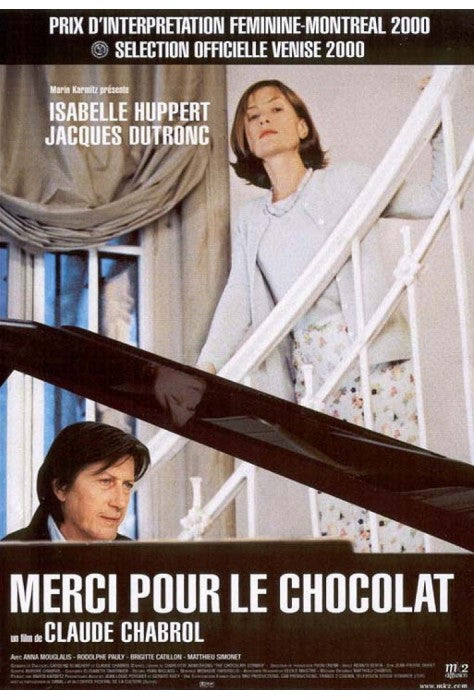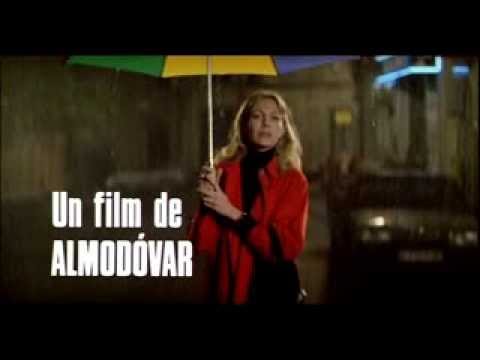

Claude Chabrol's final great film is a poisoning mystery — or is it? Mika Muller is the wealthy wife of a famous Swiss pianist. She is gracious, efficient, beautifully dressed, and possibly poisoning her family with the chocolate she makes. Merci pour le Chocolat (2000) is Chabrol at his most controlled: a film about bourgeois comfort as a form of violence, where the most menacing things are said politely, offers of hospitality carry implications, and the most dangerous character in the room is always the one holding a cup. For a French class, it is one of the most sophisticated portraits of the French-speaking bourgeoisie available.
For French students, the film's language is Swiss-French bourgeois: formal without being stiff, warm on the surface and completely controlled underneath. Isabelle Huppert's performance is a masterclass in speaking one thing and meaning another, and students can use it explicitly to study what linguists call "face-saving strategies" — the ways French speakers signal disagreement, suspicion, or hostility while maintaining the register of polite conversation. That register is distinct, learnable, and extremely useful for students who want to understand French social communication beyond the obvious. The film also features piano extensively, and the vocabulary of classical music in French is woven throughout.
📬 Stay in the loop. New lessons added regularly — join the list to hear when your film is available.
Key Themes for the Classroom
- Power and hospitality — Mika's hospitality is control. Ask: Comment Mika utilise-t-elle le chocolat pour contrôler les gens? Students list specific scenes where an act of generosity functions as a power move.
- Bourgeois surface and hidden violence — The film's violence, if it exists, is invisible. Ask: Comment Chabrol crée-t-il une atmosphère menaçante sans montrer de violence explicite? Students analyze how the French of the film performs menace while maintaining courtesy.
- Identity and replacement — Jeanne arrives looking for a father who may have been switched at birth. Ask: Qu'est-ce que Jeanne cherche vraiment? And: is Mika threatened by her, or by something else?
Scene to use: Any scene where Mika offers chocolate — and watch it twice. First time, students track the words. Second time, they track the eyes, the pauses, the recipient's response. Ask: Qu'est-ce qui se passe vraiment dans cette scène? The gap between the French spoken and the French communicated is the lesson. Chabrol puts everything in the gap.
Low-prep classroom activity: Students write a brief dialogue in French between two characters who are not saying what they mean. One character must offer something (food, help, information); the other must accept or decline while actually communicating something entirely different. Both characters remain formally polite throughout. The constraint produces sophisticated pragmatic French — the language of indirect communication, which is genuinely advanced.
The full French lesson plan for Merci pour le Chocolat is ready at filmarobics.com/products/merci-pour-le-chocolat — $29.95.
Students walk away from Merci pour le Chocolat having heard the French of beautiful manners and quiet menace — and having understood that politeness is never neutral.
The full French lesson plan for Merci pour le Chocolat is ready at filmarobics.com/products/merci-pour-le-chocolat — $29.95.
📬 Stay in the loop. New lessons added regularly — join the list to hear when your film is available.
Students walk away from Merci pour le Chocolat having heard the French of beautiful manners and quiet menace — and having understood that politeness is never neutral.