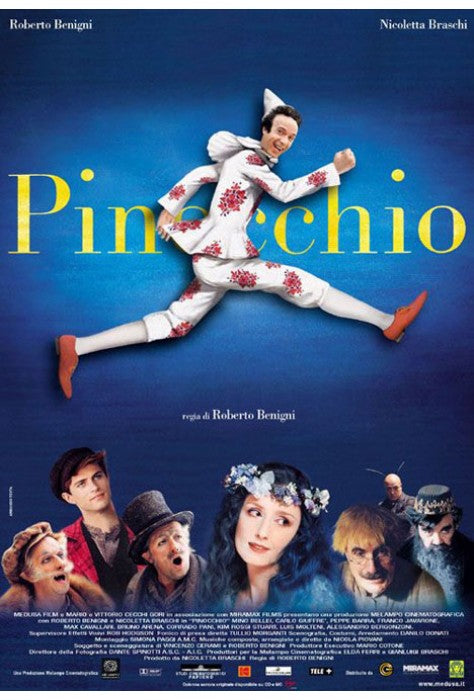
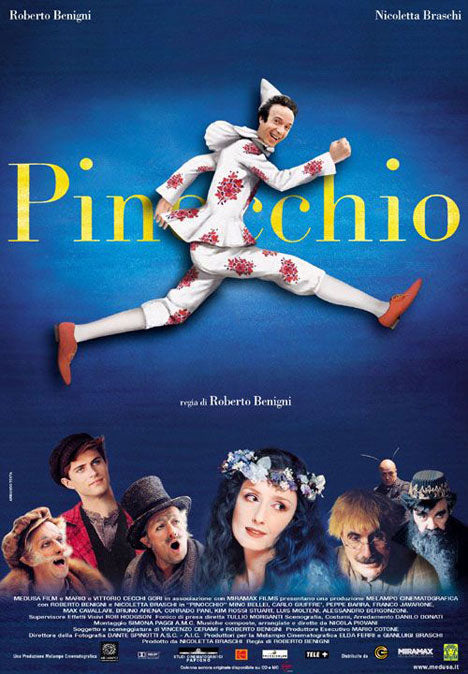
Collodi wrote Pinocchio in Florence in 1883 as a serial newspaper story, and what he wrote was considerably darker than the Disney version: a fable about a lying, lazy, foolish puppet who makes every wrong choice available to him before he's allowed to become real. Roberto Benigni's 2002 adaptation (and more recently Matteo Garrone's 2019 version) restores that darkness while keeping the magic, and for Italian students it provides something irreplaceable — the language of Italian moral fable, the vocabulary of transformation and consequence, and a story that has been part of Italian cultural literacy for over a century.
The film's Italian is Tuscan-inflected — Collodi was Florentine, and productions of Pinocchio tend to honor the Tuscan roots of the original language. Students hear Italian in its most canonical, most formally "correct" form, spoken in the register of fable: clear, slightly elevated, full of the specific vocabulary of moral instruction that Italian literature carries more comfortably than most European traditions.
📬 Stay in the loop. New lessons added regularly — join the list to hear when your film is available.
Key Themes for the Classroom
- Honesty and its physical consequences — The nose is the film's central image. Ask: Perché Collodi sceglie la menzogna come difetto principale di Pinocchio? What is the story saying about what lying does to a person?
- Temptation and consequence — Pinocchio is led astray repeatedly by characters who tell him what he wants to hear. Ask: Chi è il personaggio più pericoloso per Pinocchio? And: Why does Pinocchio keep listening?
- Becoming real — Being a "real boy" is the film's goal. Ask: Cos'è un bambino "vero"? What does Pinocchio need to learn to become one?
Scene to use: The scene where Pinocchio's nose grows for the first time — his shock, the Fairy's explanation, and his immediate attempt to shrink it by telling a more complicated lie. The Italian in this scene is the Italian of moral instruction and childlike rationalization — the gap between what Pinocchio understands intellectually and what he can control emotionally. Ask: Come reagisce Pinocchio quando capisce che il suo naso cresce? What does his reaction tell us about him?
Low-prep classroom activity: Students write a brief "confession" in Italian from Pinocchio — addressed to Geppetto, explaining one lie he told, why he told it, and what happened as a result. He must acknowledge the lie directly, explain his reasoning, and admit one thing he learned. The task produces first-person past tense Italian with the specific vocabulary of admission, guilt, and consequence.
What to listen for: Pinocchio's Italian — whether Benigni's theatrical version or Garrone's darker adaptation — is the Italian of moral instruction: direct, clear, and built on the vocabulary of truth, deception, and consequence. The Talking Cricket (il Grillo Parlante) speaks in the formal Italian of conscience; Pinocchio speaks in the impulsive Italian of desire. Ask students: Come parla il Grillo rispetto a Pinocchio? The register difference between the voice of conscience and the voice of impulse is one of Italian literature's defining contrasts, and it is entirely accessible in the language.
The full Italian lesson plan for Pinocchio is ready at filmarobics.com/products/pinocchio — $29.95.
Students walk away from Pinocchio having heard Italian carry one of literature's oldest lessons — and having thought seriously about what it means to be "real" in a language and a culture that has been telling this story for over a hundred years.
The full Italian lesson plan for Pinocchio is ready at filmarobics.com/products/pinocchio — $29.95.
📬 Stay in the loop. New lessons added regularly — join the list to hear when your film is available.
Students walk away from Pinocchio having heard Italian carry one of literature's oldest lessons — and having thought seriously about what it means to be "real" in a language and a culture that has been telling this story for over a hundred years.