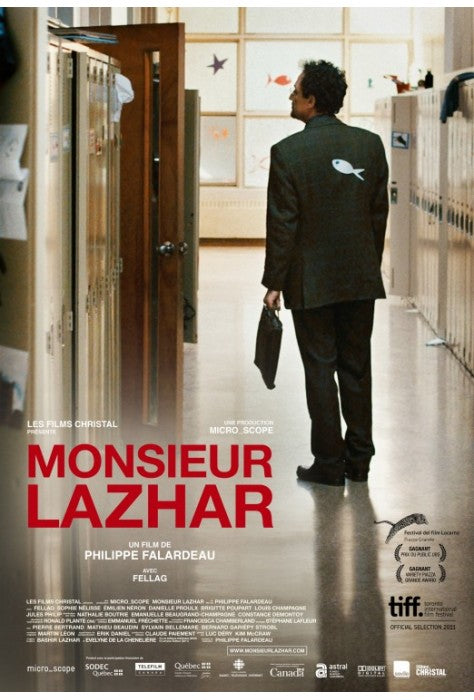
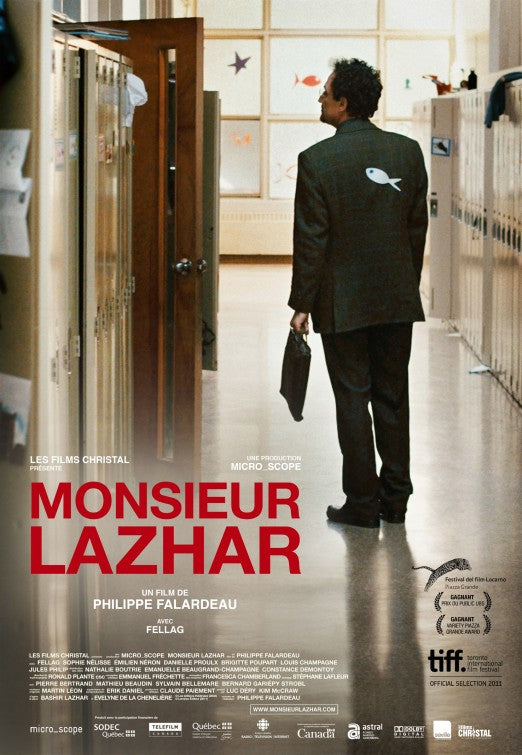
A Québec primary school classroom. The regular teacher has died suddenly, and a volunteer replacement steps forward: Bachir Lazhar, an Algerian immigrant who taught school in Algiers for twenty years. He doesn't know how Canadian classrooms work. The children don't know how to be in a classroom anymore — their teacher died inside it. Monsieur Lazhar is a film about grief and about teaching, and about the specific generosity of someone who has survived enormous loss offering that hard-won knowledge to children who are encountering loss for the first time.
For French students, the film offers something rare: the French of two different Francophones who come from completely different cultural contexts. Lazhar's French is Algerian — formal, literary, slightly elevated — and the children's French is contemporary Québécois. The gap between them is part of the film's texture, and it opens a discussion about what French is when it belongs to many cultures simultaneously.
📬 Stay in the loop. New lessons added regularly — join the list to hear when your film is available.
Key Themes for the Classroom
- Grief in school — The children are traumatized; the school system is uncertain how to help. Ask: Qu'est-ce que le système scolaire offre aux enfants? And: What does Lazhar offer that the system doesn't?
- Immigration and identity — Lazhar is a refugee from Algeria who is applying for asylum while teaching. Ask: Comment Lazhar gère-t-il sa propre situation difficile tout en aidant les enfants? What is he hiding, and why?
- The limits of pedagogical correctness — Lazhar teaches in ways that conflict with the school's guidelines — he touches students' shoulders, he reads them Balzac. Ask: A-t-il raison? Is correctness always the same as care?
Scene to use: Lazhar reading Balzac to the class — a passage about loss, in formal 19th-century French, to ten-year-olds in Québec. The scene is quietly extraordinary: an Algerian man using French literature to give children words for something they can't yet name. Ask: Pourquoi Lazhar choisit-il ce texte? And: Do the children understand? Do they need to?
Low-prep classroom activity: Students write a brief letter in French from one of the children to M. Lazhar — after the film ends, after he's had to leave. The child must say one thing they learned that wasn't in any textbook, one question they never got to ask, and one thing they hope he knows. Present and past tense, direct address, and the specific French of a child writing to an adult they respect.
What to listen for: Bachir Lazhar speaks Québécois French with an Algerian accent — a combination that signals his position: he is Francophone but not Canadian, educated but from elsewhere. The children speak the contemporary Québécois French of a Montreal primary school. Ask students to track how Lazhar's French sounds different from the children's French and explain the difference. The exercise teaches students that accent carries biography — and that a person can be entirely fluent in a language while still carrying the sound of where they came from.
The full French lesson plan for Monsieur Lazhar is ready at filmarobics.com/products/monsieur-lazhar — $29.95.
Students walk away from Monsieur Lazhar having heard Algerian French and Québécois French in the same classroom — and having thought about what teaching is when the teacher and the students are both grieving something they can barely name.
The full French lesson plan for Monsieur Lazhar is ready at filmarobics.com/products/monsieur-lazhar — $29.95.
📬 Stay in the loop. New lessons added regularly — join the list to hear when your film is available.
Students walk away from Monsieur Lazhar having heard Algerian French and Québécois French in the same classroom — and having thought about what teaching is when the teacher and the students are both grieving something they can barely name.