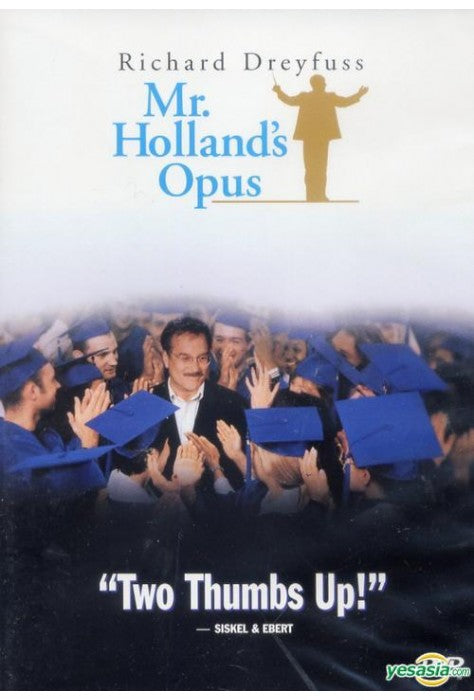
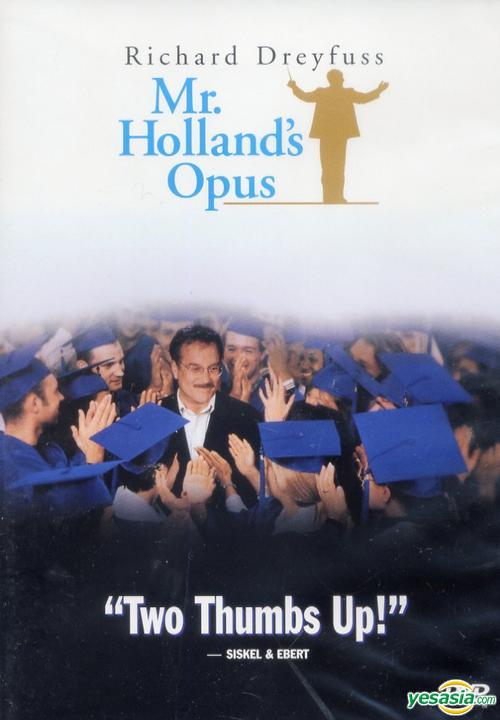
Glenn Holland takes the music teacher job as a temporary measure. He'll teach for a few years, save money, and then go home to compose the symphony he's been working on for his whole life. Thirty years later, he's still in the same high school, the symphony is unfinished, and a very large number of students have learned music because of him. Richard Dreyfuss's performance in Mr. Holland's Opus is one of the defining portraits of teaching in American film — and for an ESL class, the film's thirty-year span makes it one of the most complete records of American language change available in the catalog.
For ESL students, the film spans from the mid-1960s to the 1990s — a thirty-year arc of American language, music culture, and social change. Students hear English from three different decades in the same classroom, and the changes — in slang, in social norms, in the music that motivates students — are entirely audible without being pointed out.
📬 Stay in the loop. New lessons added regularly — join the list to hear when your film is available.
Key Themes for the Classroom
- Vocation and calling — Holland becomes a teacher by accident and a great teacher on purpose. Ask: When did Holland decide to be a teacher? Is there a specific moment, or does it happen gradually? Students find this moment in the film.
- Music as language — Holland uses music to reach students who don't respond to conventional teaching. Ask: What specific things does Holland do that work? What doesn't work until he tries something different?
- Sacrifice and meaning — Holland's personal life pays a price for his professional dedication. Ask: Was the trade worth it? Who decides?
Scene to use: Holland's lesson with Gertrude, the Governor's daughter — she can't play the clarinet, she's giving up, and Holland asks her what she likes about herself. The English in this scene moves from standard teacher-student register to something more personal as Holland tries to reach past the clarinet to the person. Ask: What does Holland do differently in this scene than he does in regular class? Students identify his teaching strategies in English.
Low-prep classroom activity: Students write a brief speech in English — as Mr. Holland, on his last day, explaining to the assembled former students what he learned from them. He must mention something specific, acknowledge something he got wrong, and end with one statement about what music is for. Formal but warm English, first person, present and past tense.
What to listen for: The film spans thirty years, which means the American English of 1965 and the American English of 1995 are both present — and students who listen carefully can hear the difference: slang that comes and goes, the shifting register of teacher-student relationships, the specific American English of music education. Ask students to identify one expression or construction that sounds dated and one that sounds contemporary. The linguistic archaeology exercise teaches students that English, like all languages, is always in motion — which is both reassuring and important to know.
The full ESL lesson plan for Mr. Holland's Opus is ready at filmarobics.com/products/mr-hollands-opus — $29.95.
Students walk away from Mr. Holland's Opus having heard thirty years of American English — and having thought about what teaching is actually for, which is not a question with an easy answer in any language.
The full ESL lesson plan for Mr. Holland's Opus is ready at filmarobics.com/products/mr-hollands-opus — $29.95.
📬 Stay in the loop. New lessons added regularly — join the list to hear when your film is available.
Students walk away from Mr. Holland's Opus having heard thirty years of American English — and having thought about what teaching is actually for, which is not a question with an easy answer in any language.