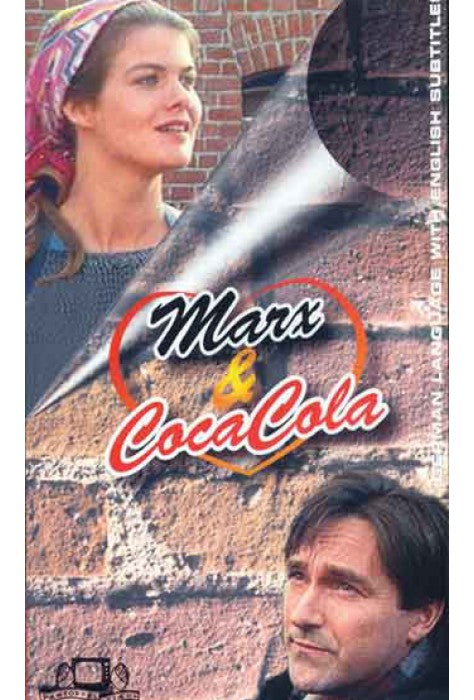
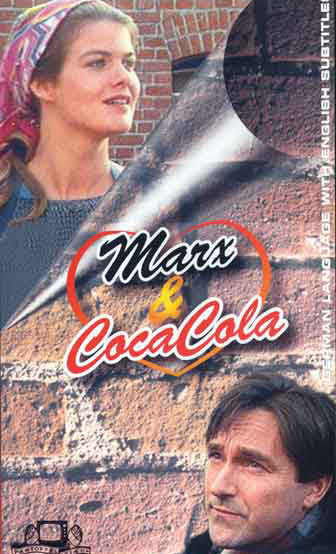
East Germany, 1983. Sandra is seventeen, living in the GDR, and she's in love with Moritz, who has applied to leave for the West. While he waits for his exit visa, Sandra must decide what she wants — whether to go with him or to stay with the world she knows. Marx und Coca-Cola is a coming-of-age story set in a specific political moment, and it does what the best films about the GDR do: it shows the system through the experience of someone young enough to still believe the world could be different.
For German students, the film offers GDR German in its everyday register — the specific vocabulary of life in the East, where Western brands like Coca-Cola are forbidden objects and where "Marx" is the unavoidable frame for every public statement. Students hear the gap between official language and private language in the GDR, and the specific way young people carved out space for themselves inside the system.
📬 Stay in the loop. New lessons added regularly — join the list to hear when your film is available.
Key Themes for the Classroom
- Love and choice — Sandra's love for Moritz is real, but so is her life in the GDR. Ask: Was soll Sandra wählen? And: Is there a version of this story where she can have both?
- Individual and system — Moritz's decision to leave is personal; the state treats it as political. Ask: Wie reagiert das System auf Moritz' Entscheidung? What specific language does the state use to describe individual choices?
- Western culture and Eastern identity — Coca-Cola is forbidden but desired. Ask: Was symbolisiert Coca-Cola im Film? What does the West represent, and is the representation accurate?
Scene to use: Sandra and Moritz's conversation about leaving — what it would mean, what they'd leave behind, what they'd go toward. The German in this scene is intimate, circular, and full of things that can't quite be said directly because both characters know they're being listened to. Ask: Worüber können Sandra und Moritz nicht frei reden? And: How does that constraint shape their language?
Low-prep classroom activity: Students write a brief letter in German — from Sandra to Moritz, after the film ends. She must say one thing she decided, one thing she doesn't know if she'll ever understand, and one thing she hopes for him in the West. Formal written German, first person, and the specific vocabulary of a love that existed in a particular political moment and can't quite survive leaving it.
What to listen for: The film's title is its argument: 1960s West German youth is caught between Marxist ideology (the politics they inherited from the left) and Coca-Cola (the consumer culture they were born into). The German of the film reflects that split — political vocabulary sits alongside advertising language, and the characters switch between them with the ease of people who don't yet know the contradiction is serious. Ask students to identify one scene where both vocabularies appear and describe what the mixture reveals about the character's world.
The full German lesson plan for Marx und Coca-Cola is ready at filmarobics.com/products/marx-und-coca-cola — $29.95.
Students walk away from Marx und Coca-Cola having heard the German of East Germany — the language of a society that controlled what you could say and couldn't quite control what you wanted — and having thought seriously about what love looks like when the political makes the personal impossible.
The full German lesson plan for Marx und Coca-Cola is ready at filmarobics.com/products/marx-und-coca-cola — $29.95.
📬 Stay in the loop. New lessons added regularly — join the list to hear when your film is available.
Students walk away from Marx und Coca-Cola having heard the German of East Germany — the language of a society that controlled what you could say and couldn't quite control what you wanted — and having thought seriously about what love looks like when the political makes the personal impossible.