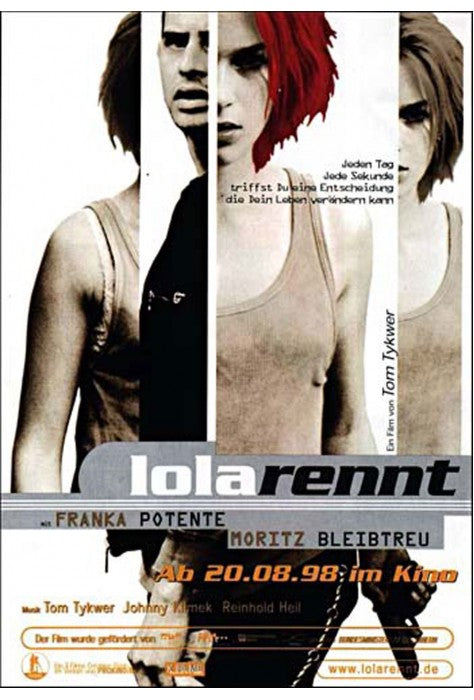
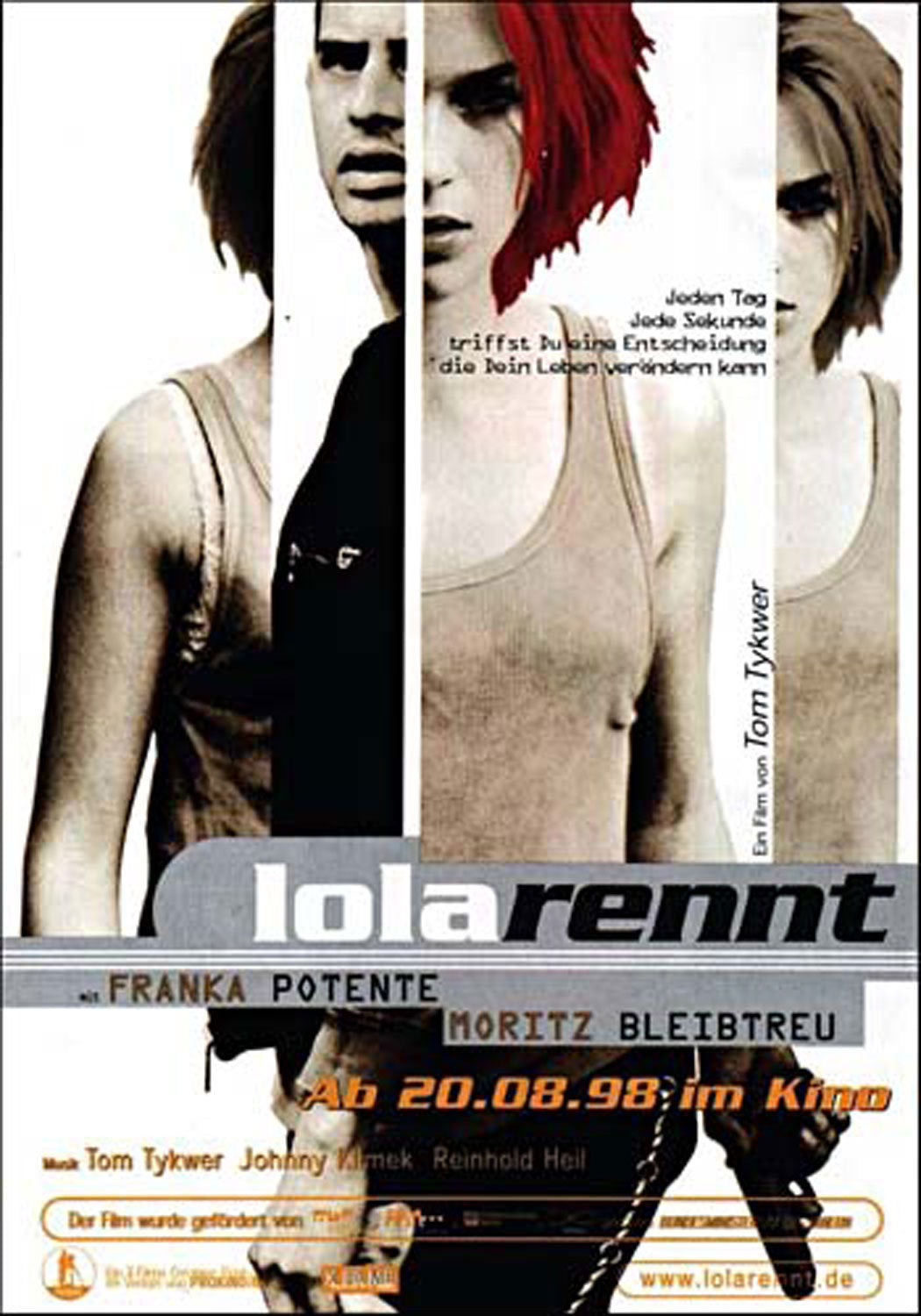
Lola has twenty minutes to get 100,000 deutschmarks to her boyfriend Manni, or he'll rob a supermarket and probably get killed. She runs. The film runs with her — three times, with three different outcomes. By the second run, your students are leaning forward. By the third, they're problem-solving alongside her. That's not passive viewing. That's active engagement with narrative, causality, and consequence — in German.
Lola Rennt (Tom Tykwer, 1998) is relentless, kinetic, and packed with contemporary Berlin German. The language is direct, imperative, and urgent — Lola doesn't have time for subordinate clauses. Students who find German grammar exhausting will find this film's dialogue energizing. The film also provides an exceptional entry point into discussion of fate, choice, and causality — concepts that German expresses with particular precision.
📬 Stay in the loop. New lessons added regularly — join the list to hear when your film is available.
Key Themes for the Classroom
- Fate and agency: The film asks whether outcomes are determined or chosen. Each run changes based on tiny decisions. Ask students: what is one small decision you've made that changed everything? Say it in German.
- Time pressure as dramatic engine: Twenty minutes, repeated three times. Discuss: how does urgency change the language we use? German imperative forms become natural when survival is at stake — students can feel this without being taught it.
- Berlin in 1998: The film captures a reunified Berlin still figuring out what it is — a city in motion, like Lola. Ask students what the setting adds to the film's meaning. What would be different if the same story happened in Munich? In Hamburg?
- Love as motivation: Lola runs for Manni. Ask students: what would you run toward? What German vocabulary describes the quality of love that makes someone physically sprint through a city?
One Scene to Use
The split-second flash-forward sequences — where the camera freezes on a minor character and rapid-fire still photographs show the rest of their life — are one of the film's most distinctive techniques. Each character's future changes depending on which run we're in. Use these sequences to teach the future tense and conditional in German: Er wird... / Wenn Lola früher gelaufen wäre, hätte er...
One Low-Prep Classroom Activity
After the first run, pause the film. Give students five minutes to write — in German — what they think will happen differently in the second run, and why. After the second run, check their predictions. This is prediction and conditional writing disguised as suspense. Students won't notice they're doing grammar.
The full German lesson plan for Lola Rennt is ready at filmarobics.com/products/lola-rennt — $29.95.
📬 Stay in the loop. New lessons added regularly — join the list to hear when your film is available.
Students who work through this unit leave with the grammatical tools to talk about what might have been — in a language that happens to be exceptionally good at it.