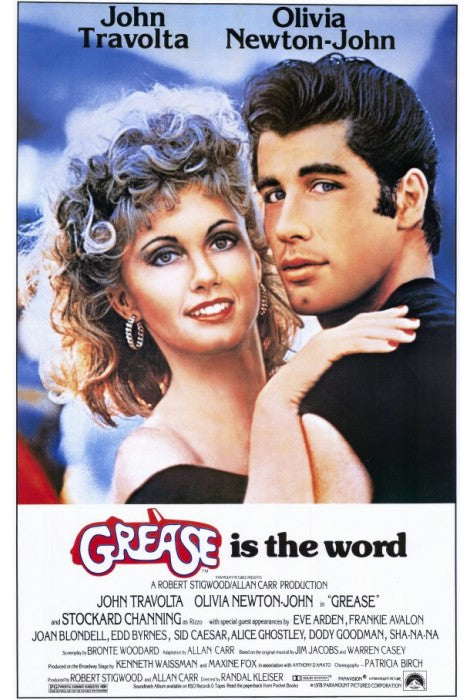
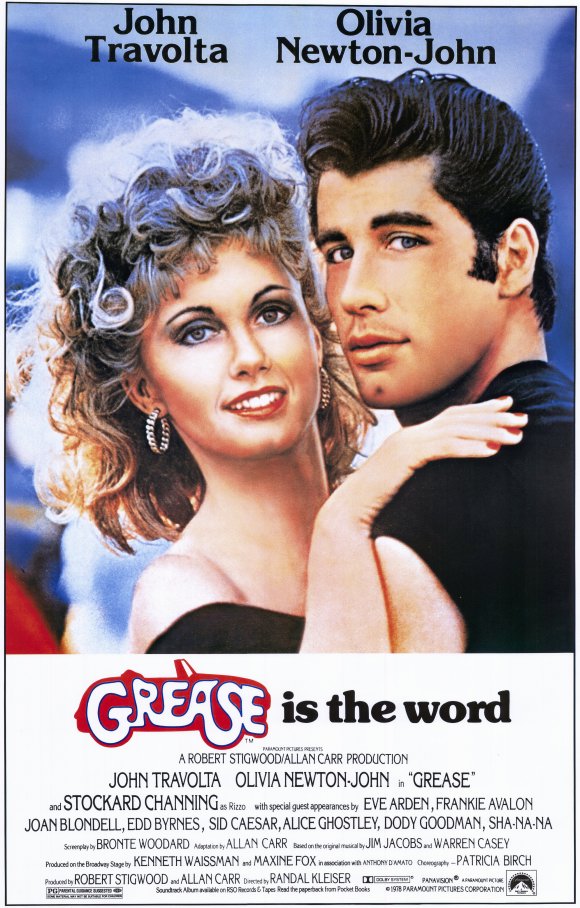
Sandy and Danny meet on the beach, fall in love, say goodbye, and then discover they're at the same high school. Except Sandy is a good girl and Danny is the leader of a gang, and neither of them can figure out how to be who they are in front of who the other one is. It's a premise so simple it sounds thin — until you realize that half the songs in this musical are actually about the gap between private self and public performance. Your ESL students live that gap every time they walk into an English-speaking room.
Grease (Randal Kleiser, 1978) is one of the most linguistically accessible American films for ESL use because the songs do comprehension scaffolding work that dialogue alone cannot. Students hear the same vocabulary, same emotional content, repeated in multiple registers — dialogue, song, chorus — which dramatically increases retention. 1950s American vernacular is also a distinctive register that creates productive contrast with modern American English.
📬 Stay in the loop. New lessons added regularly — join the list to hear when your film is available.
Key Themes for the Classroom
- Social groups and belonging: The T-Birds and the Pink Ladies are the film's social architecture. Ask students: what groups organized their high school? What did belonging to a group require — in language, dress, and behavior?
- 1950s American vernacular: Cool, groovy, swell, chick, dig it — the film is a time capsule of Americanisms that are historically interesting and still partially in use. Give students a decade-sorting exercise: which of these words are still used? Which have dated? Which have changed meaning?
- Gender roles and their resistance: Sandy changes for Danny; Danny changes for Sandy. The film wants you to think this is equal. It isn't. Ask students: who actually changes more, and why does that matter?
One Scene to Use
"Summer Nights" — where Sandy tells her girlfriends one version of the summer romance and Danny tells the boys another version simultaneously — is a masterclass in register difference. Sandy's telling is romantic; Danny's is sexual bravado. After watching the scene (no subtitles), ask students: what is the same in both versions? What is different? Why? The activity is interpretation and register, in English.
One Low-Prep Classroom Activity
Give students the lyrics to "Sandra Dee" (the song Rizzo sings mocking Sandy) and "Look at Me, I'm Sandra Dee" (Sandy's own reprise). They circle every insult in Rizzo's version and every word of self-assertion in Sandy's version. Then discuss: what does it mean to take back the language someone used to mock you? This is a lesson in the power dynamics of English vocabulary.
The full ESL lesson plan for Grease is ready at filmarobics.com/products/grease — $29.95.
📬 Stay in the loop. New lessons added regularly — join the list to hear when your film is available.
Students who work through this unit leave with American vernacular from two eras, a feel for how social groups use language as membership cards, and — if you use the gender discussion — something worth arguing about in English.