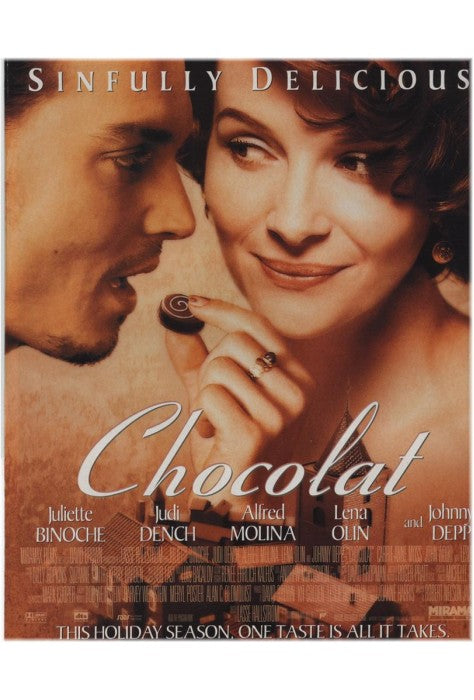

January in a French class. It's the month Lasse Hallström's Chocolat was set in — cold, strict, self-denying — and that January is exactly the atmosphere the film wants to break. Vianne Thierry arrives in a small French village with her daughter and opens a chocolate shop during Lent. The village's moral guardian is outraged. The villagers are tempted. And the film becomes, quietly and with enormous warmth, an argument about what it means to live well, freely, and without shame in a society that prizes conformity above all else.
For French students, Chocolat works at multiple levels. The language is clear and expressive, the vocabulary of food, pleasure, and social judgment appears constantly in emotionally rich context, and the French village setting gives students immediate cultural grounding. The film also models something rare: a female protagonist who is confident, skilled, and unapologetic — a model of agency that generates discussion at any level.
📬 Stay in the loop. New lessons added regularly — join the list to hear when your film is available.
Key Themes for the Classroom
- Tradition vs. freedom — The Count's insistence on discipline and propriety versus Vianne's invitation to pleasure and self-expression. Ask: Qui a raison — le Comte ou Vianne?
- Community and belonging — Vianne is always almost-but-not-quite accepted. The village's slow thaw toward her is a study in how French social acceptance works — gradually, never quite completely.
- Pleasure as resistance — Eating chocolate during Lent is a political act in this film. The vocabulary of indulgence, guilt, and defiance is woven through every scene in the shop.
Scene to use: Vianne determines which chocolate each customer truly wants by reading their faces and habits. The scene is almost entirely in dialogue — Vianne asking questions, making observations, guessing, being right. The French vocabulary of sensory pleasure (goût, douceur, saveur) and emotional revelation (avouer, céder, se permettre) arrives in a completely naturalistic context. After watching, ask: Comment Vianne sait-elle ce que les gens veulent? The answers open a discussion about intuition, psychology, and what people hide in French society.
Low-prep classroom activity: Students write a short description in French of their "ideal chocolate" — but the assignment requires them to describe not just the flavor but the feeling. They must use at least two sensory adjectives, one verb of desire or permission (vouloir, permettre, oser), and one thing they usually don't allow themselves. The constraint surfaces emotional vocabulary naturally.
📅 Teach it when it counts: January and February — the film is set in January, during Lent, and the tension between Vianne's chocolate shop and the village mayor's austerity is built on that calendar. Teaching it at the actual time of year it depicts adds a layer of cultural immediacy. The vocabulary of Lent, of discipline and indulgence, of French Catholic tradition and its complications, all appear naturally when students are experiencing something like the same season.
The full French lesson plan for Chocolat is ready at filmarobics.com/products/chocolat — $29.95.
Students walk away from Chocolat with the French to talk about pleasure, permission, and what it costs to be different in a place that values sameness — which, it turns out, is vocabulary they needed anyway.
The full French lesson plan for Chocolat is ready at filmarobics.com/products/chocolat — $29.95.
📬 Stay in the loop. New lessons added regularly — join the list to hear when your film is available.
Students walk away from Chocolat with the French to talk about pleasure, permission, and what it costs to be different in a place that values sameness — which, it turns out, is vocabulary they needed anyway.