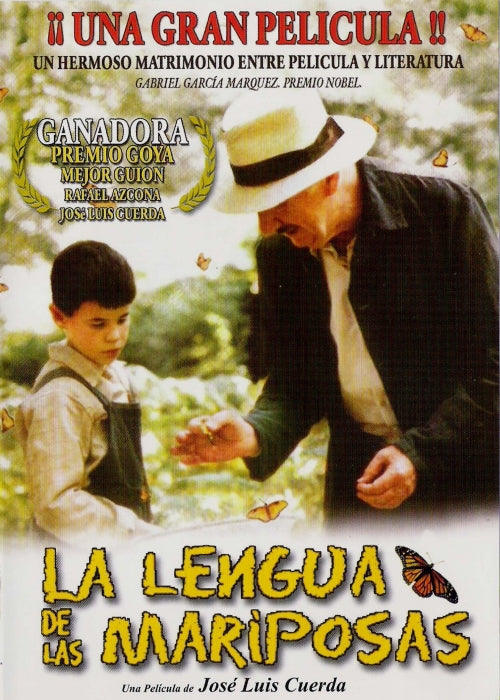
The most important thing about La Lengua de las Mariposas (Butterfly) is what happens at the end. For most of the film, it's a warm, beautifully observed story about a shy boy named Moncho in a 1930s Galician village and his relationship with his beloved teacher Don Gregorio — a Republican schoolteacher who teaches him about butterflies, poetry, and how to look at the world. And then the Spanish Civil War arrives, and the film does something that no classroom lecture about the Civil War can do: it makes you feel what it cost.
For Spanish students, the film is accessible and devastating in equal measure. The Galician-inflected Castilian Spanish is clear and warm, Don Gregorio's classroom dialogue is a model of how to teach with patience and curiosity, and the film's final scene is one of the most teachable moments in Spanish cinema — because it forces students to confront exactly what fear does to people who know better.
📬 Stay in the loop. New lessons added regularly — join the list to hear when your film is available.
Key Themes for the Classroom
- Education and freedom — Don Gregorio believes that a free mind is the only real education. The Republican school in the film is a specific political project. Ask: ¿Qué quiere Don Gregorio que aprenda Moncho — además del lenguaje de las mariposas?
- Fear and betrayal — The final scene. Don't describe it. Watch it. Then ask: ¿Por qué hace Moncho lo que hace al final? And wait. The silence before students answer tells you everything.
- Language and knowledge — Don Gregorio teaches Moncho words for things — tilonorrinco, spiracle, butterfly tongue — and those words give Moncho a world that didn't exist for him before. Ask: ¿Qué puede hacer Moncho ahora que no podía antes?
Scene to use: Don Gregorio's first day of class, when Moncho is terrified and the teacher — having heard that Moncho peed himself in fear — treats him so gently and normally that the fear evaporates. The Spanish here is warm, careful, pedagogically perfect. Ask students: ¿Qué hace Don Gregorio para que Moncho se sienta seguro? What specific language choices does he make? That question is a lesson in how teachers use language to create safety.
Low-prep classroom activity: After the final scene, students write a brief first-person account in Spanish from Moncho's perspective — not immediately after, but years later. He's an adult now. He's still thinking about what happened. He must explain it — to himself, to someone else, or to Don Gregorio — in Spanish, using past tense, with at least one thing he still doesn't understand and one thing he now knows he was wrong about.
What to listen for: The film's final scene is one of the most devastating in Spanish cinema, and it depends entirely on language: Moncho calling out against Don Gregorio in front of the soldiers, using the words he was taught to love as weapons against the person who taught them to him. Ask students: ¿Por qué usa Moncho exactamente las palabras que usaba Don Gregorio? The answer requires students to understand how language becomes political — and what it means to weaponize the words of someone who taught you to love language.
The full Spanish lesson plan for La Lengua de las Mariposas is ready at filmarobics.com/products/lengua-de-las-mariposas — $29.95.
Students walk away from La Lengua de las Mariposas having heard Spanish used for everything — wonder, tenderness, fear, and the kind of betrayal that haunts a person for a lifetime.
The full Spanish lesson plan for La Lengua de las Mariposas is ready at filmarobics.com/products/lengua-de-las-mariposas — $29.95.
📬 Stay in the loop. New lessons added regularly — join the list to hear when your film is available.
Students walk away from La Lengua de las Mariposas having heard Spanish used for everything — wonder, tenderness, fear, and the kind of betrayal that haunts a person for a lifetime.