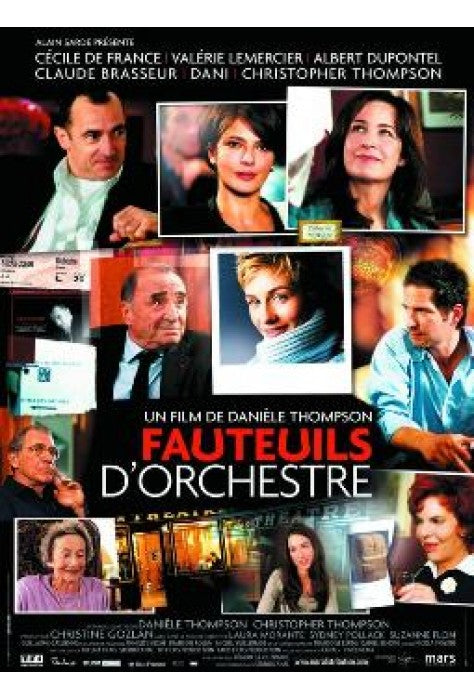
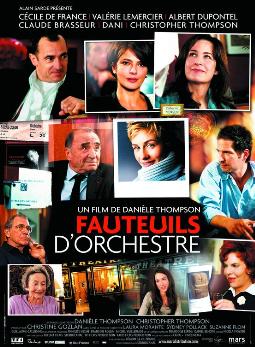
The setup of Avenue Montaigne is perfectly designed for a French class that needs a film about art, ambition, and the specific world of Parisian cultural life without being dry about it. Jessica is a young woman from the provinces who arrives in Paris, gets a job as a waitress in a café on the Avenue Montaigne — the street of Paris's grand concert halls and theaters — and becomes entangled in the lives of three artists at critical moments: a concert pianist about to retire, an actress about to sell her late husband's art collection, and an actor considering a Hollywood film at the expense of his stage career.
For French students, the film's language is a complete cultural education. The haute-bourgeois French of the artists and collectors, the working-class French of the café staff, and Jessica's wide-eyed provincial French all occupy the same scenes, and the social code that governs who speaks how to whom is visible in every exchange. Students who are learning to hear French socially rather than grammatically will find this film invaluable.
📬 Stay in the loop. New lessons added regularly — join the list to hear when your film is available.
Key Themes for the Classroom
- Art and compromise — Each artist faces a version of the same question: what are you willing to trade for success, security, or recognition? Ask: Lequel des trois artistes prend la meilleure décision?
- Paris as aspiration — Jessica has come to Paris because it is Paris. The film explores what that actually means — the gap between the city of cultural legend and the city of daily waitressing. Ask: Qu'est-ce que Paris représente pour Jessica?
- Listening and observation — Jessica's role is largely to watch and listen. She becomes, without trying to, the film's moral center — the one person not performing anything. Ask: Pourquoi Jessica est-elle la personne la plus honnête dans ce film?
Scene to use: The pianist Gabriël's final concert — the moment before he walks onstage, and the moment after. The French vocabulary of artistic courage and fear is present in his preparation, his conversation with Jessica, and his silence before the concert begins. Ask: Qu'est-ce qui se passe sur le visage de Gabriël juste avant de monter sur scène? Students must read emotion in language and body simultaneously.
Low-prep classroom activity: Students write a brief letter in French — from Jessica to a friend back home, after her first month on the Avenue Montaigne. She describes what she has seen, who she has met, and one thing about Paris that surprised her. Formal letter format, imperfect and passé composé mixed, and at least one moment where the reality doesn't match what she expected.
What to listen for: The film gathers the French of several different high-culture worlds — the concert hall, the auction house, the theater — and puts them in collision with the warmer, less cultivated French of Jessica the waitress, who serves all of them. Ask students to track Jessica's French as she moves between these worlds: does she adapt? Does she resist? What does her refusal or accommodation tell us about French social mobility? The exercise teaches students that French, like all prestige languages, carries social aspiration — and that navigating it is itself a kind of competence.
The full French lesson plan for Avenue Montaigne is ready at filmarobics.com/products/avenue-montaigne — $29.95.
Students walk away from Avenue Montaigne having heard French spoken by people who care deeply about art — and having learned that caring about the right things doesn't always mean you make the right choices.
The full French lesson plan for Avenue Montaigne is ready at filmarobics.com/products/avenue-montaigne — $29.95.
📬 Stay in the loop. New lessons added regularly — join the list to hear when your film is available.
Students walk away from Avenue Montaigne having heard French spoken by people who care deeply about art — and having learned that caring about the right things doesn't always mean you make the right choices.