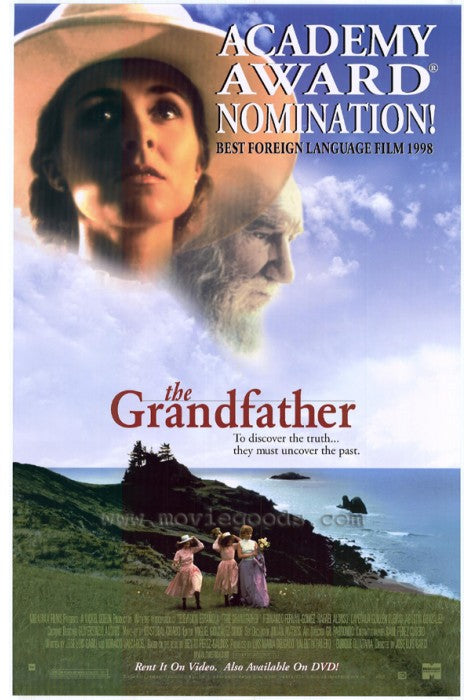
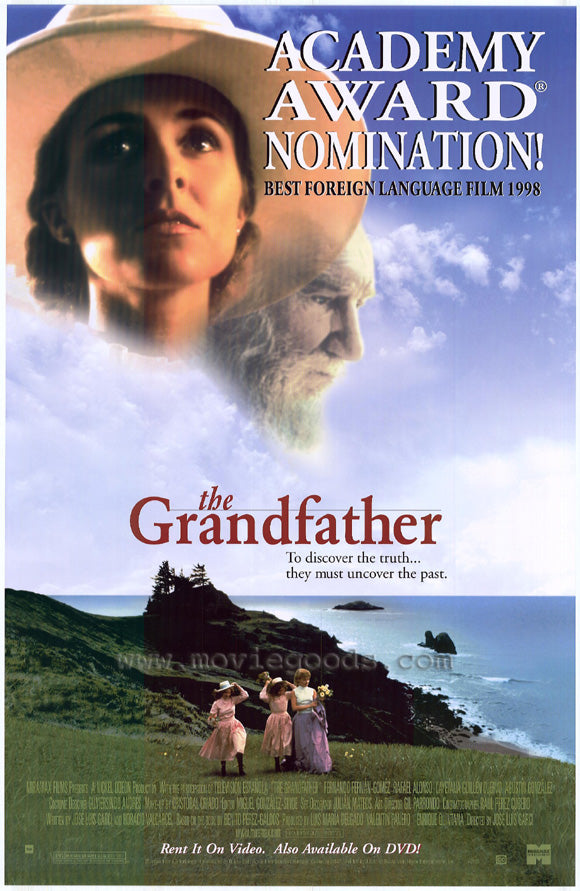
The moment you need in a Spanish classroom isn't always the dramatic one. Sometimes it's the quiet scene — two people in a room, one of them keeping a secret, both of them choosing their words carefully. El Abuelo is full of those moments, and that care with language is exactly what makes this 1998 Spanish drama so teachable. Rodrigo García Ordóñez has returned to the village of his ancestors, convinced that one of his two granddaughters is not of noble blood. His obsession with lineage and honor is the engine of the film — and for Spanish students, it's a portal into a Spain that still echoes in the language today.
For a Spanish class, El Abuelo offers something rare: a genuinely adult drama, set in rural Spain, with dialogue that is formal, measured, and emotionally layered. The characters speak in complete sentences. They argue with courtesy. They hide things with politeness. This is the Spanish of literature made audible, and it gives students access to register and vocabulary that telenovelas and contemporary films can't provide.
📬 Stay in the loop. New lessons added regularly — join the list to hear when your film is available.
Key Themes for the Classroom
- Honor and family reputation — Don Rodrigo's obsession with lineage is a lens into traditional Spanish values and how they conflict with modern sensibility. Ask students: ¿Tiene razón el abuelo en preocuparse tanto por el honor?
- Secrets and silence — Several characters know things they don't say. The film models the Spanish vocabulary of evasion, euphemism, and indirect speech with extraordinary precision.
- Love as defiance — The granddaughters' relationships challenge the grandfather's worldview. Students can trace how the language of affection changes depending on who holds power in the conversation.
Scene to use: Don Rodrigo's first long conversation with Inesilla, the granddaughter he believes to be the illegitimate one. He speaks to her with formal courtesy even as he suspects her origins. The scene's surface language is warm; the subtext is cold. Use it to teach the gap between what Spanish speakers say and what they mean — which is one of the hardest cultural-linguistic lessons to convey through a textbook.
Low-prep classroom activity: After watching the grandfather's return scene, give students a short written task: write a formal letter in Spanish from Don Rodrigo to his granddaughters explaining why he has come back. They must use formal usted address, at least one expression of family obligation, and one indirect way of saying what they're not saying directly. The constraint is the lesson.
What to listen for: Count Albrit speaks the formal Spanish of the Spanish nobility — elaborate, governed by a code of honor that is entirely legible in his sentence structure and word choices. Against his formal Spanish, the village people and servants speak a warmer, more direct variety. Ask students to identify one exchange where the class difference is entirely carried by register rather than content — where it's not what the Count says but how he says it that marks his position. The register analysis teaches Spanish social history through language.
The full Spanish lesson plan for El Abuelo is ready at filmarobics.com/products/abuelo — $29.95.
Students walk away from El Abuelo having heard honor and love argue with each other in formal Spanish — and having learned that the most powerful things in the language are often the ones left unsaid.
The full Spanish lesson plan for El Abuelo is ready at filmarobics.com/products/abuelo — $29.95.
📬 Stay in the loop. New lessons added regularly — join the list to hear when your film is available.
Students walk away from El Abuelo having heard honor and love argue with each other in formal Spanish — and having learned that the most powerful things in the language are often the ones left unsaid.