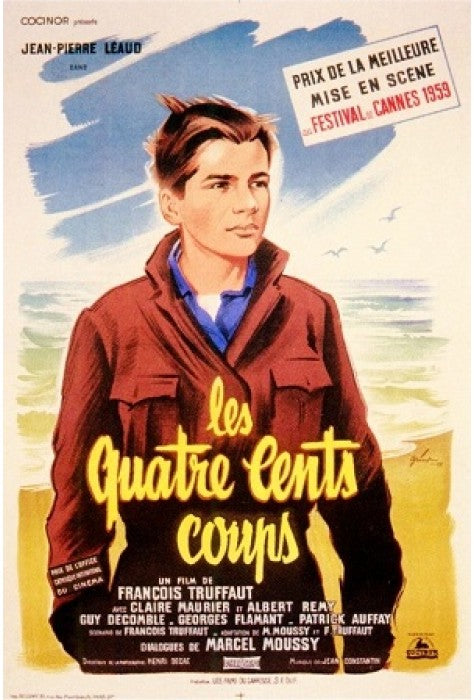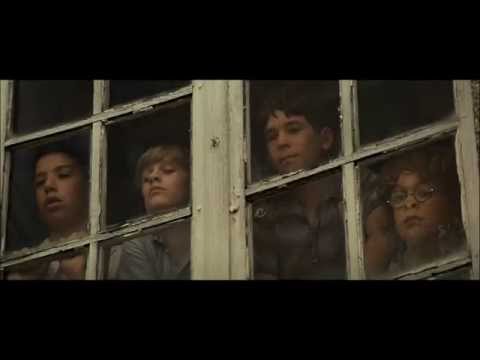
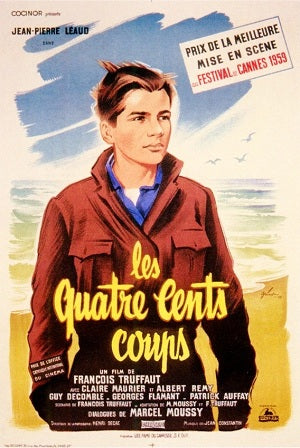
Every language teacher eventually reaches for a film that doesn't reassure anyone — a film that tells the truth about what it's like to be young in a world that isn't built for you. Truffaut made Les Quatre Cents Coups at twenty-seven, from memory, and Antoine Doinel is the most honest portrait of a difficult adolescence in French cinema. The film doesn't explain Antoine. It doesn't excuse him. It just watches him — carefully, without sentimentality — as he tries to find a way through a life that keeps closing its doors.
For French students, the film is a canonical text — and that canonicity is itself pedagogically useful. The French of Les Quatre Cents Coups is 1950s Paris: working-class apartments, the school system that doesn't know what to do with a boy who reads Balzac by candlelight while his parents argue. The vocabulary of French institutional life — school, police, reform school, the judicial system — appears throughout, and students begin to understand how French institutions have shaped themselves around the language of authority and classification.
📬 Stay in the loop. New lessons added regularly — join the list to hear when your film is available.
Key Themes for the Classroom
- Abandonment and resilience — Antoine's parents are present and absent simultaneously. He is a child being raised by neglect, and his response is resourcefulness rather than despair. Ask: Comment Antoine se débrouille-t-il seul?
- Institutional failure — The school, the reform school, the family court — every institution encounters Antoine and fails him. Ask: Quelle institution aurait pu aider Antoine? Would any of them?
- Art and escape — Antoine loves Balzac. The famous scene of the stolen typewriter begins with Balzac. The film argues that literature is the only reliable escape — and that argument is worth having in French class.
Scene to use: The final shot — Antoine running, reaching the sea, turning to face the camera. No dialogue. Just Antoine's face and the ocean. Use it last, after everything else. Ask: Qu'est-ce qu'Antoine cherche? Qu'est-ce qu'il a trouvé? The question has no right answer and opens the best discussion of the film.
For earlier in the film: Antoine's interview with the school psychologist. She asks him questions he has never been asked — and he answers them, one by one, completely honestly. The French here is simple, direct, and devastating. Ask students to identify: which questions does Antoine answer easily, which does he struggle with, and what does the difficulty reveal?
Low-prep classroom activity: Students write a brief character description of Antoine in French — not a plot summary, but a portrait. What kind of person is he? What does he need that he isn't getting? What would you say to him if you could? Third-person present tense for the description; first person if they write directly to him. The task requires empathy and vocabulary simultaneously.
The full French lesson plan for Les Quatre Cents Coups is ready at filmarobics.com/products/400-coups — $29.95.
Students walk away from Les Quatre Cents Coups having heard French carry the weight of a childhood that nobody caught — and having thought seriously about what institutions owe the people they're supposed to serve.
The full French lesson plan for Les Quatre Cents Coups is ready at filmarobics.com/products/400-coups — $29.95.
📬 Stay in the loop. New lessons added regularly — join the list to hear when your film is available.
Students walk away from Les Quatre Cents Coups having heard French carry the weight of a childhood that nobody caught — and having thought seriously about what institutions owe the people they're supposed to serve.