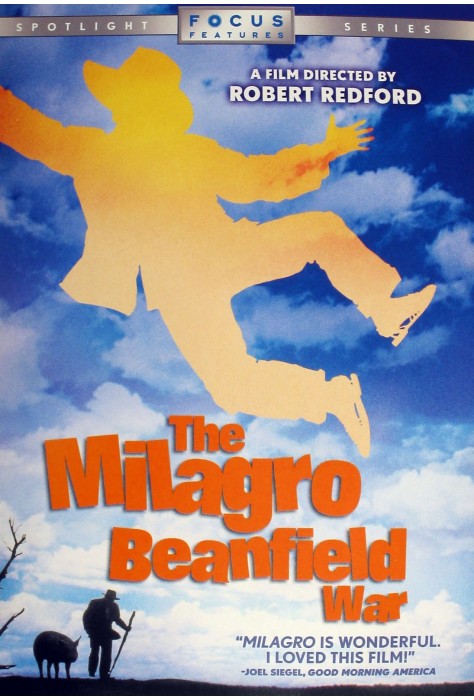

A man in a small New Mexico town illegally diverts a water line to irrigate his family's long-fallow beanfield — and in doing so, accidentally starts a revolution. Robert Redford's The Milagro Beanfield War is a magical realist comedy about Chicano community resistance to corporate development, and it is one of the warmest, strangest, most linguistically rich films in the Spanish-language curriculum. It's also one of the few Hollywood films where the Spanish is primary, not dubbed or subtitled as an afterthought, but woven into the DNA of the story.
For Spanish students, the New Mexican Spanish in the film is distinctive — a variety that has maintained archaisms from colonial Spanish that have since disappeared from other regions. Students hear Spanish that is genuinely different from textbook Castilian or Mexican Spanish, and the community context gives them cultural grounding for understanding Chicano history and language simultaneously.
📬 Stay in the loop. New lessons added regularly — join the list to hear when your film is available.
Key Themes for the Classroom
- Community and resistance — The beanfield is not just a beanfield. Ask: ¿Qué representa el campo de frijoles para la comunidad? The answer is the whole film's argument about land, identity, and survival.
- Magical realism in everyday life — Amarante's saint visits him. The pig has conversations. Ask: ¿Por qué incluye la película elementos mágicos? What does magic do that realism cannot?
- Chicano identity and history — The community's relationship to the land is historical. Ask: ¿Por qué es importante para la gente de Milagro que Joe riegue ese campo?
Scene to use: The community meeting where the townspeople argue about whether to support Joe's illegal beanfield. The Spanish is a mixture of formal meeting language and chaotic emotional intervention — people talking over each other, switching registers, appealing to history and pride simultaneously. Ask: ¿Qué argumentos usan los personajes? Students map the persuasive strategies used by different community members in Spanish.
Low-prep classroom activity: Have students write a brief speech in Spanish — either supporting or opposing the beanfield — as if they're speaking at the community meeting. They must use at least one appeal to history, one expression of community solidarity, and one acknowledgment of the opposing argument. The constraint produces rhetorical Spanish that is alive and motivated.
📅 Teach it when it counts: The Milagro Beanfield War pairs perfectly with a unit on Chicano history, environmental justice, or Latin American magical realism. March — César Chávez Day (March 31) — is a natural moment to situate this film in the broader history of Chicano resistance and community organizing. The film's argument about land and community resonates with contemporary discussions about development, displacement, and who owns what.
📅 Teach it when it counts: The Milagro Beanfield War pairs perfectly with a unit on Chicano history, environmental justice, or Latin American magical realism. March — César Chávez Day (March 31) — is a natural moment to situate this film in the broader history of Chicano resistance and community organizing. The film's argument about land and community resonates with contemporary discussions about development, displacement, and who owns what.
The full Spanish lesson plan for The Milagro Beanfield War is ready at filmarobics.com/products/campo-de-frijoles-milagro — $29.95.
Students walk away from The Milagro Beanfield War having heard Chicano Spanish carry community resistance — and having argued, in Spanish, about what it means to fight for a field of beans.
The full Spanish lesson plan for The Milagro Beanfield War is ready at filmarobics.com/products/campo-de-frijoles-milagro — $29.95.
📬 Stay in the loop. New lessons added regularly — join the list to hear when your film is available.
Students walk away from The Milagro Beanfield War having heard Chicano Spanish carry community resistance — and having argued, in Spanish, about what it means to fight for a field of beans.