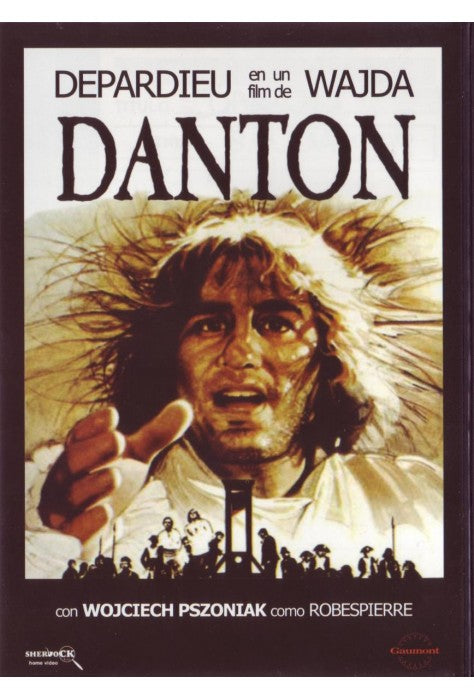

If you want your French class to feel the Revolution rather than read about it, show them Danton. Andrzej Wajda's 1983 film drops students directly into the Terror — Robespierre's France, 1794, when the Revolution is eating its own. Georges Danton, the man who roared the Revolution into being, is now on trial for his life, charged by the very men he helped bring to power. The film is a political thriller dressed in period costume, and it is entirely, uncompromisingly about power: who holds it, what it does to them, and what it costs to speak truth to it.
For French students, the language of Danton is a revelation. The film's French is formal, rhetorical, and historically inflected — the language of public speech, political debate, and legal accusation. Students who have only heard contemporary French conversation suddenly encounter the language in its 18th-century political mode: long sentences, subjunctive mood as a weapon of accusation, and the difference between rhetoric and honesty made audible in every exchange between Danton and Robespierre.
📬 Stay in the loop. New lessons added regularly — join the list to hear when your film is available.
Key Themes for the Classroom
- Revolutionary idealism and its betrayal — Danton believed in what the Revolution promised. Robespierre believes in the same thing, and that's the tragedy. Ask: Qui est le vrai révolutionnaire — Danton ou Robespierre?
- Public speech and political power — Danton's courtroom speech is one of the great performances of political oratory in French film. Students who analyze it learn something about how French encodes conviction.
- The price of principle — Danton knows what speaking honestly will cost him and does it anyway. Ask: Est-ce que le courage de Danton est de la bravoure ou de la folie?
Scene to use: Danton's tribunal speech, when he turns the courtroom into a political performance and forces Robespierre's men to silence him rather than answer him. The French here is elevated, theatrical, and historically rich — every sentence is a lesson in rhetorical structure. After watching, ask: Comment Danton utilise-t-il le langage comme une arme? Students map the rhetorical moves in French.
Low-prep classroom activity: Students write a short political statement in French — from either Danton's position (human, pragmatic, urgent) or Robespierre's (principled, cold, unyielding). They must use formal register, at least one subjunctive clause expressing doubt or demand, and one rhetorical question. The exercise teaches formal French while making students inhabit a political position.
What to listen for: Andrzej Wajda directed the film in French with a Polish cast playing the French roles — and the result is French that is slightly more theatrical than conversational, more declaimed than spoken. This suits the Revolutionary period, but it also means the film's French is unusually clear and formal, which makes it excellent for listening comprehension exercises. Ask students to identify one speech act in Danton's courtroom address — one appeal, one accusation, one declaration — and describe it in French. The rhetorical analysis is also a grammar lesson in the French of formal argument.
The full French lesson plan for Danton is ready at filmarobics.com/products/danton — $29.95.
Students walk away from Danton having heard the French of revolution — and having learned that political language is always, at bottom, the language of power disguised as principle.
The full French lesson plan for Danton is ready at filmarobics.com/products/danton — $29.95.
📬 Stay in the loop. New lessons added regularly — join the list to hear when your film is available.
Students walk away from Danton having heard the French of revolution — and having learned that political language is always, at bottom, the language of power disguised as principle.