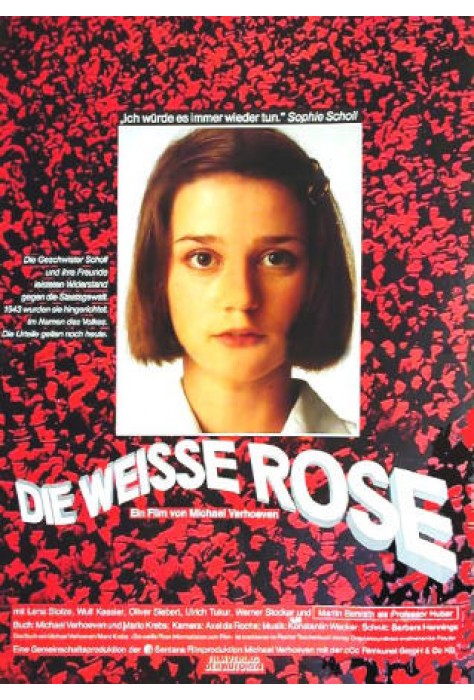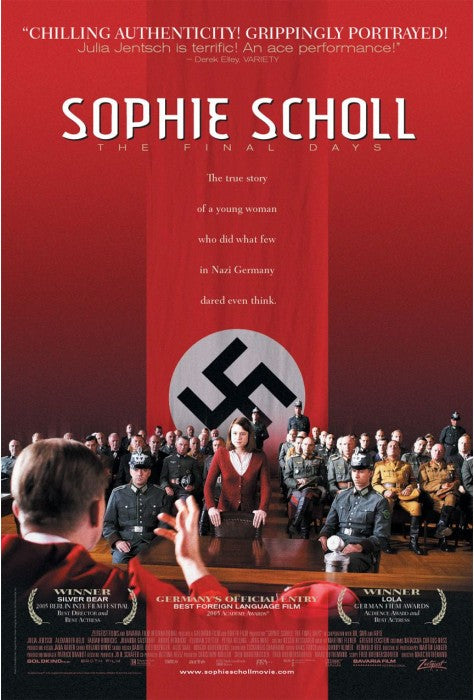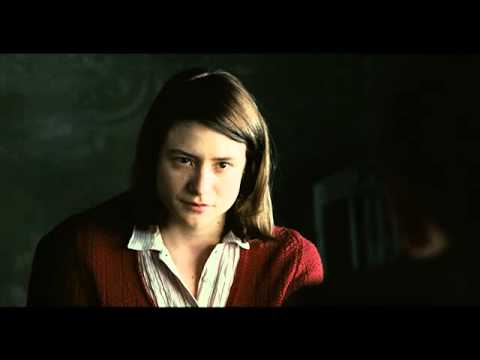
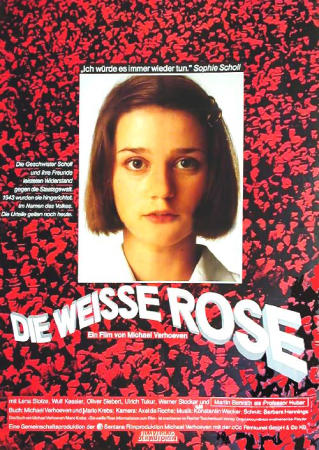
Hans and Sophie Scholl were twenty-four and twenty-one years old when they were arrested for distributing anti-Nazi leaflets at the University of Munich. They were executed four days later. Die Weiße Rose (The White Rose) follows the final months of the Scholl siblings and their friends — the printing of the leaflets, the widening distribution, the arrest, and the trial before Roland Freisler's "People's Court." It is one of the most important German films about resistance, and for an advanced German class, it is essential.
For German students, the film carries particular weight because the White Rose was a student organization — young people not much older than the students watching the film. That proximity matters. When Sophie Scholl argues with Freisler in court, she speaks in complete sentences, with moral clarity, in the face of someone who has the power to execute her. Students hear German used for principled resistance against overwhelming authority, which is one of the most important things a German class can teach.
📬 Stay in the loop. New lessons added regularly — join the list to hear when your film is available.
Key Themes for the Classroom
- Moral courage — The Scholls knew what distributing the leaflets would mean if they were caught. Ask: Warum haben sie es trotzdem getan? What gave them the courage?
- Language as resistance — The leaflets are acts of language — arguments, moral appeals, calls to action. Ask: Was sagen die Flugblätter? What specific arguments do they make, and are those arguments correct?
- The "People's Court" — Freisler's show trial is one of the most documented examples of German judicial language being weaponized for political ends. Ask: Welche Techniken verwendet Freisler, um die Angeklagten zu erniedrigen?
Scene to use: Sophie's interrogation — she's calm, she lies strategically, she's trying to protect the others. The German in this scene is precise, measured, and politically conscious in every word. Ask: Warum antwortet Sophie so ruhig? What is she doing with every answer, and what is she not doing? Students track her strategy in the language itself.
Low-prep classroom activity: Students write a brief White Rose leaflet in German — in the students' style: an argument for resistance, using moral language rather than political slogans. They must make one factual claim about what is happening, one appeal to conscience, and one call to action. The task produces formal German writing with genuine moral stakes.
📅 Teach it when it counts: February 18 is the anniversary of the Scholl siblings' arrest. Teaching Die Weiße Rose in the week surrounding that date connects students to a commemoration that German schools and universities observe annually — the film becomes part of an ongoing conversation rather than a historical artifact. Students who know that the anniversary is observed every year understand something about German collective memory that the film alone doesn't convey.
The full German lesson plan for Die Weiße Rose is ready at filmarobics.com/products/weisse-rose — $29.95.
Students walk away from Die Weiße Rose having heard German used for moral courage in the face of death — and having thought seriously about what language is worth when saying the wrong thing gets you killed.
The full German lesson plan for Die Weiße Rose is ready at filmarobics.com/products/weisse-rose — $29.95.
📬 Stay in the loop. New lessons added regularly — join the list to hear when your film is available.
Students walk away from Die Weiße Rose having heard German used for moral courage in the face of death — and having thought seriously about what language is worth when saying the wrong thing gets you killed.