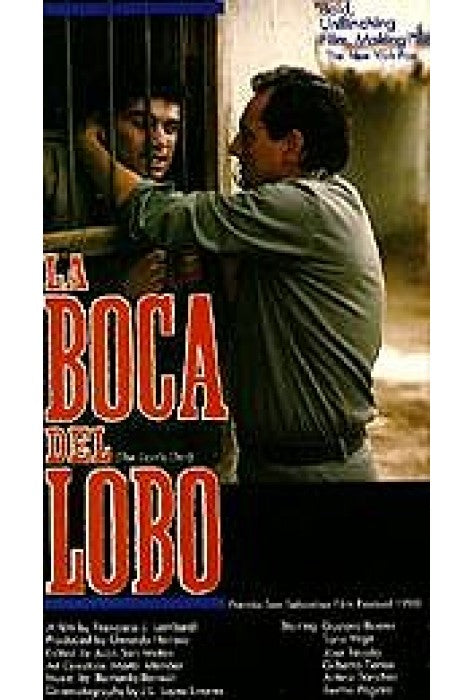
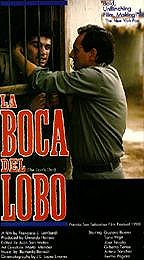
Not every Spanish film belongs in a comfortable classroom. La Boca del Lobo earns its difficulty. Set during Peru's internal conflict in the 1980s — the Shining Path insurgency against the military — the film follows a young soldier stationed in a remote Andean village who watches his commanding officer commit an atrocity and then has to decide what to do about it. The film asks a question that has no clean answer: what do you owe your conscience when your conscience costs you everything?
For an advanced Spanish class, La Boca del Lobo is one of the most important films in the Latin American canon. The language is Andean-inflected Peruvian Spanish — not the clean, neutral Spanish of Mexican or Argentine productions — which gives students exposure to regional variation while the story holds their attention so completely they barely notice they're doing linguistics.
📬 Stay in the loop. New lessons added regularly — join the list to hear when your film is available.
Key Themes for the Classroom
- Moral courage vs. survival — The soldier protagonist knows what happened. His choice about whether to report it structures the entire second half of the film. Ask: ¿Qué habría hecho tú?
- Military authority and ethics — The film depicts with brutal clarity how institutions can normalize violence. The vocabulary of military hierarchy and command appears throughout — and the question of when orders stop being legitimate is central.
- Indigenous communities and the state — The village caught between the army and Sendero Luminoso is a Quechua community. The film doesn't let you forget that. Students encounter the intersection of ethnicity, poverty, and political violence in Spanish.
Scene to use: The commanding officer Roca's first display of authority over the village — a seemingly routine inspection that ends with humiliation. The scene establishes the power dynamic the whole film turns on, and the Spanish vocabulary of authority, deference, and silent resistance is fully present. After watching, ask: ¿Cómo muestra el personaje Roca que tiene el poder? What linguistic and physical signals does he use?
Low-prep classroom activity: The film's central dilemma is a classic whistle-blower scenario. Give students the scenario in Spanish: they witnessed something wrong, but reporting it will put them in danger. Have them write a letter in Spanish — to a superior, a friend, or in a journal — explaining what they saw and what they've decided to do about it. Require a justification in Spanish, not just a decision.
What to listen for: The Spanish of the Andean highlands differs from coastal Peruvian Spanish in rhythm and vocabulary, and the film captures both — the soldiers' regional varieties and the indigenous village's more formal, careful Spanish with its Quechua-influenced rhythms. Students who notice the linguistic difference understand something about Peru's internal geography. Ask: ¿Cómo hablan los soldados comparado con los habitantes del pueblo? The register difference is also a power difference, and identifying it through language is more precise than any historical summary.
The full Spanish lesson plan for La Boca del Lobo is ready at filmarobics.com/products/boca-del-lobo — $29.95.
Students walk away from La Boca del Lobo having grappled with one of Spanish-language cinema's most uncompromising moral arguments — and with the language to make their own case about it.
The full Spanish lesson plan for La Boca del Lobo is ready at filmarobics.com/products/boca-del-lobo — $29.95.
📬 Stay in the loop. New lessons added regularly — join the list to hear when your film is available.
Students walk away from La Boca del Lobo having grappled with one of Spanish-language cinema's most uncompromising moral arguments — and with the language to make their own case about it.