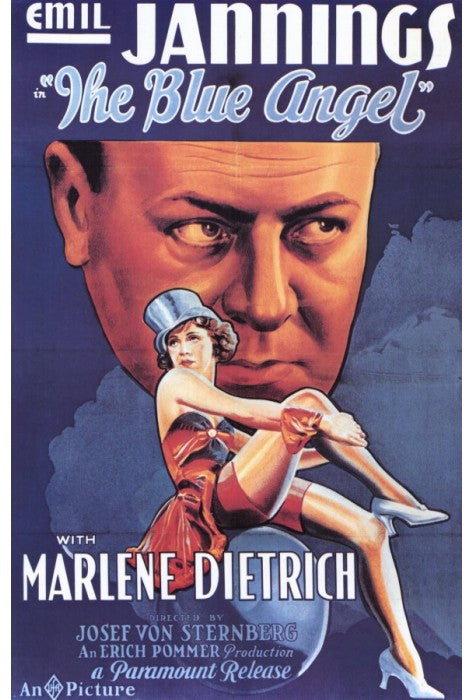
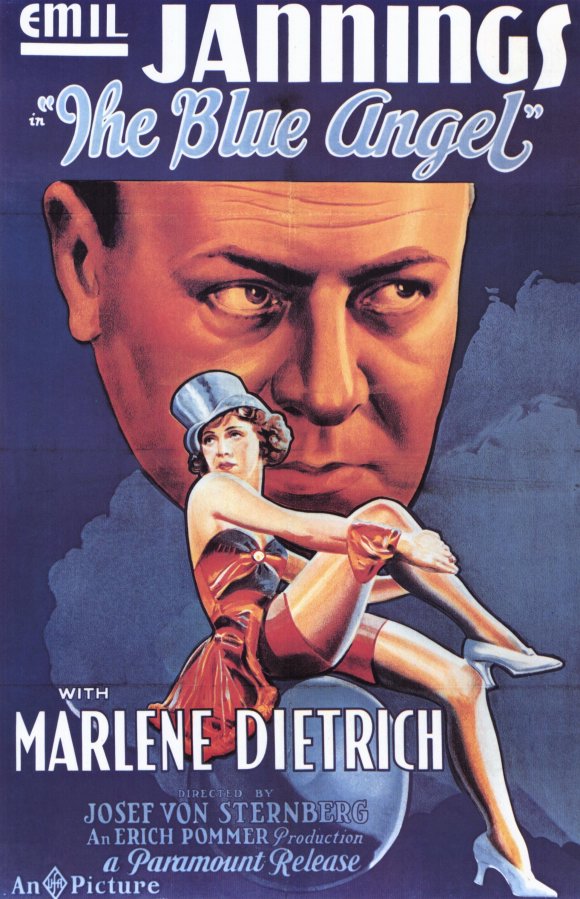
There is a reason professors fall for their students in films — it's because power is seductive in both directions, and Marlene Dietrich playing Lola Lola in Der Blaue Engel understood this completely. The film is from 1930 — Germany's first sound film — and it is a study in humiliation: a respectable professor becomes obsessed with a cabaret singer, loses everything, and ends exactly where you fear he will from the first scene. It is also one of the most linguistically important films in the German catalog, because it captures the sound of Weimar Germany at the moment before the world collapsed.
For German students, the language of Der Blaue Engel is a historical document. The 1930 German — the accent, the rhythm, the specific vocabulary of bourgeois respectability and cabaret life — is different from contemporary German in ways that are audible and instructive. Students who have studied German learn to hear how the language has changed; students who are just beginning encounter the formal, careful German of academic life alongside the loose, provocative language of the stage.
📬 Stay in the loop. New lessons added regularly — join the list to hear when your film is available.
Key Themes for the Classroom
- Obsession and self-destruction — Professor Rath knows what he's doing is wrong and does it anyway. The German vocabulary of rationalization — the ways he explains his choices to himself — is central to the film. Ask: Wie rechtfertigt Professor Rath sein Verhalten?
- Class and performance — Rath represents Wilhelmine respectability; Lola represents Weimar transgression. Their collision is historical as well as personal. Ask: Was symbolisiert jede Figur in der deutschen Geschichte?
- Gender and power — Lola has the power in this relationship and uses it. For 1930, that is extraordinary. Ask: Wie zeigt Lola ihre Macht im Film?
Scene to use: Professor Rath's return to the Blaue Engel — now as Lola's clown husband, forced to perform on the stage where he first saw her. The German in this scene is stripped to its minimum: humiliation needs almost no words. Ask students to identify the moment when Rath understands what is happening, and then ask: Was hätte er anders machen können? That question requires subjunctive mood in a context where students feel the answer viscerally.
Low-prep classroom activity: Students write a short journal entry in German from Professor Rath's perspective — at the midpoint of the film, when things are already going wrong but he hasn't admitted it yet. He must use the present tense for what he believes and the past tense for what actually happened. The contrast between these two voices is a grammar lesson hidden inside a character study.
What to listen for: Dietrich's German in this film is the German that launched an international career — throaty, direct, and absolutely confident. Her Lola Lola speaks the German of the cabaret stage: economical, rhythmic, and completely without apology. Jannings's Professor Rath speaks the German of the academy — formal, elaborate, and ultimately helpless. Ask students: Warum ist Lolas Deutsch stärker als das Deutsch des Professors? The question has a linguistic answer and a moral answer simultaneously, and finding both teaches students that power and language are always connected.
The full German lesson plan for Der Blaue Engel is ready at filmarobics.com/products/blaue-engel — $29.95.
Students walk away from Der Blaue Engel having heard German at the moment Weimar Germany was ending — and having understood that obsession and self-destruction sound very precise in any language.
The full German lesson plan for Der Blaue Engel is ready at filmarobics.com/products/blaue-engel — $29.95.
📬 Stay in the loop. New lessons added regularly — join the list to hear when your film is available.
Students walk away from Der Blaue Engel having heard German at the moment Weimar Germany was ending — and having understood that obsession and self-destruction sound very precise in any language.