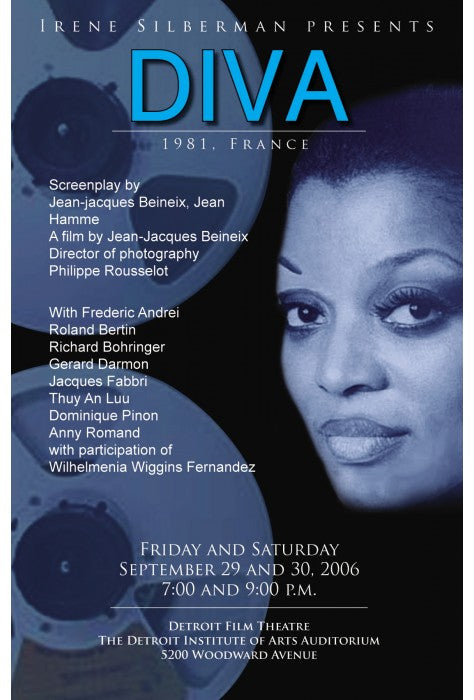

Jules is a young Parisian postman who is obsessively in love with an opera singer named Cynthia Hawkins — who has never allowed her voice to be recorded. He secretly records her concert. By accident, he also picks up a tape that reveals a police corruption network, and suddenly he is being chased by both the corrupt police and Taiwanese bootleggers, while also trying to get Cynthia to forgive him. Diva is a thriller disguised as a meditation on beauty, obsession, and the ethics of art — and it was 1981's most stylish argument for why Paris is the most cinematic city on earth.
Diva (Jean-Jacques Beineix, 1981) launched the Cinéma du look movement — a French New Wave successor defined by visual excess and emotional intensity. The French is urban, contemporary, and fast; the film's Paris is stylized but real. For students who find French cinema too slow or too literary, Diva is the gateway film: it moves at thriller pace while delivering genuine cultural and linguistic content.
📬 Stay in the loop. New lessons added regularly — join the list to hear when your film is available.
Key Themes for the Classroom
- Art and ownership: Jules records Cynthia without permission because he loves her voice more than she does. Ask students: who owns a piece of art — the creator, or the person who loves it most? What French vocabulary addresses this: l'auteur, le droit, l'interprète, l'enregistrement, le consentement?
- Obsession and collection: Jules's apartment is full of Cynthia's records, posters, and now his illegal recording. Discuss the psychology of collecting — when does admiration become possession?
- Paris as aesthetic object: Beineix shoots Paris as if it were a fashion magazine. Ask students: what does that vision of the city serve? What does it hide? What is the real Paris underneath the style?
One Scene to Use
The opera recording sequence — Jules smuggling his equipment into the concert hall, recording Cynthia while weeping — combines theft and devotion in a single act. After watching it, ask students: what is Jules's action — a crime, an act of love, or both? Write the argument in French. This is a modal exercise in disguise: il devrait, il aurait dû, il faut bien que.
One Low-Prep Classroom Activity
Give students five French words for types of music and musical experience: l'opéra, la partition, l'aria, la voix, l'enregistrement. Then five French words for obsession and collection: la passion, collectionner, posséder, conserver, idolâtrer. They write three sentences that combine one word from each list. The resulting sentences are almost always surprising — and the constraint produces creative French.
The full French lesson plan for Diva is ready at filmarobics.com/products/diva — $29.95.
📬 Stay in the loop. New lessons added regularly — join the list to hear when your film is available.
Students who work through this unit leave with the French of contemporary Paris — stylish, fast, morally complicated — and with a vocabulary for talking about what we owe the things and people we love.