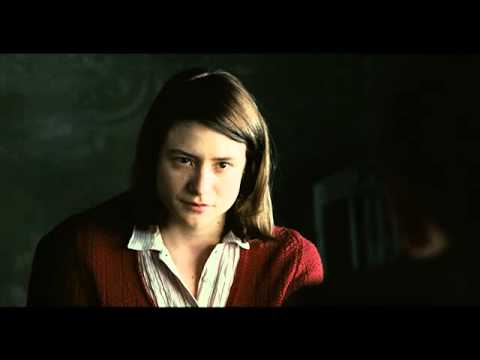

On the night the Berlin Wall goes up — August 1961 — a group of young people tries to escape from East to West. Most make it. Sophie does. Konrad doesn't. He is left on the Eastern side, watching the truck carrying Sophie disappear into the West. Das Versprechen (The Promise) then follows their separate lives across thirty years — two people who loved each other, separated by a wall neither of them built, doing the best they can. It is one of the most quietly devastating films about Germany's division in the catalog, and it belongs in any advanced German class studying the GDR.
For German students, the film offers three decades of German history through intimate personal experience — which is the only way the scale of that history becomes comprehensible. The language spans different eras of German: the stilted, careful East German official speech of the 1960s and 1970s, and the looser, reunification-era German of the 1990s. Students hear how a political system shapes even the texture of a language.
📬 Stay in the loop. New lessons added regularly — join the list to hear when your film is available.
Key Themes for the Classroom
- Divided lives — Sophie and Konrad meet again, across the decades, as different people. Ask: Wie haben sich die beiden verändert? And then: Wer ist verantwortlich für diese Veränderungen?
- German division — The Wall is not backdrop but protagonist. Students encounter the mechanics of separation — travel restrictions, surveillance, the East German state — through people who lived inside it.
- Love and time — The film asks what a promise means when circumstances beyond your control make it impossible to keep. Ask: Ist Konrad schuldig, das Versprechen zu brechen? Was hätte er anders machen können?
Scene to use: The 1968 meeting — Sophie and Konrad reunite in Prague during a scientific conference, the brief window when travel was possible. They have a few days together. They both know it will end. The German in this scene is tender, adult, and full of the specific vocabulary of people who have learned not to say everything they feel — because they've had to. Ask: Was sagen Sophie und Konrad nicht in dieser Szene?
Low-prep classroom activity: Students write a brief letter in German — Konrad writing to Sophie from East Berlin, years after the Wall goes up, knowing she may never receive it. He must describe what his life is like, what he is not allowed to say, and one thing he hopes she knows without being told. The constraint requires students to write in formal past and present German with deliberate omission — which is advanced register work.
📅 Teach it when it counts: November 9 is the anniversary of the Berlin Wall's fall in 1989 — the event that ends the film, which has been thirty years coming. Teaching Das Versprechen in November gives students the before and the after in a single film: the night the wall went up, and the night it came down, and everything that happened in between for two people who loved each other and couldn't share a country. Students who know the date understand why the ending is what it is.
The full German lesson plan for Das Versprechen is ready at filmarobics.com/products/versprechen — $29.95.
Students walk away from Das Versprechen having understood German division not as a political event but as a personal one — and with the German to talk about promises, time, and the things a wall cannot quite prevent.
The full German lesson plan for Das Versprechen is ready at filmarobics.com/products/versprechen — $29.95.
📬 Stay in the loop. New lessons added regularly — join the list to hear when your film is available.
Students walk away from Das Versprechen having understood German division not as a political event but as a personal one — and with the German to talk about promises, time, and the things a wall cannot quite prevent.