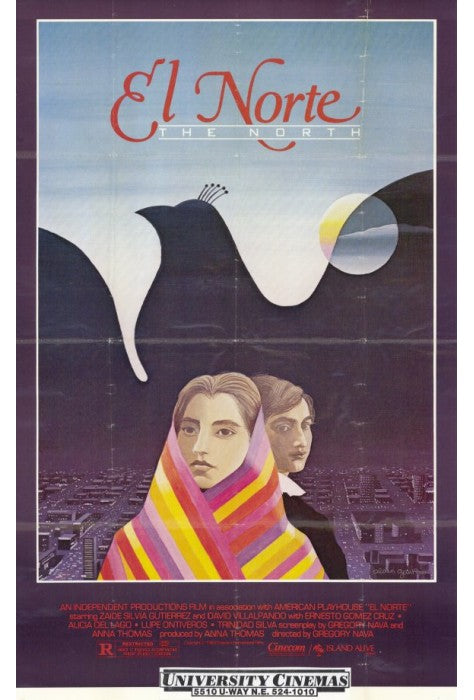
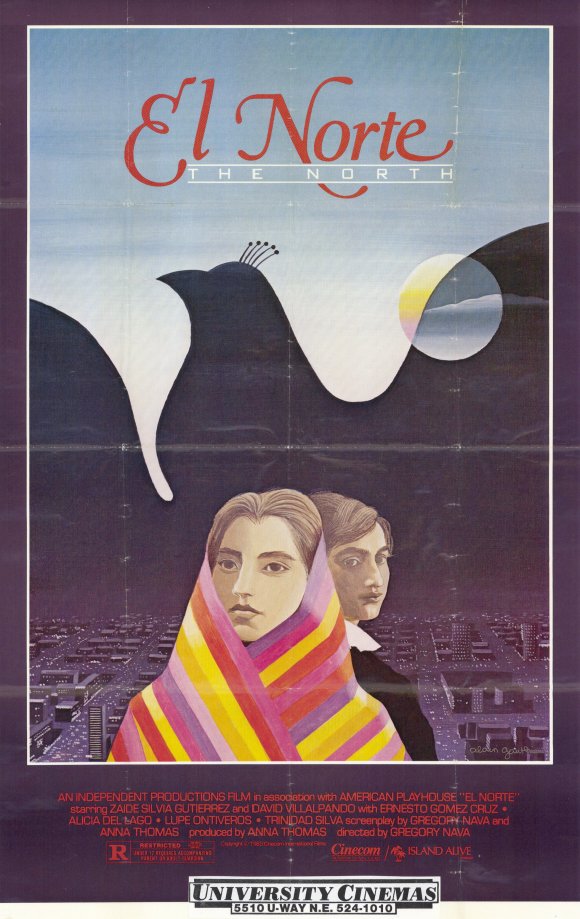
Rosa and Enrique Xuncax are Guatemalan. Their father was killed for organizing indigenous peasants. Their mother has disappeared. They make the decision — or the decision is made for them — to go north: through Mexico, through the border, to Los Angeles. Gregory Nava's film follows them every step of the way, and it does not romanticize a single step. Your students will watch this film and understand something about the U.S.-Mexico border, about Guatemala, about the cost of survival, that no news article has ever made as immediate.
El Norte (Gregory Nava, 1983) is a landmark of American cinema and one of the essential Spanish-language teaching texts because it covers three distinct linguistic and cultural registers: the Mayan-inflected Spanish of highland Guatemala, the Mexican Spanish of the coyote networks, and the Los Angeles Spanish of the immigrant community. Students hear Spanish used as a tool of survival, not as a classroom exercise — and that changes how they hear it.
📬 Stay in the loop. New lessons added regularly — join the list to hear when your film is available.
Key Themes for the Classroom
- The price of "El Norte": Rosa and Enrique lose everything to reach a place where they are invisible. Ask students: what does the American Dream cost the people who pursue it most desperately? What Spanish vocabulary describes that cost: el sacrificio, el precio, el sueño, la ilusión?
- Indigenous identity and Spanish: Rosa and Enrique speak a Mayan language as their first language; Spanish is already their second. Discuss what it means to migrate in a language that is not your mother tongue.
- The border as both physical and psychological: The film's border-crossing sequence — through a sewer tunnel filled with rats — is one of cinema's most visceral depictions of what human beings will endure for hope. Ask students: what does a border do to the people who cross it illegally? What vocabulary describes that transformation?
- America as seen from below: In Los Angeles, Rosa and Enrique do work that Americans won't do and live lives Americans don't see. Ask students: whose America is this? Whose isn't?
One Scene to Use
The scene in the sewer tunnel — rats, filth, darkness, the sound of Enrique trying to calm Rosa in Spanish while they crawl toward the U.S. — is unforgettable. It's also linguistically stripped to essentials: short sentences, imperatives, words of encouragement. After watching it, give students five minutes to write those words in Spanish: what would you say to someone you love in a moment of shared terror?
One Low-Prep Classroom Activity
Give students a map showing the geography of the film: Huehuetenango (Guatemala) → Mexico City → Tijuana → Los Angeles. Ask them to trace the route and estimate distance. Then ask: if you could only bring what you could carry, what would you bring? Write the list in Spanish. The activity is vocabulary (packing items, survival supplies) that connects to the film's stakes.
The full Spanish lesson plan for El Norte is ready at filmarobics.com/products/el-norte — $29.95.
📬 Stay in the loop. New lessons added regularly — join the list to hear when your film is available.
Students who work through this unit leave with the Spanish of survival — the language as it sounds when it is the only tool you have left.