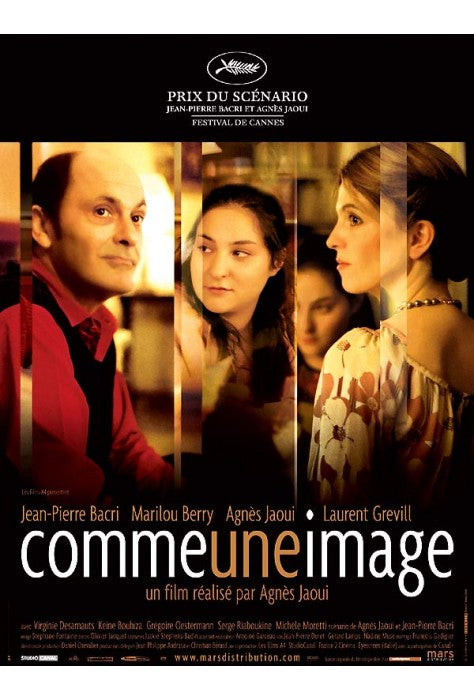

Lolita is twenty, smart, and invisible. Not invisible the way introverts are invisible, but invisible the way daughters of famous men are invisible — constantly in her father's orbit, constantly assessed in relation to him, constantly not quite seen as herself. Agnès Jaoui's Comme une image (Look at Me) is about what that does to a person, told with the kind of observational precision that makes every scene feel like something you've watched happen in real life and never quite named.
For French students, the film is a gift in two ways. First, the language: contemporary Parisian French, upper-middle-class register, sharp and layered. The conversations in the film are the kind that seem polite on the surface and are devastatingly rude underneath — which is exactly the kind of French that requires students to listen for what isn't being said. Second, the setting: the literary and artistic milieu of contemporary Paris, which gives students access to a specific French social world with its own codes and conventions.
📬 Stay in the loop. New lessons added regularly — join the list to hear when your film is available.
Key Themes for the Classroom
- Recognition and invisibility — Lolita's father, Étienne, is celebrated everywhere and attentive nowhere. Ask: Comment Étienne parle-t-il à Lolita différemment des autres? Students identify the linguistic markers of dismissal.
- Artistic ambition and self-doubt — Lolita wants to sing, but she doesn't believe in herself enough to try fully. The film tracks this with painful accuracy. Ask: Qu'est-ce qui empêche Lolita de croire en elle-même?
- Flattery and sincerity — Several characters in the film praise Étienne for instrumental reasons. Learning to hear the difference between sincere and instrumental French compliments is a real sociolinguistic skill.
Scene to use: Étienne at a dinner party, performing brilliance while ignoring his daughter across the table. The French social performance here — the interrupting, the flattery, the way status is negotiated through conversational dominance — is textbook French sociolinguistics made visible. After watching, ask: Comment Étienne monopolise-t-il la conversation? Students map the conversational moves he makes.
Low-prep classroom activity: Students write a short dialogue in French between Lolita and a classmate after the dinner party. Lolita must respond to questions about her father without saying anything negative — she's learned to be guarded — but one honest thing must slip through. The constraint requires students to write indirect, self-protective French, which is advanced and realistic.
What to listen for: Agnès Jaoui's dialogue — she co-wrote the script — is built on what people don't say. Characters speak around the things that matter most to them; the important conversations happen in the gaps between the stated ones. Ask students to identify one scene where the real subject of the conversation is not what is being said, and explain in French what both people actually want from the exchange. The pragmatic analysis produces sophisticated French and attentive viewing simultaneously.
The full French lesson plan for Comme une image is ready at filmarobics.com/products/comme-une-image — $29.95.
Students walk away from Comme une image with the French to talk about recognition, ambition, and the specific cruelty of being overlooked by someone who should see you — which turns out to be vocabulary everyone needs eventually.
The full French lesson plan for Comme une image is ready at filmarobics.com/products/comme-une-image — $29.95.
📬 Stay in the loop. New lessons added regularly — join the list to hear when your film is available.
Students walk away from Comme une image with the French to talk about recognition, ambition, and the specific cruelty of being overlooked by someone who should see you — which turns out to be vocabulary everyone needs eventually.