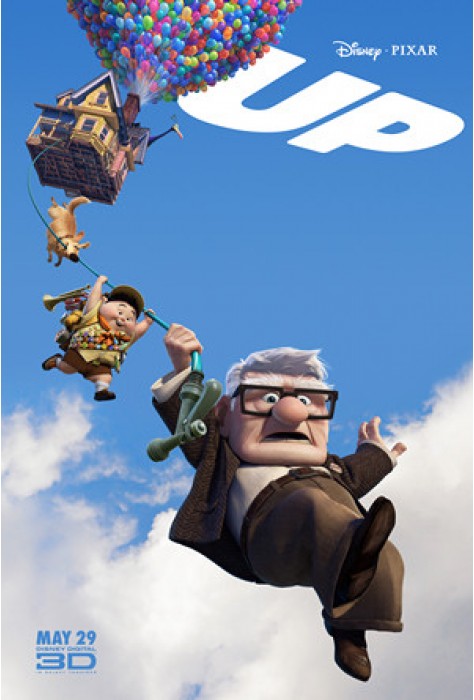

The first ten minutes of Up contain no dialogue worth speaking of — and yet they communicate grief, love, and loss more completely than most films manage in two hours. That opening is the reason language teachers keep coming back to this film. Students feel the story before they understand a single word, and then when the language arrives, it arrives inside meaning they've already built.
📬 Stay in the loop. New lessons added regularly — join the list to hear when your film is available.
🇪🇸 Teach It in Spanish — Up
In Spanish, Carl Fredricksen's grudging relationship with Russell is a slow masterclass in register shift. At the beginning, Carl's Spanish is formal, clipped, and dismissive — the language of someone who has closed himself off. Over the course of the film, his speech warms. Those incremental shifts are audible to students even when they can't name the mechanism. By the end, they've internalized what emotional openness sounds like in Spanish without ever drilling an adjective list.
The scene to use: Carl and Russell at the top of the falls, the night before they reach Paradise Falls. Russell talks about his father — a simple, heartbreaking monologue about missing someone who isn't there. Carl says almost nothing. But his silence in Spanish is loaded: students can analyze what he's choosing NOT to say, which is a sophisticated comprehension task. Ask: ¿Por qué no responde Carl? What does his silence tell us? The answers stay with a class.
The full Spanish lesson plan for Up is at filmarobics.com/products/up — $29.95.
🇫🇷 Teach It in French — Là-Haut
The French dub of Là-Haut is warm, precisely cast, and particularly strong in its handling of the film's quieter emotional moments. French students encounter a range of registers: Carl's stiff, careful French; Russell's enthusiastic, sometimes incorrect French (he's a child — his grammar is imperfect in the dub, which is pedagogically valuable); and the villain Muntz's theatrical, over-confident speech that students immediately recognize as dangerous without being told so.
The scene to use: the adventure book sequence, where Ellie explains her dream and Russell shows Carl his scouting badges. The vocabulary of aspiration, achievement, and memory in French is dense in this section — and the emotional register is high enough that students absorb it without resistance. Pause after the adventure book scene and ask: Comment Ellie décrit-elle ses rêves? Students then write their own adventure book page in French, describing one thing they want to do before they grow up. The assignment is universal. The language is specific.
The full French lesson plan for Là-Haut is at filmarobics.com/products/la-haut — $29.95.
📅 Teach It When It Counts
- Grief and resilience units: The film's opening sequence is the most economical representation of loss in animated film — and the rest of the film is about what we do with grief. Works in any semester where these themes are relevant.
- End of year (May–June): The adventure theme — making good on a promise, before it's too late — resonates strongly with students facing their own transitions and endings.
📬 Stay in the loop. New lessons added regularly — join the list to hear when your film is available.
Students leave Up having practiced the language of grief, adventure, and unexpected friendship — in Spanish or French, carried by a story that earns every one of its emotions.