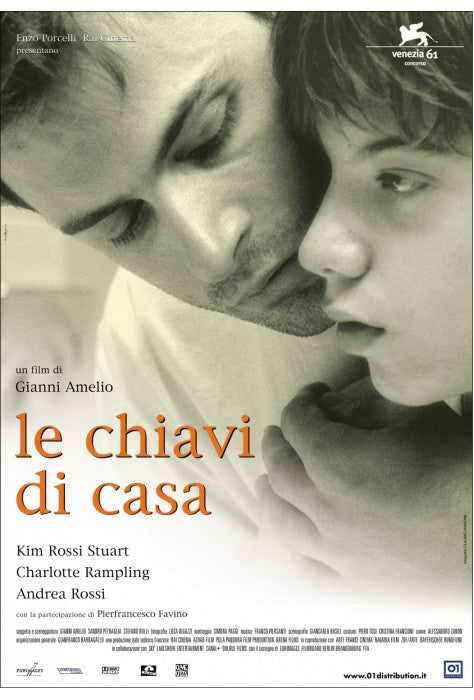
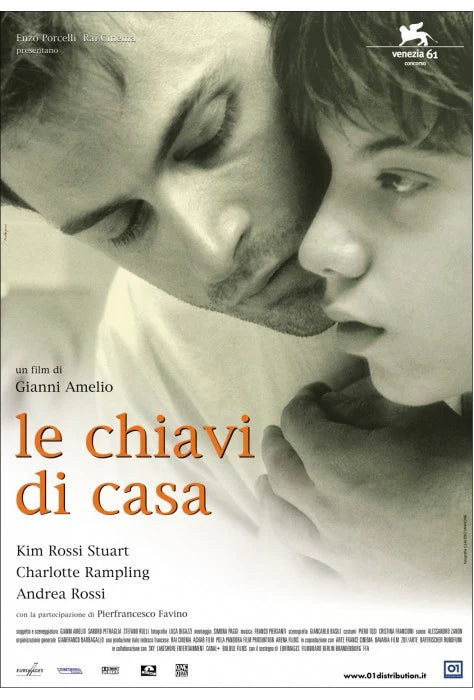
When Gianni finally meets his teenage son Paolo for the first time — a boy he abandoned at birth — he has no idea how to be a father. Neither does the film, and that's its honesty. Chiavi di Casa (The Keys to the House) is not a redemption story with a clean arc. It's a portrait of a man fumbling toward something he doesn't have a script for, with a disabled son who, it turns out, has a clearer sense of who he is than his father does. The film is tender, uncomfortable, and completely authentic.
For Italian students, the film's language is contemporary spoken Italian — warm, halting, and emotionally transparent. Gianni's Italian is full of incomplete sentences and false starts; he's a man who doesn't know what to say, and the film lets that show in the language itself. Paolo's Italian, by contrast, is direct and concrete — the language of someone who has learned to say exactly what he means because nobody has always listened. The contrast is both human and instructive.
📬 Stay in the loop. New lessons added regularly — join the list to hear when your film is available.
Key Themes for the Classroom
- Parenthood and responsibility — Gianni abandoned his son at birth and has lived with that choice. The film doesn't judge him directly but doesn't let him off the hook either. Ask: Cosa deve Gianni a Paolo?
- Disability and dignity — Paolo has disabilities, but the film shows him as a full character — funny, stubborn, capable of depth — rather than as a symbol or a lesson. Students respond to this.
- What fathers and sons owe each other — The film's central question is whether biology creates obligation, and what love looks like when you missed the beginning. The Italian vocabulary of obligation, affection, and forgiveness runs throughout.
Scene to use: Gianni and Paolo's first night in the hospital in Berlin, early in the film — both of them uncertain, neither willing to admit how frightened they are. The Italian is quiet, careful, full of things not said. Ask students: Cosa non dicono i due personaggi in questa scena? Then: Perché non lo dicono? Those two questions require comprehension and inference simultaneously.
Low-prep classroom activity: Students write a brief letter in Italian from Gianni to Paolo — not an apology, exactly, but an explanation. Gianni must use at least one expression of regret, one statement about what he hopes for, and one honest admission of what he doesn't know how to say. The constraint produces genuine writing and surfaces the Italian of emotional vulnerability.
What to listen for: Gianni speaks the Italian of a man who has no script — who is making up fatherhood as he goes and knows it. His sentences frequently start with confidence and end with uncertainty; he says things he immediately takes back; he asks questions he doesn't know how to finish. Paolo, by contrast, knows exactly what he wants to say — he has thought about his life more than his father has. Ask students: Chi parla più chiaramente — Gianni o Paolo? The answer — that the disabled character is more linguistically coherent than the non-disabled parent — is the film's argument about who is actually struggling.
The full Italian lesson plan for Chiavi di Casa is ready at filmarobics.com/products/chiavi-di-casa — $29.95.
Students walk away from Chiavi di Casa having heard Italian spoken by people doing hard things — and with a vocabulary for what we owe each other when we've been absent too long.
The full Italian lesson plan for Chiavi di Casa is ready at filmarobics.com/products/chiavi-di-casa — $29.95.
📬 Stay in the loop. New lessons added regularly — join the list to hear when your film is available.
Students walk away from Chiavi di Casa having heard Italian spoken by people doing hard things — and with a vocabulary for what we owe each other when we've been absent too long.