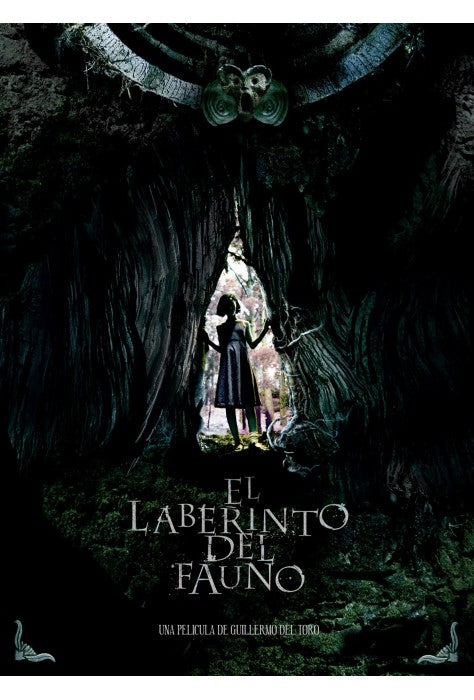
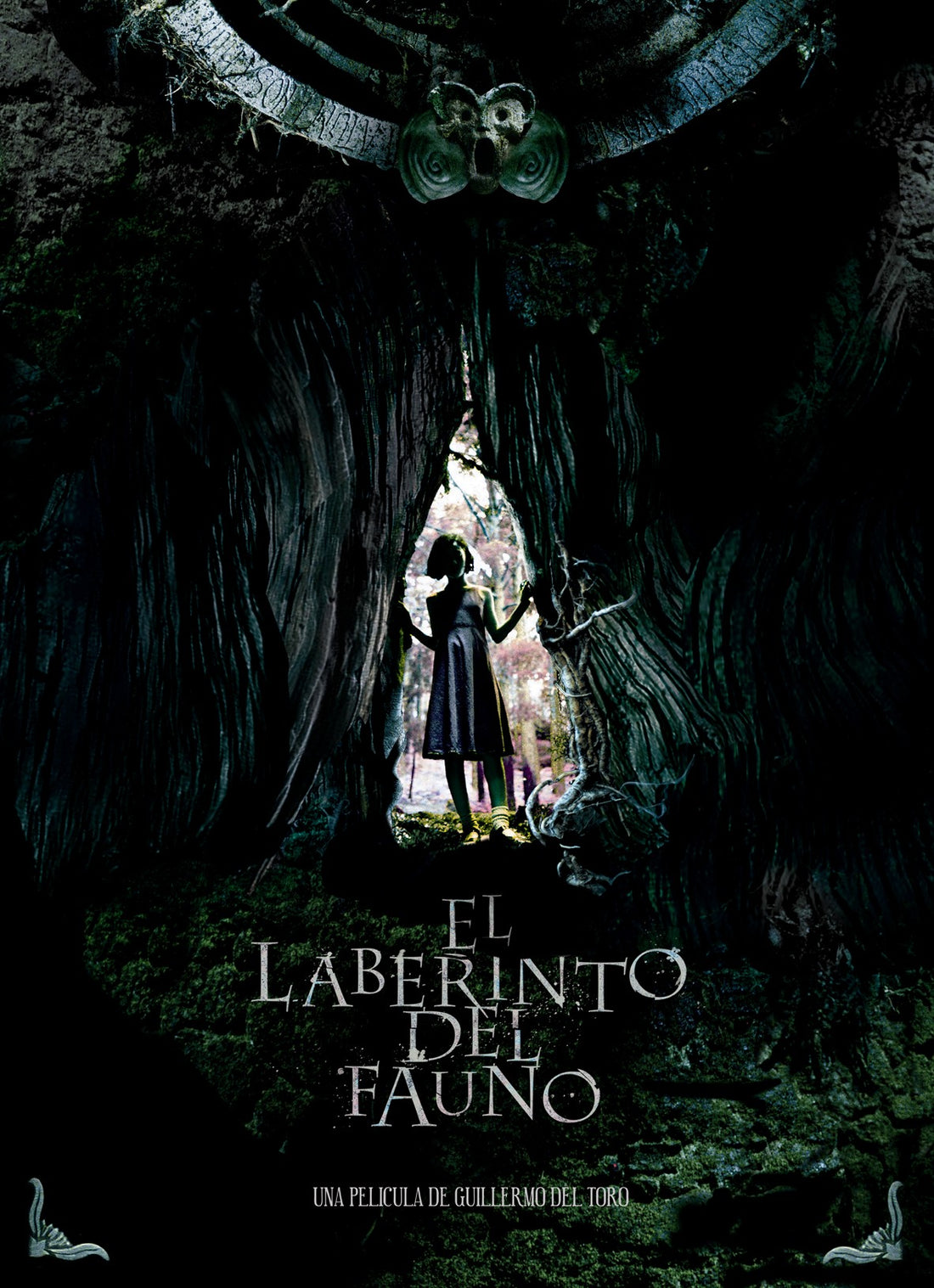
Ofelia is eleven years old. Her new stepfather is a fascist captain who terrifies everyone around him. The world she lives in is grinding and grey and dangerous. So she follows a fairy to a labyrinth, where a faun tells her she is a princess, and that if she completes three tasks, she can return to her kingdom. Your students will debate — seriously, genuinely, heatedly — whether the fantasy world is real or whether it's the coping mechanism of a traumatized child. There is no right answer, and that's what makes this film teach.
El Laberinto del Fauno (Guillermo del Toro, 2006) is set in 1944 fascist Spain and uses two distinct registers with great clarity: the harsh, militaristic Spanish of Captain Vidal's world and the lyrical, mythic Spanish of the fairy tale sequences. Both are spoken clearly, at a pace that rewards careful listening. Fantasy vocabulary — el fauno, el laberinto, la princesa, la tarea, la magia — layers naturally onto historical vocabulary, and students absorb both.
📬 Stay in the loop. New lessons added regularly — join the list to hear when your film is available.
Key Themes for the Classroom
- Imagination as resistance: Ofelia creates an inner life that the real world cannot reach. Ask students: is that a form of escape or a form of survival? Where is the line? This is a discussion that works equally well in Spanish or in English — and the Spanish version is harder and more rewarding.
- Fascism and family: Captain Vidal is Ofelia's stepfather. He is also a monster. The film refuses to make this simple — Ofelia's mother loves him, or at least needs him. Ask students: what does the film say about what fear does to love?
- Postwar Spain under Franco: Most students know nothing about the Spanish Civil War or the Francoist period. This film is an extraordinary entry point. Use the historical sequences to teach the vocabulary of political violence: el maquis, la resistencia, el régimen, la represión.
- The real vs. the imagined: Del Toro designed the film so that both readings — fantasy is real, fantasy is coping — are internally consistent. Ask students to pick a side and defend it using specific scenes from the film. In Spanish.
One Scene to Use
The Pale Man sequence — Ofelia enters a banquet hall, is warned not to eat, eats anyway, and wakes the Pale Man, an eyeless creature who places his eyes in his palms and hunts her — is one of the most viscerally frightening scenes in modern cinema. But it's also a clear moral allegory: Ofelia transgresses a rule and faces the consequences. Ask students: what does the Pale Man represent? What Spanish vocabulary describes the fear in this scene — and the moral weight of the transgression?
One Low-Prep Classroom Activity
The faun gives Ofelia three tasks, each with rules. Task one: retrieve a key from a giant toad's stomach. Task two: retrieve a dagger from the Pale Man's banquet. Task three: bring her baby brother to the labyrinth. Before watching each task sequence, give students the rule in Spanish and ask them to predict what will go wrong. The prediction exercise forces students to engage with the conditional — si Ofelia come, entonces... — in a narrative context that makes the grammar feel urgent.
The full Spanish lesson plan for El Laberinto del Fauno is ready at filmarobics.com/products/el-laberinto-del-fauno — $29.95.
📬 Stay in the loop. New lessons added regularly — join the list to hear when your film is available.
Students who work through this unit leave with vocabulary for two worlds at once — the brutal one and the imagined one — and the understanding that language is what makes both of them real.