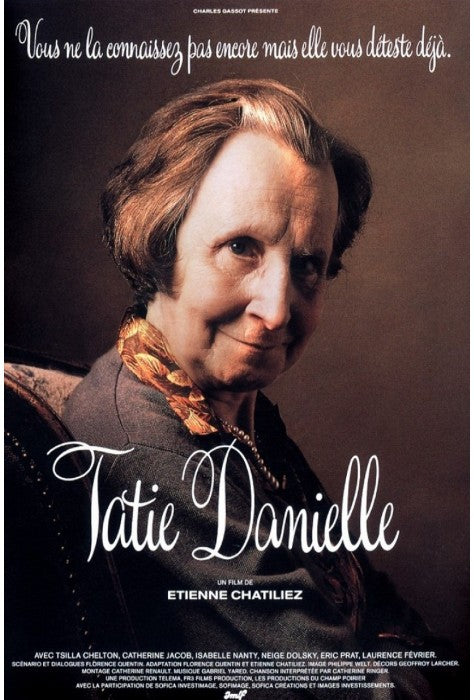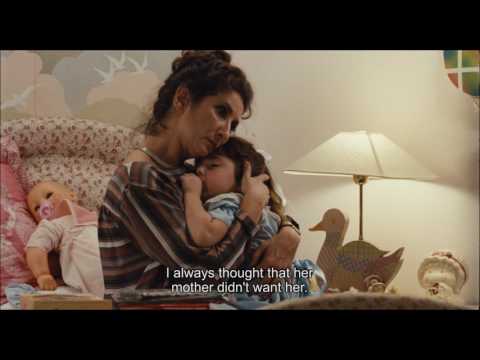

You will not like Tatie Danielle. That's the point. Étienne Chatiliez's 1990 comedy gives you an 82-year-old woman who is mean, manipulative, and completely without remorse, and then asks you to spend ninety minutes with her. What makes the film teach so well is that Danielle is also, in a specific and uncomfortable way, understandable: she is old, she is dependent, and she has decided that being awful is the only power she has left. Students who make that connection never forget the film.
For French students, the film offers contemporary French of family life — the polite, strained register of a family that is trying very hard to manage someone they cannot manage. The contrast between the family's careful courtesy and Danielle's blunt malice is linguistically rich: students hear French being used to maintain social order and French being used to destroy it in the same scenes. The film also models the specific French of elderly care, family obligation, and the particular cruelty of dependence.
📬 Stay in the loop. New lessons added regularly — join the list to hear when your film is available.
Key Themes for the Classroom
- Power and dependence — Danielle is physically dependent but socially dominant. Ask: Comment Tatie Danielle maintient-elle son pouvoir malgré sa dépendance? What specific tactics does she use?
- Family obligation — The family takes her in because they must. Ask: Que doivent les enfants et petits-enfants à leurs vieux parents? Is there a limit?
- Authenticity vs. social performance — Everyone in the film except Danielle performs kindness. She refuses. Ask: Qui est plus honnête — Tatie Danielle ou sa famille?
Scene to use: Danielle's sabotage of her nephew's apartment — the quiet, methodical destruction she achieves while the family is away. The scene has no dialogue, but what comes after it — the family's stunned French response — is a masterclass in how French speakers manage outrage with politeness. Ask: Pourquoi la famille ne crie-t-elle pas? What is the French social code that prevents direct confrontation?
Low-prep classroom activity: Students write a brief complaint in French — from one member of the family to another, about Tatie Danielle. They must be completely honest about what she did, use formal polite French throughout, and end with a proposed course of action that is also extremely polite. The constraint produces the specific French of managing a difficult situation without causing more conflict.
What to listen for: Danielle's French is fascinating precisely because it is blunt. She says what she means, directly, with no softening — which exposes how much work the rest of French social language is doing. Ask students to identify moments when another character softens a statement that could have been made directly. Then: why? What social rule requires the softening? The analysis teaches students the pragmatic infrastructure of French politeness, which is only fully visible when someone deliberately refuses to use it.
What to listen for: Danielle's French is fascinating precisely because it is blunt. She says what she means, directly, with no softening — which exposes how much work the rest of French social language is doing. Ask students to identify moments when another character softens a statement that could have been made directly. Then: why? What social rule requires the softening? The analysis teaches students the pragmatic infrastructure of French politeness, which is only fully visible when someone deliberately refuses to use it.
The full French lesson plan for Tatie Danielle is ready at filmarobics.com/products/tatie-danielle — $29.95.
Students walk away from Tatie Danielle having heard French used for both impeccable courtesy and spectacular malice — and having thought seriously about what families actually owe each other when one person refuses to cooperate.
The full French lesson plan for Tatie Danielle is ready at filmarobics.com/products/tatie-danielle — $29.95.
📬 Stay in the loop. New lessons added regularly — join the list to hear when your film is available.
Students walk away from Tatie Danielle having heard French used for both impeccable courtesy and spectacular malice — and having thought seriously about what families actually owe each other when one person refuses to cooperate.