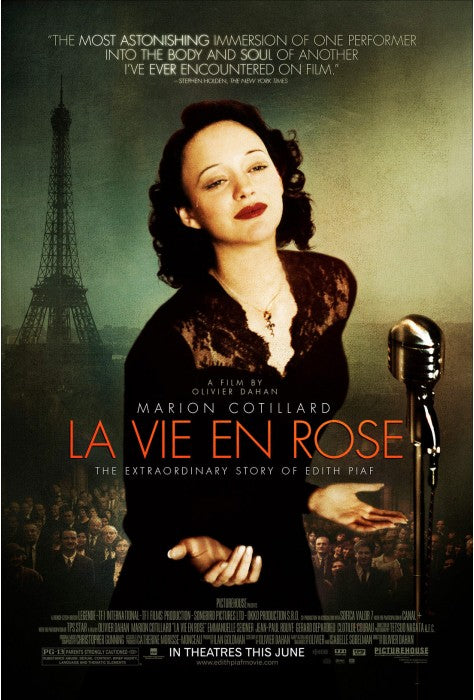
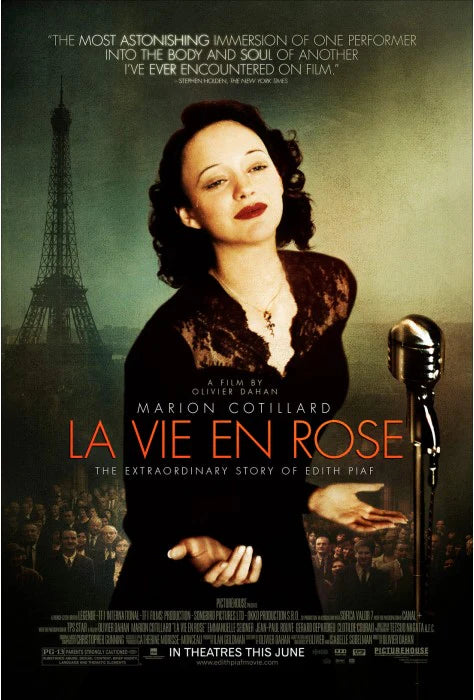
Édith Piaf's life was genuinely extraordinary, and Oliver Dahan's film captures the extremity of it without softening any of it: the poverty, the abandonment, the brothel childhood, the drugs, the love, the voice that became the voice of France for a generation. Marion Cotillard won the Academy Award for her performance, and for a French class, the film is one of the most culturally essential available — Piaf is as embedded in French identity as Molière or Voltaire, and her songs give students access to a French that is simultaneously historical and alive.
For French students, the film offers the French of three different eras — the working-class Paris of the 1920s, the cabaret world of the 1940s, and the exhausted American late career of the 1950s — in a voice that makes every register completely distinct. Students who know "La Vie en Rose" or "Non, je ne regrette rien" encounter those songs here with the context that makes them mean something beyond the melody.
📬 Stay in the loop. New lessons added regularly — join the list to hear when your film is available.
Key Themes for the Classroom
- Art and suffering — Piaf's voice came from a life of genuine suffering. Ask: Est-ce que la souffrance est nécessaire pour créer de l'art? And: Is it fair to celebrate the art if it cost this much?
- French working-class life — Piaf came from the streets of Belleville, and the French of that world — rough, warm, specific — runs through the early sections of the film. Ask: Comment la jeunesse de Piaf se reflète-t-elle dans sa musique?
- Love and loss — The film's emotional center is her love for Marcel Cerdan and his death. Ask: Comment Piaf exprime-t-elle son amour? And: What does "Non, je ne regrette rien" actually mean in the context of her life?
Scene to use: The first performance of "La Vie en Rose" — Piaf discovering the song and understanding what it is. The French of musical revelation is fully present, and the sequence shows students what French musical performance looks like when it's entirely and completely genuine. Ask: Comment Piaf change-t-elle quand elle chante? What does performance do to her?
Low-prep classroom activity: Students write a brief "liner notes" entry in French — for an imaginary album of Piaf's songs. They must choose one song they've heard, explain what it's about, describe what Piaf's voice does in it, and say why it would matter to French listeners in 1946. The task produces descriptive French writing with cultural and historical grounding.
What to listen for: Marion Cotillard performed all of Piaf's songs live during filming — and the result is French chanson as a full-body language experience. The vocabulary of Piaf's songs — l'amour, la souffrance, le destin, la rue — is the vocabulary of French Romanticism stripped to its essence. Ask students to choose one Piaf song featured in the film, transcribe one verse, and explain in French what it means to them personally. The translation is not from French to English but from music to meaning in French — a distinctly advanced task.
The full French lesson plan for La Vie en Rose is ready at filmarobics.com/products/la-vie-en-rose — $29.95.
Students walk away from La Vie en Rose having heard French at its most musical and most specific — and having understood why Édith Piaf is still, decades after her death, what France sounds like to the world.
The full French lesson plan for La Vie en Rose is ready at filmarobics.com/products/la-vie-en-rose — $29.95.
📬 Stay in the loop. New lessons added regularly — join the list to hear when your film is available.
Students walk away from La Vie en Rose having heard French at its most musical and most specific — and having understood why Édith Piaf is still, decades after her death, what France sounds like to the world.