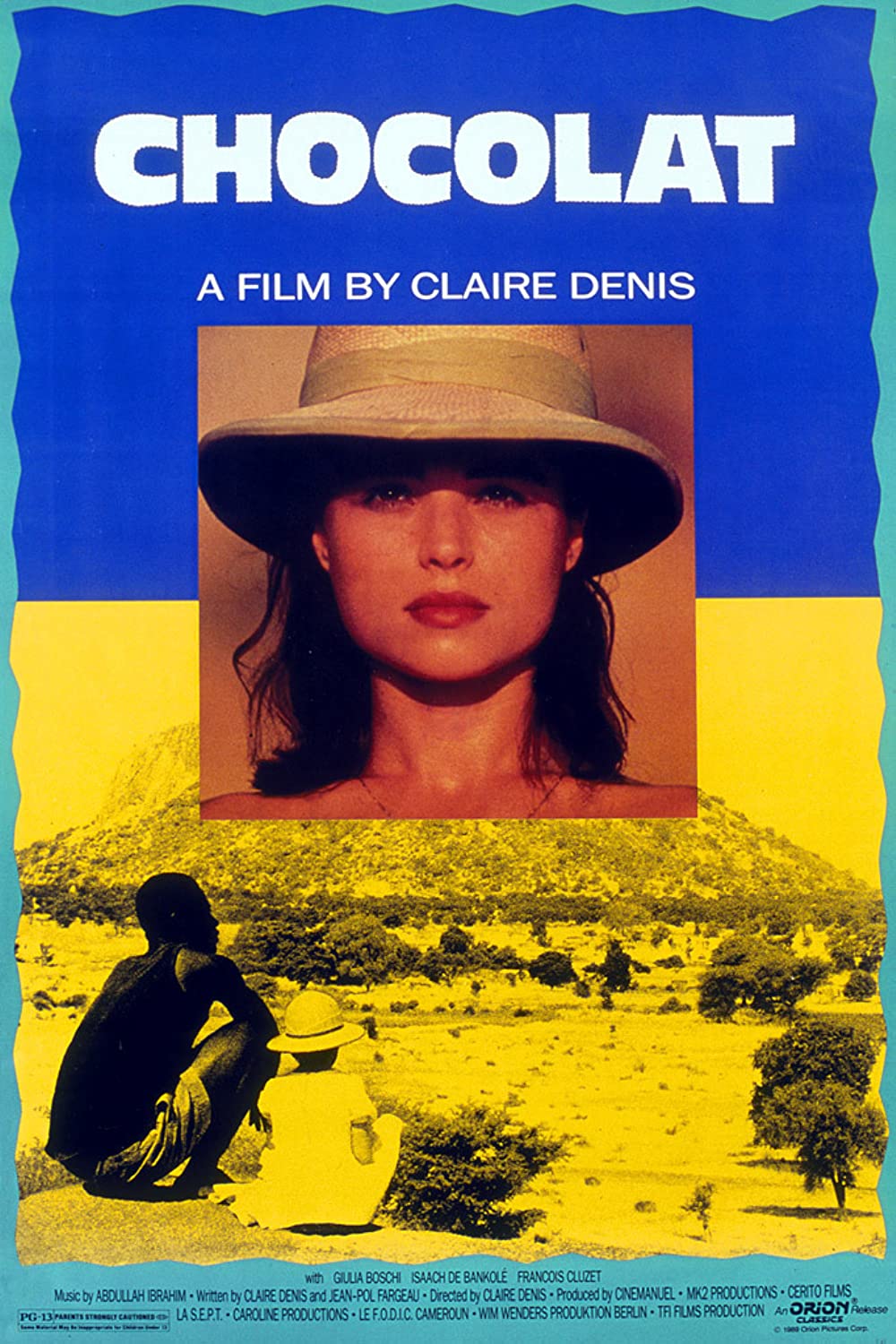

This Chocolat is not the one with chocolate. Claire Denis's 1988 film takes its name from French slang — c'est chocolat, meaning to be cheated or denied — and it is a film about colonial Africa that does not announce itself as a statement. France in the early 1960s. Cameroon. A French family living on a remote station. The house servant Protée, who is treated by Aimée, the French wife, with an intimacy that colonialism reserves for the people it has power over. France, the narrator, remembers her childhood. The film watches what memory does to complicity.
For advanced French students, the film is essential postcolonial material — and it's taught in university French programs for good reason. The language is formal, colonial-era French — the language of the administration, the plantation, the carefully maintained social distance between the French settlers and the Cameroonian population. Students hear French as an instrument of power in a way that contemporary European French films rarely show.
📬 Stay in the loop. New lessons added regularly — join the list to hear when your film is available.
Key Themes for the Classroom
- Colonialism and complicity — The French family is not cruel in an obvious way. That's the point. Ask: Comment la famille française traite-t-elle Protée? Is their treatment respectful? What does respect mean in this context?
- Memory and guilt — The adult France returns to Cameroon and remembers. Ask: Pourquoi France retourne-t-elle en Afrique? What is she looking for?
- Power and intimacy — Aimée's relationship with Protée is one of the film's most disturbing elements. Ask: Qu'est-ce que cette relation révèle sur la colonisation?
Scene to use: Protée's dismissal from the house — Aimée's decision, delivered without explanation, which strips him of his position in the household. The French in this scene is the French of authority avoiding accountability: polite, indirect, and complete. After watching, ask: Comment Aimée dit-elle ce qu'elle ne peut pas dire directement? Students map the evasion strategies in the French itself.
Low-prep classroom activity: Students write a brief testimony in French — from Protée's perspective, to an imaginary court, describing the incident. He must use formal French, past tense, and at least one moment where he identifies the gap between what was said and what was meant. The constraint requires students to write French that understands the difference between language and power.
What to listen for: The film uses silence as deliberately as it uses speech. Protée rarely speaks, and when he does, his French is measured and formal — the French of a person who knows that speaking costs. Aimée speaks to him with the particular intimacy of colonial authority: personal, warm, and entirely unaware of what that warmth does. Ask students: Qui parle dans ce film, et qui se tait? Mapping the speech patterns — who has language and who withholds it — reveals the power structure more directly than any analysis of plot.
What to listen for: The film uses silence as deliberately as it uses speech. Protée rarely speaks, and when he does, his French is measured and formal — the French of a person who knows that speaking costs. Aimée speaks to him with the particular intimacy of colonial authority: personal, warm, and entirely unaware of what that warmth does. Ask students: Qui parle dans ce film, et qui se tait? Mapping the speech patterns — who has language and who withholds it — reveals the power structure more directly than any analysis of plot.
The full French lesson plan for Chocolat (Claire Denis) is ready at filmarobics.com/products/chocolat-by-claire-denis — $29.95.
Students walk away from Claire Denis's Chocolat having heard French as the language of colonial power — and having understood something about what colonialism did to French that no textbook on the Francophonie mentions.
The full French lesson plan for Teach Claire Denis's "Chocolat" in French Class is ready at filmarobics.com/products/chocolat-by-claire-denis — $29.95.
📬 Stay in the loop. New lessons added regularly — join the list to hear when your film is available.
Students walk away from Claire Denis's Chocolat having heard French as the language of colonial power — and having understood something about what colonialism did to French that no textbook on the Francophonie mentions.