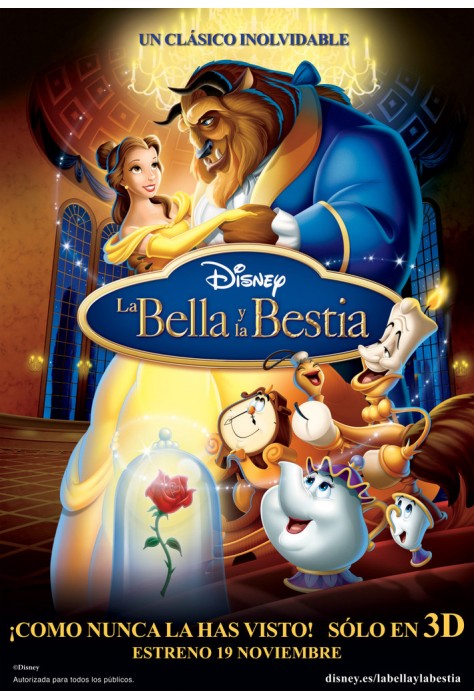
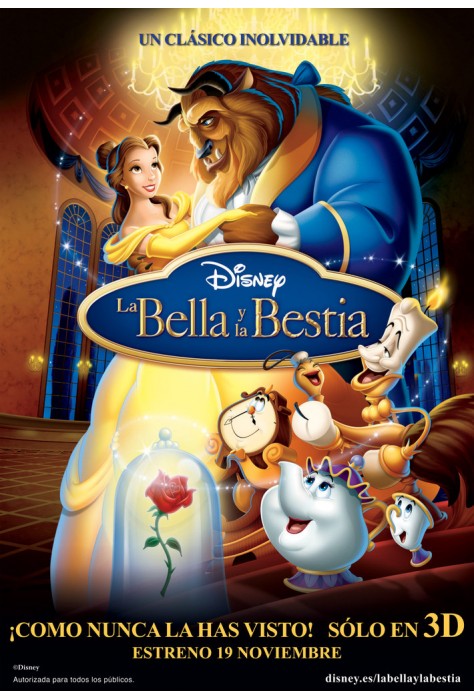
The Disney Beauty and the Beast does something that most adaptations don't — it takes Belle's longing for something more seriously than her longing for escape. She doesn't want to leave the village because it's small. She wants to leave because nobody in it reads. That specificity is the film's emotional core, and it makes the story work in a language class at any level. Students feel Belle before they understand her.
📬 Stay in the loop. New lessons added regularly — join the list to hear when your film is available.
🇪🇸 Teach It in Spanish — La Bella y la Bestia
The Spanish dub is clear, expressive, and well-paced — the Beast's language evolves across the film, which gives Spanish students a rare opportunity to track character development through speech rather than just action. Early in the film, he barks commands in short, angry sentences. By the middle, he begins to ask. By the end, he explains himself. Those shifts are a complete lesson in how Spanish encodes emotional state through verb choice and sentence structure.
The scene to use: the library scene, where the Beast offers Belle his library and she walks in, overwhelmed. No conflict, no plot — just two characters discovering something unexpected in each other. The vocabulary of books, reading, and intellectual joy appears naturally in Spanish, and students who love reading respond to it viscerally. Ask: ¿Por qué es importante este momento para Belle? What does it mean that this is what changes things? The discussion goes deep quickly.
The full Spanish lesson plan for La Bella y la Bestia is at filmarobics.com/products/bella-y-la-bestia — $29.95.
🇫🇷 Teach It in French — La Belle et la Bête
Teaching the Disney Belle et la Bête in French is an obvious choice — the French setting, the French name, the French cultural context. But beyond the setting, the film's French dub offers something genuinely useful: the provincial townspeople speak in energetic, colloquial French that contrasts sharply with the more formal language of the Beast's castle. Students hear the difference between village speech and aristocratic speech without anyone drawing a diagram.
The scene to use: "Belle" — the opening number, when the village watches Belle walk through the market, reading and seemingly disconnected from everything around her. The townspeople's commentary in French is rapid, gossipy, and full of social judgment — the vocabulary of conformity and difference lands in every line. Ask students: Qu'est-ce que le village pense de Belle? Then: Ont-ils tort? That second question is where the class really starts.
The full French lesson plan for La Belle et la Bête is at filmarobics.com/products/belle-et-la-bete — $29.95.
📅 Teach It When It Counts
- Valentine's Day (February): The romance arc makes this a natural February choice — and the discussion of what real love looks like versus what the village expects gives the lesson a critical edge.
- Identity units (any semester): Belle's refusal to conform and the Beast's shame about who he is are parallel stories about how we perform identity for others — rich material for any level.
📬 Stay in the loop. New lessons added regularly — join the list to hear when your film is available.
Students leave Beauty and the Beast having practiced the language of longing, transformation, and courage in Spanish or French — and the connection between reading and understanding someone, which is not incidental to the story at all.