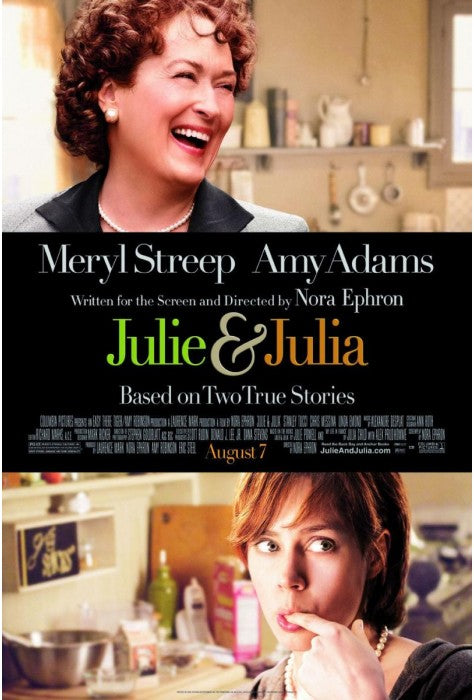

Julia Child arrives in Paris in 1948, tastes sole meunière for the first time, and is transformed. That scene — Meryl Streep's face as she discovers what butter and fish and heat can become together — is one of cinema's best arguments for why cultural immersion works. Your French students are about to have the same experience: they are going to encounter something that is genuinely better in French, and that encounter is going to change what they think French is for.
Julie et Julia (Nora Ephron, 2009) is in English, which makes it highly accessible — but it is saturated with French culinary vocabulary, Paris geography, and the cultural weight of French food as a symbol system. Students learn beurre blanc, sauce mornay, coq au vin not as foreign words but as concepts that carry meaning. The film also offers a parallel narrative about pursuing something difficult with sustained effort — which is, of course, what language learning requires.
📬 Stay in the loop. New lessons added regularly — join the list to hear when your film is available.
Key Themes for the Classroom
- Mastery and time: Julia Child spent ten years mastering French cooking before writing her cookbook. Ask students: what is something worth spending ten years on? What is the French concept of maîtrise and how does it differ from the English idea of "skill"?
- American in Paris: Julia's experience as an American woman in postwar Paris — large, enthusiastic, bewildered by everything — is comic and instructive. Ask students: what would an American need to unlearn to thrive in France?
- Passion and vocation: Both Julia and Julie find purpose through cooking. Ask students: what's the French word for a calling that is also a craft? (vocation, passion, métier) What's the difference between those three words?
One Scene to Use
Julia's first cooking class at Le Cordon Bleu — where she is the only woman, and substantially more enthusiastic than everyone else — is perfect for a discussion about gender and French professional culture in the 1950s. The French instructors are skeptical. Julia is unstoppable. After watching, ask students: what would the same scene look like today? What has changed in French professional kitchens?
One Low-Prep Classroom Activity
Pull three classic French recipes referenced in the film — students can find them online in French. Give them five minutes to identify all the cooking verbs: faire revenir, incorporer, fouetter, mijoter, assaisonner. Then ask them to write one original recipe sentence — any dish — using three of those verbs in French. The imperative form for recipes is one of the most useful and transferable grammar points in French.
The full French lesson plan for Julie et Julia is ready at filmarobics.com/products/julie-et-julia — $29.95.
📬 Stay in the loop. New lessons added regularly — join the list to hear when your film is available.
Students who work through this unit leave with French culinary vocabulary, a genuine feel for French food culture, and the understanding that mastering anything — cooking, language — takes exactly as long as it takes.