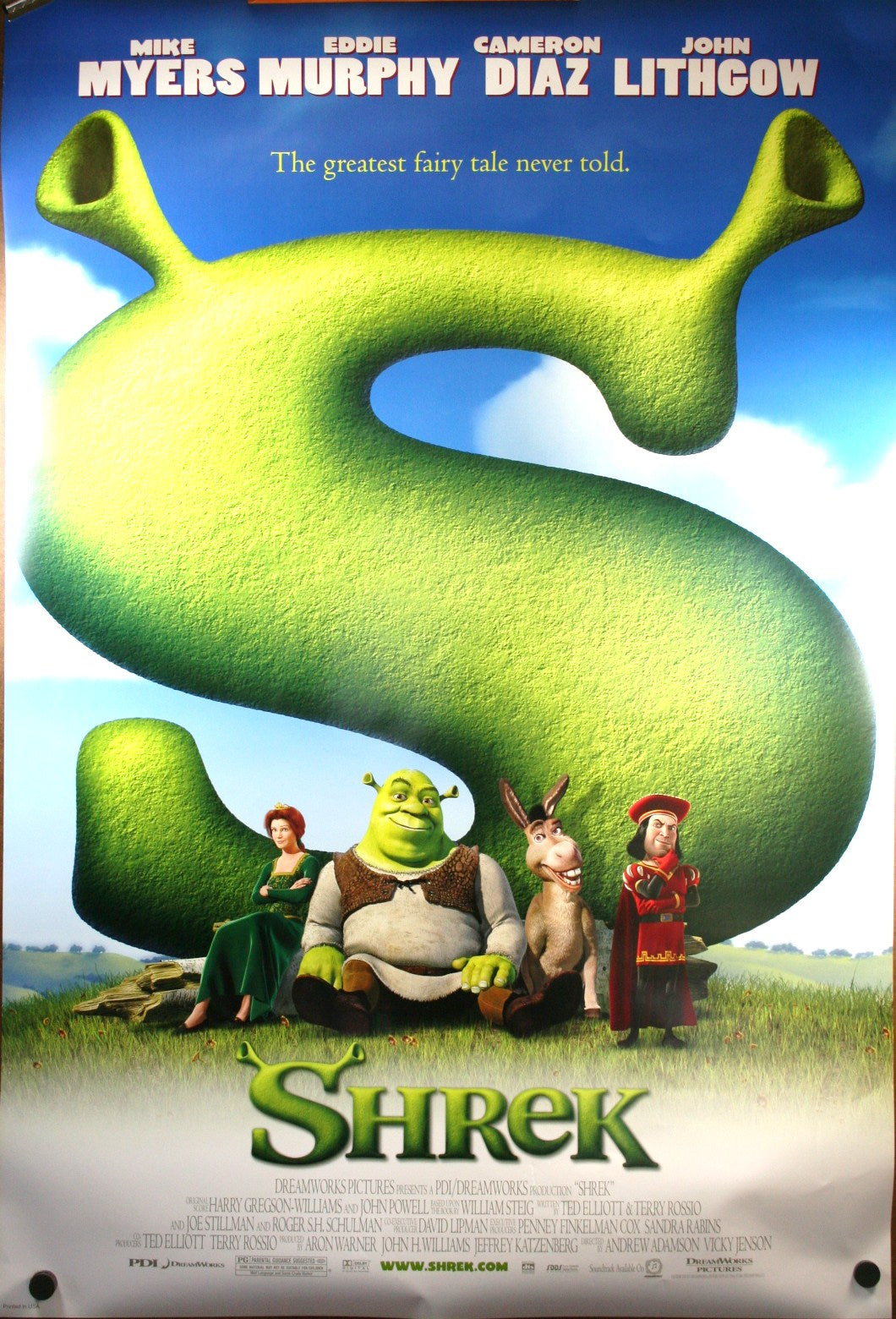
There's a reason teachers keep coming back to Shrek. The film lands every time — not because it's animated, but because the story is genuinely about something. An outsider who wants to be left alone, an unwanted quest, an impossible friendship. Students feel the stakes. And because they feel the stakes, the language sticks.
📬 Stay in the loop. New lessons added regularly — join the list to hear when your film is available.
🇪🇸 Teach It in Spanish
The Spanish dub of Shrek is clean, well-paced, and surprisingly rich for intermediate learners. Shrek's language is blunt — short declarative sentences, strong emotion, minimal complexity — which makes it easier to parse without losing meaning. The supporting cast (Burro/Donkey, Princess Fiona) opens up register contrast: informal speech alongside the stiff, formal language of Lord Farquaad's court.
The scene to use: Shrek confronts Lord Farquaad's guards in front of his swamp. The dialogue is fast, confrontational, and loaded with imperative forms — exactly the structures Spanish students need to hear in emotional context. Stop after the guards flee and ask: ¿Cómo se siente Shrek en esta escena? What verb forms signal his dominance? The answer practically teaches itself.
The themes — self-acceptance, belonging, what it means to be judged by appearance — generate real discussion in Spanish at any level. The full Spanish lesson plan for Shrek is at filmarobics.com/products/shrek-spanish — $29.95.
🇫🇷 Teach It in French
The French dub holds up beautifully. Shrek's flat affect in French is actually pedagogically useful — students can track the gap between what he says and what he feels, which is a sophisticated reading comprehension skill in any language. Fiona's dialogue mid-film introduces the conditional mood naturally (si j'étais libre, je voudrais), and the courtly scenes in Duloc give you formal register without feeling forced.
The scene to use: Fiona and Shrek share the campfire the night before they reach Duloc. It's the film's quietest scene — two characters talking, not performing. Students hear hesitation, subtext, and informal spoken French that textbooks rarely capture. Pause and ask: Qu'est-ce que Fiona ne dit pas? What is she not saying? That one question drives fifteen minutes of real discussion.
Friendship, authenticity, and the courage to be honest — these themes carry genuine weight for teenage learners. The full French lesson plan for Shrek is at filmarobics.com/products/shrek-french — $29.95.
📅 Teach It When It Counts
- Back to school (September): Shrek's outsider arc is perfect for the first weeks when students are navigating their own belonging questions.
- Anti-bullying awareness (October): The film's core message — don't judge by appearance — pairs naturally with school-wide conversations on identity and respect.
What to listen for (all language versions): The French Shrek is earthier than the American original; the Spanish Shrek captures different comedic rhythms; and the German Shrek has a specific directness that suits the character. Ask students to watch the same scene — Shrek explaining to Donkey why he has layers — in whatever language you're teaching, then describe what Shrek is actually saying about himself. The metaphor of the onion works in every language, and the discussion requires students to use the vocabulary of inner life in the target language.
📬 Stay in the loop. New lessons added regularly — join the list to hear when your film is available.
Students walk away from Shrek with more than vocabulary — they walk away with a character they argued about, a scene they remember, and the language that carried all of it.