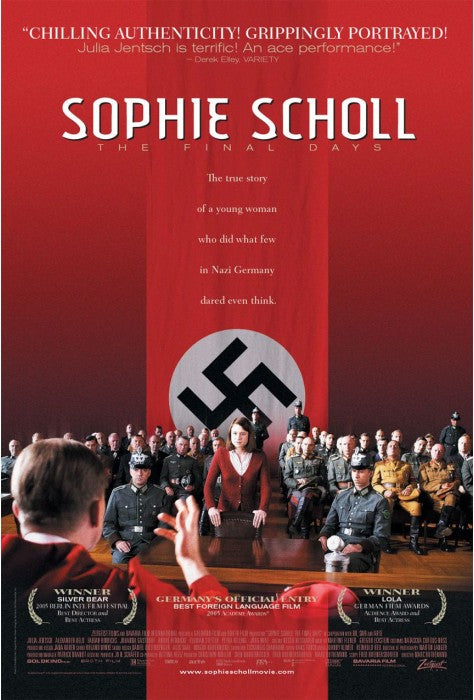
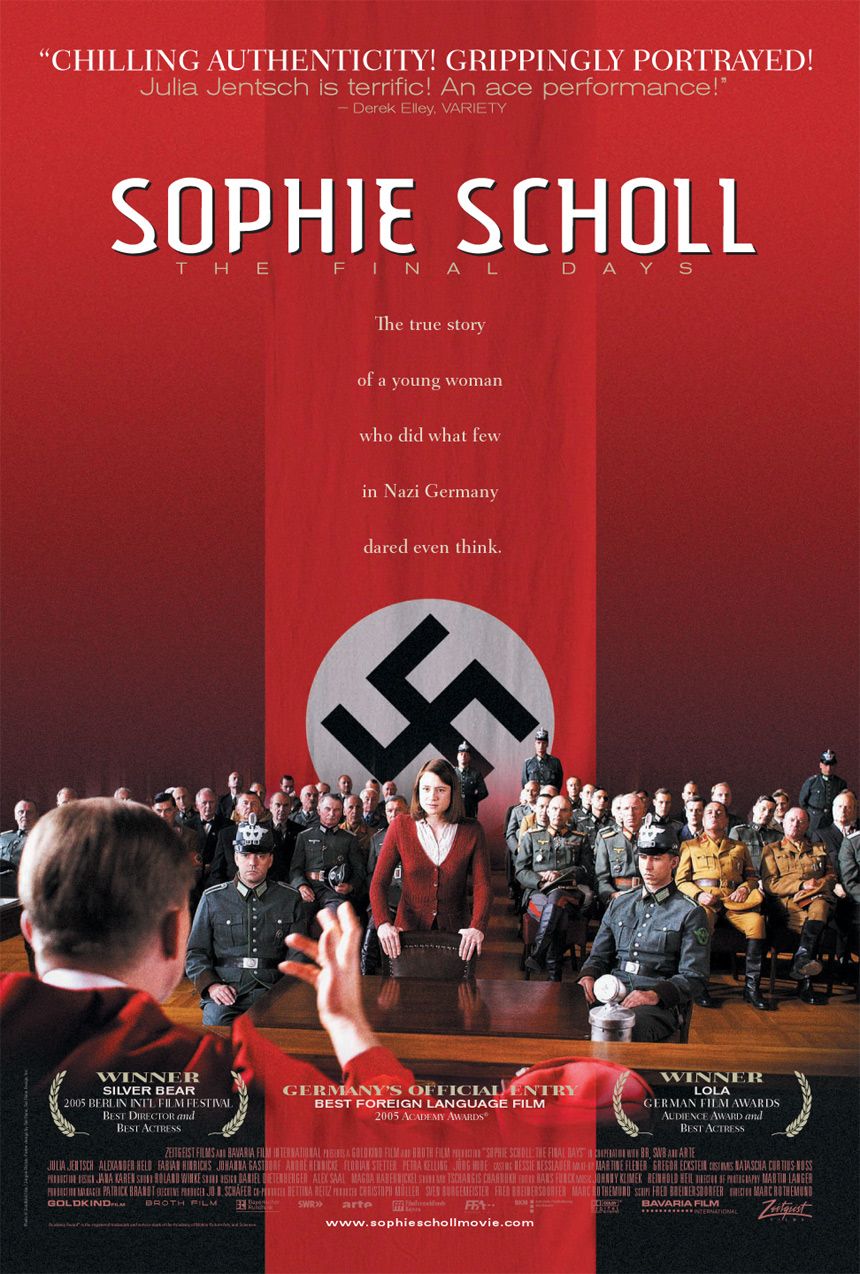
Marc Rothemund's Sophie Scholl: Die Letzten Tage focuses on the final six days of Sophie Scholl's life — from the arrest to the execution — and it does something that the broader White Rose films don't: it makes Sophie a person rather than a martyr. Julia Jentsch's performance is one of the finest in German cinema, and the film's central set piece — Sophie's interrogation by Robert Mohr of the Gestapo — is a masterclass in what happens when a committed principled person meets an institution that has all the power and none of the righteousness.
For German students, the interrogation scenes are linguistically extraordinary. Sophie and Mohr conduct a sustained argument about law, conscience, and the nature of guilt in formal, precise German — Sophie using the language of moral philosophy, Mohr using the language of legal procedure. Students who track the argument encounter both registers simultaneously and begin to understand how German encodes different kinds of authority.
📬 Stay in the loop. New lessons added regularly — join the list to hear when your film is available.
Key Themes for the Classroom
- Conscience vs. law — Sophie argues that a law that requires evil is not binding. Mohr argues that the law is the law. Ask: Wer hat Recht? And then: Is there a version of this argument where Mohr wins?
- Fear and courage — Sophie is afraid. The film shows this clearly. Ask: Was unterscheidet Sophie von jemandem, der zu verängstigt ist, um das Richtige zu tun? Is it that she isn't afraid, or that she acts anyway?
- Institutional language as dehumanization — The trial before Freisler, the paperwork, the formal procedures of execution — the German bureaucratic register is present throughout. Ask: Wie benutzt das NS-System Sprache, um das Unrecht normal erscheinen zu lassen?
Scene to use: Sophie's extended interrogation with Mohr, when she finally stops denying everything and begins to argue her actual position. The German in this scene is formal, philosophical, and completely unafraid. After watching, ask: Welche Argumente bringt Sophie vor? Students identify her claims and then evaluate them: are they correct? Are they sufficient?
Low-prep classroom activity: Students write a brief statement in German — from Sophie Scholl's perspective, prepared as a statement for the court. She must explain what she did, why she did it, and what she believes the law requires of a person when the law itself requires evil. Formal German, first person, and the specific vocabulary of moral conviction and legal argument.
What to listen for: The interrogation scenes between Sophie Scholl and Robert Mohr are among the most linguistically extraordinary in German cinema. Mohr speaks the German of institutional authority — formal, procedural, occasionally persuasive. Sophie responds in the German of moral conviction — clear, direct, occasionally gentle with a person she is outwitting intellectually. The contrast is between two kinds of German certainty: the certainty of power and the certainty of conscience. Ask students: Wer hat mehr Macht in diesen Szenen — Mohr oder Sophie? The linguistic analysis produces the answer.
The full German lesson plan for Sophie Scholl: Die Letzten Tage is ready at filmarobics.com/products/sophie-scholl — $29.95.
Students walk away from Sophie Scholl: Die Letzten Tage having heard German used for the most serious argument a person can make — the argument for the right to follow your conscience when the state says otherwise.
The full German lesson plan for Sophie Scholl: Die Letzten Tage is ready at filmarobics.com/products/sophie-scholl — $29.95.
📬 Stay in the loop. New lessons added regularly — join the list to hear when your film is available.
Students walk away from Sophie Scholl: Die Letzten Tage having heard German used for the most serious argument a person can make — the argument for the right to follow your conscience when the state says otherwise.