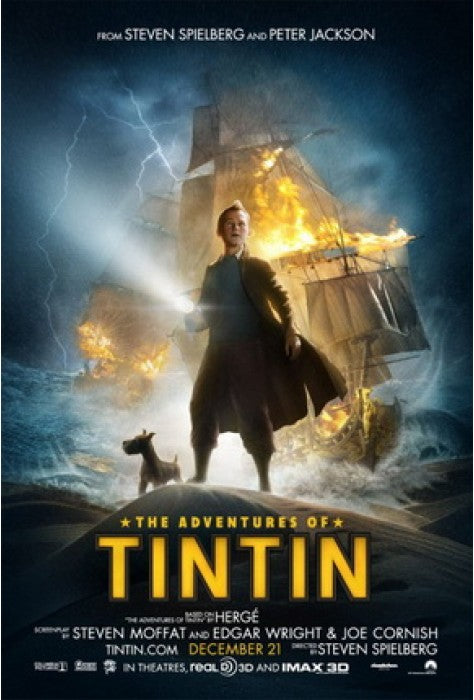
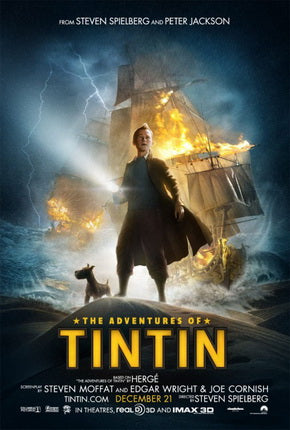
Any French teacher who has never shown Tintin in class has probably wondered whether it's too simple. It isn't. The Tintin films — whether Spielberg's 2011 animated adaptation or the older Belvision versions — are built on Hergé's visual language: a world where every object tells you something, every face is a story, and the dialogue is crisp enough to be understood by students at every level. The French of Tintin is not simplified French. It's efficient French — maximum meaning per sentence, which is actually harder to write than complex French and immediately useful for students to hear.
For French students, the Tintin world is also a cultural document. Hergé's Belgium — Francophone, early-to-mid 20th century, globally adventurous in a very specific imperialist way — is a complex cultural object, and advanced students can engage with that complexity while beginning students enjoy the adventure. The film works at any level because the story never depends on language alone.
📬 Stay in the loop. New lessons added regularly — join the list to hear when your film is available.
Key Themes for the Classroom
- Adventure and problem-solving — Tintin never gives up. His investigative French — questions, hypotheses, deductions — models how French speakers reason through problems. Ask: Comment Tintin arrive-t-il à résoudre les mystères?
- Friendship and loyalty — The relationship between Tintin and the Capitaine Haddock is the series' emotional center. Ask: Pourquoi Haddock et Tintin sont-ils amis? What does each give the other?
- Haddock's vocabulary — The Capitaine's insults and exclamations (Mille millions de mille sabords! Moule à gaufres!) are some of the most famous French vocabulary in the world. Students who learn his exclamations are learning the pleasure of French excess.
Scene to use: Any scene where Haddock is angry and invents new insults. The French vocabulary of creative insult is genuinely rich, and the comic timing makes every new word memorable. Ask students to list Haddock's insults and categorize them: which are physical? Which are professional? Which are just sounds? The categorization task produces vocabulary engagement through genuine curiosity.
Low-prep classroom activity: Students write a brief adventure report in French — as Tintin would write it in his notebook. He must describe what happened, what he suspects, and what he plans to do next. Present and future tense, first person, and the specific clarity of Tintin's voice: no padding, no hedging, just what happened and what it means.
What to listen for: Hergé's dialogues — whether in the original printed albums or the animated adaptations — are built on maximum clarity per sentence. Every line advances either the plot or the character. That economy is not simplification; it is craft. Ask students to find the longest speech in any Tintin scene they watch and count the words. Then ask: what work is each word doing? The exercise teaches French precision — that language has weight, and the best writers use exactly the weight they need.
The full French lesson plan for Les Aventures de Tintin is ready at filmarobics.com/products/aventures-de-tintin — $29.95.
Students walk away from Les Aventures de Tintin having heard French in its most efficient, most adventure-ready form — and having discovered that the Capitaine's vocabulary alone is worth an entire vocabulary unit.
The full French lesson plan for Les Aventures de Tintin is ready at filmarobics.com/products/aventures-de-tintin — $29.95.
📬 Stay in the loop. New lessons added regularly — join the list to hear when your film is available.
Students walk away from Les Aventures de Tintin having heard French in its most efficient, most adventure-ready form — and having discovered that the Capitaine's vocabulary alone is worth an entire vocabulary unit.