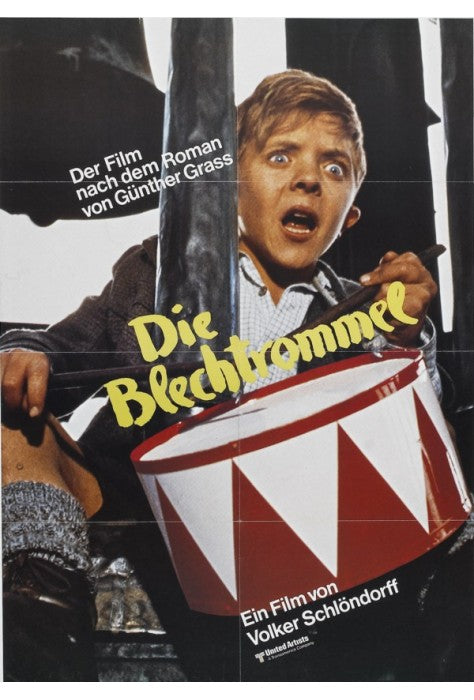
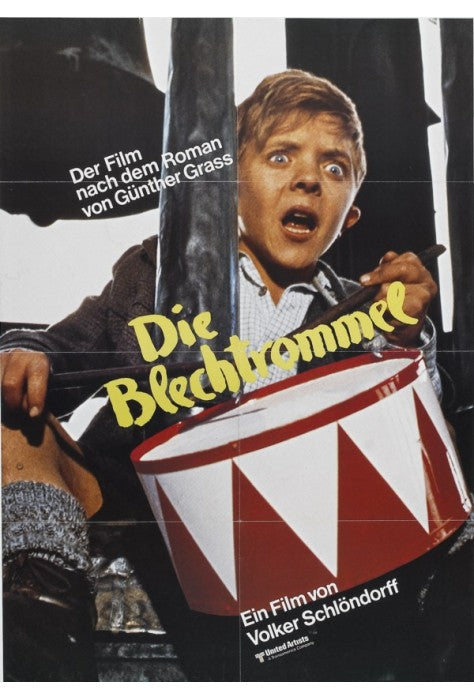
Günter Grass's Die Blechtrommel (The Tin Drum) is one of the most challenging novels in German literature — and Volker Schlöndorff's film adaptation is one of the most challenging in German cinema, which is saying something. Oskar Matzerath decides at age three to stop growing. He has a tin drum that he beats constantly, and a scream that can shatter glass. The film follows him from 1927 through 1945, from the Free City of Danzig through the Nazi period and its aftermath, as a child who refused to become an adult watching adults destroy everything around him.
For advanced German students, the film is essential — it won the Palme d'Or and the Academy Award for Best Foreign Language Film in 1979, and the German it contains is historically and literarily significant. The language of Weimar Germany, of Nazi Germany, and of the immediate postwar period are all present, and the film's allegorical structure makes every scene a provocation for analysis. This is not a film for beginning German students, but for advanced students it is irreplaceable.
📬 Stay in the loop. New lessons added regularly — join the list to hear when your film is available.
Key Themes for the Classroom
- Refusal and complicity — Oskar refuses to grow up as a protest against the adult world. But does refusing to participate make you innocent? Ask: Oskar ist ein Zeuge — ist er auch schuldig?
- The individual and history — Oskar watches Germany's darkest decades from below adult sight lines. Ask: Was sieht Oskar, was die Erwachsenen nicht sehen? The reverse: Was sehen die Erwachsenen, was Oskar ignoriert?
- Allegory and reality — The film uses fairy-tale logic to tell a historical story. Ask: Warum erzählt Grass/Schlöndorff diese Geschichte mit einem fantastischen Helden?
Scene to use: The Nazi rally scene, where Oskar's drumming gradually transforms a political march into a waltz. The scene is the film's most famous — the power of a single absurd act to disrupt ideological performance. In German, the language of the rally (Führer, Volk, Sieg Heil) contrasts with the suddenly dancing crowd. Ask: Was will Oskar mit dieser Aktion zeigen? What is the political argument of this scene?
Low-prep classroom activity: Oskar narrates the film in retrospect, as an adult in a mental institution looking back. Students write a short German monologue from Oskar's perspective — narrating one scene from the film, in past tense, with the specific combination of clinical precision and dark humor that characterizes his voice. The exercise requires students to adopt a narrative register unlike any other in the German catalog.
What to listen for: Oskar narrates in German with the complete certainty of a character who has decided not to grow up — his language is both childlike and ancient, both literal and deeply ironic. Ask students: Wie beschreibt Oskar, was um ihn herum passiert? Students find one scene where Oskar's narration and the actual events of the scene are in tension — where what he says and what we see don't quite match. The gap between Oskar's German and the historical German around him is the novel's and the film's central ironic argument.
The full German lesson plan for Die Blechtrommel is ready at filmarobics.com/products/blechtrommel — $29.95.
Students walk away from Die Blechtrommel having encountered German literature in its most demanding, most allegorical form — and having asked, in German, what it means to refuse to grow up in the face of the worst history can offer.
The full German lesson plan for Die Blechtrommel is ready at filmarobics.com/products/blechtrommel — $29.95.
📬 Stay in the loop. New lessons added regularly — join the list to hear when your film is available.
Students walk away from Die Blechtrommel having encountered German literature in its most demanding, most allegorical form — and having asked, in German, what it means to refuse to grow up in the face of the worst history can offer.