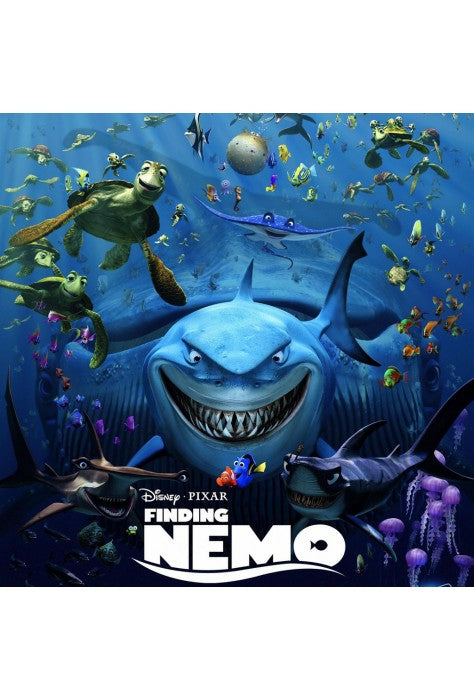
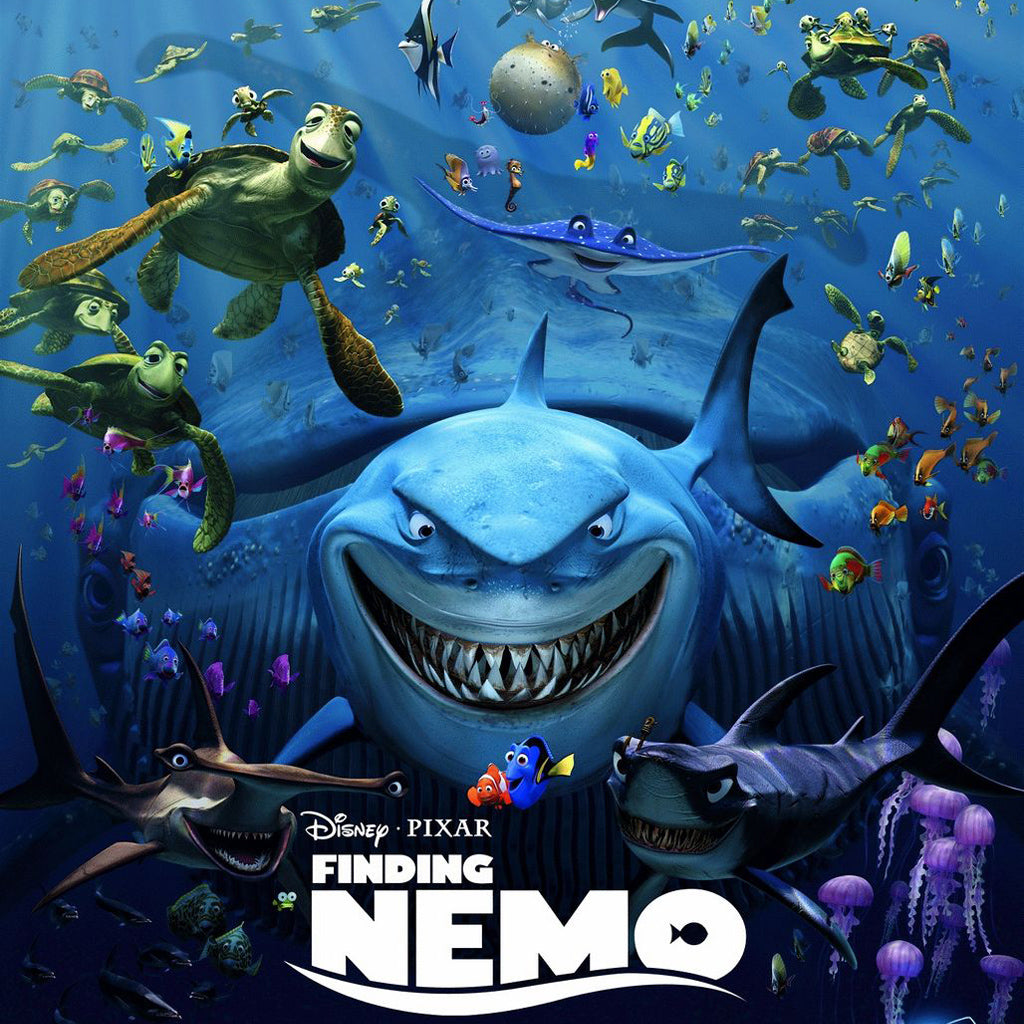
Every language teacher has a film that works without explanation. Finding Nemo is one of those films. The premise lands in ten seconds — a father's terror, a missing child, an impossible journey — and students are in before the first line of dialogue. That emotional hook is where language acquisition begins: comprehensible input wrapped in stakes that actually matter.
📬 Stay in the loop. New lessons added regularly — join the list to hear when your film is available.
🇫🇷 Teach It in French — Le Monde de Némo
The French dub of Finding Nemo is beautifully cast and surprisingly rich in register variation. Marlin speaks in anxious, over-qualified sentences — conditional clauses, hedging, the kind of worried parent French that textbooks skip entirely. Dory, by contrast, speaks in short, present-tense bursts, sometimes forgetting her own sentences mid-construction. That contrast is pedagogically deliberate: students hear two completely different models of spoken French and have to track meaning in both.
The scene to use: Marlin and Dory meet for the first time after Marlin loses sight of the boat carrying Nemo. Dory leads him somewhere, forgets she's doing it, then remembers. The rapid confusion and correction creates natural listening comprehension work — students can pause, predict, and then check. Ask: Comment Marlin montre-t-il son inquiétude dans cette scène? The answers cover both character analysis and grammatical observation simultaneously.
The full French lesson plan for Le Monde de Némo is at filmarobics.com/products/le-monde-de-nemo — $29.95.
🇬🇧 Teach It in English (ESL) — Finding Nemo
For ESL learners, Finding Nemo offers something rare: a film with a wide range of speakers — young, old, anxious, carefree, formal, chaotic — all using clear, emotionally transparent English. Dory's language is particularly useful: she models how English speakers interrupt themselves, correct mid-sentence, and use repetition for emphasis. These are features of authentic spoken English that grammar classes never reach.
The scene to use: Dory teaching Nemo's dad to "just keep swimming." It's one of the most-quoted lines in the film, but what makes it pedagogically valuable is what surrounds it: Dory's self-talk, her mid-sentence shifts, and the way Marlin responds with increasing desperation. Use it to teach sentence-level intonation, the imperative mood, and the way English uses repetition for emotional effect. Then ask students: What does "just keep swimming" really mean? The metaphorical reading drives real conversation.
The full English lesson plan for Finding Nemo is at filmarobics.com/products/finding-nemo — $29.95.
🇩🇪 Teach It in German — Findet Nemo
The German dub of Findet Nemo is excellent for intermediate learners. German word order — particularly the verb-at-the-end rule in subordinate clauses — gets modeled throughout the film in emotional, high-stakes moments, which means students hear grammar under pressure rather than in careful textbook sentences. Marlin's panicked subordinate clauses are actually a gift: students can hear the verb landing at the end even when the speaker is anxious and rushing.
The scene to use: Marlin addressing the whale, asking it to release them. The scene is almost entirely one-sided — Marlin talking, no response — so the language is sustained, clear, and emotionally intense. Students hear modal verbs (können, müssen, sollen) used in real desperation, not textbook exercise. Follow up: Was hätte Marlin anders sagen können? What could he have said differently? That rewrite exercise forces students to apply the same modals creatively.
The full German lesson plan for Findet Nemo is at filmarobics.com/products/findet-nemo — $29.95.
🇪🇸 Teach It in Spanish — Buscando a Nemo
The Spanish dub gives teachers immediate access to ser vs. estar in emotional context — one of the hardest distinctions for Spanish learners to internalize. Nemo is brave (es valiente), but Marlin is scared right now (está asustado) — the film makes the distinction concrete through character, not grammar drill. The vocabulary of fear, hope, and determination appears constantly, with enough repetition that students begin to acquire it passively.
The scene to use: Nemo's first day at school, when he swims toward the boat despite Marlin's warnings. In Spanish, the exchange between Marlin and the teacher is a model of adult formal speech versus child informal speech — register distinction right at the surface. Ask students: ¿Por qué habla el maestro de manera diferente a Nemo? That question unlocks a genuine sociolinguistics conversation with beginners.
The full Spanish lesson plan for Buscando a Nemo is at filmarobics.com/products/buscando-a-nemo — $29.95.
📅 Teach It When It Counts
- September (back to school): Nemo's first day is one of the great cinematic representations of school anxiety — students feel it immediately, and the language of fear and courage arrives in context.
- Spring (family units): The film's core theme — a parent who can't let go, a child who has to prove themselves — pairs with family vocabulary units in any language class.
📬 Stay in the loop. New lessons added regularly — join the list to hear when your film is available.
Students leave Finding Nemo having practiced French, English, German, or Spanish through a story about the courage it takes to cross an ocean — and the courage it takes to trust someone else to do it.