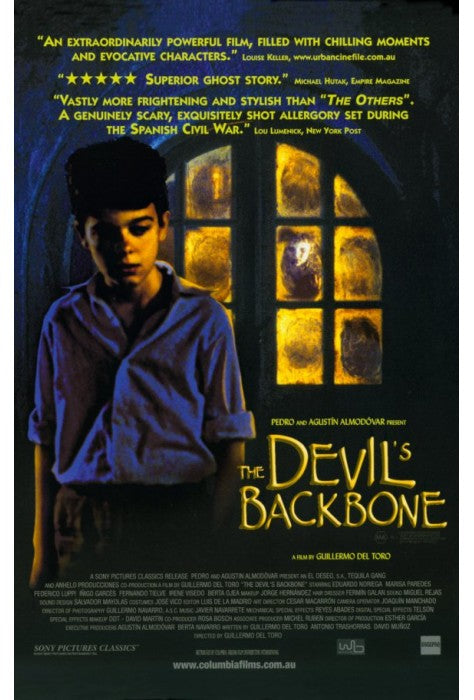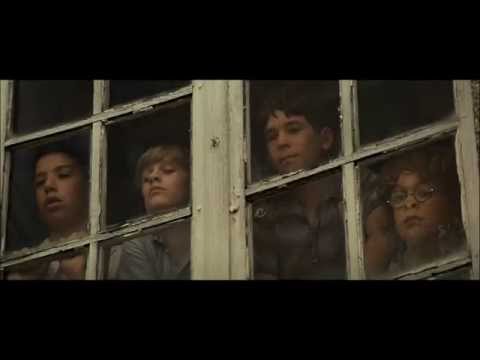

Guillermo del Toro's El Espinazo del Diablo (The Devil's Backbone) is a ghost story about the Spanish Civil War — which means it's not really a ghost story at all. The ghost is real, but the horror is human: a Republican orphanage in the final months of the war, a group of boys who know too much and too little, and the adults around them who are making choices that will destroy everything. Del Toro has said that the ghost represents a child who cannot let go of the past. The film argues that the real monsters are those who can.
For Spanish students, the film is essential Civil War material packaged in a genre that holds attention completely. The Castilian Spanish of the orphanage — formal, careful, historically appropriate — is audible and accessible to intermediate learners, and the vocabulary of war, fear, loyalty, and abandonment arrives in emotional context that makes every word memorable. This is the rare film that teaches history and language simultaneously without the student noticing either lesson arriving.
📬 Stay in the loop. New lessons added regularly — join the list to hear when your film is available.
Key Themes for the Classroom
- War and childhood — The boys in the orphanage are surrounded by adult violence they cannot fully understand but must survive. Ask: ¿Cómo les afecta la guerra a los niños? What do they understand, and what is spared them?
- The past that won't leave — The ghost Santi is literally what the film's world cannot let go of. Ask: ¿Qué representa el fantasma en esta película? The metaphorical reading is right there for students who want it.
- Complicity and innocence — The adults in the orphanage are not uniformly good or bad. Carmen protects the children but is also compromised. Jacinto is a product of the same system he's destroying. Ask: ¿Quién tiene la culpa?
Scene to use: Carlos's first encounter with Santi — the ghost appearing in the cistern, his mouth open, his wound floating in water. The scene has almost no dialogue, but the Spanish that does appear is clipped, whispered, and saturated with fear. After watching, ask students to describe what Carlos sees in Spanish — using present tense as if it's happening now, with at least three sensory adjectives. The task requires both vocabulary and tense use simultaneously.
Low-prep classroom activity: Give students the ghost's question — "¿Quién me mató?" (Who killed me?) — and ask them to answer it in Spanish, in character as one of the adults in the film. Each answer must include a justification, an evasion, and one honest admission. The exercise requires students to argue in Spanish from a morally complicated position.
What to listen for: Del Toro's children speak the Spanish of a specific kind of precarity — orphan children in wartime Spain who have learned that adults cannot always be trusted and that the rules they were raised with no longer apply. Carlos arrives speaking middle-class Madrid Spanish and must adjust to a world where that Spanish means very little. Ask students: ¿Cómo cambia el español de Carlos durante su tiempo en el orfanato? The linguistic adjustment is the survival story.
The full Spanish lesson plan for El Espinazo del Diablo is ready at filmarobics.com/products/espinazo-del-diablo — $29.95.
Students walk away from El Espinazo del Diablo having heard Spanish carry fear, courage, and the specific grief of a country that couldn't save its children — and they won't forget the lesson or the language.
The full Spanish lesson plan for El Espinazo del Diablo is ready at filmarobics.com/products/espinazo-del-diablo — $29.95.
📬 Stay in the loop. New lessons added regularly — join the list to hear when your film is available.
Students walk away from El Espinazo del Diablo having heard Spanish carry fear, courage, and the specific grief of a country that couldn't save its children — and they won't forget the lesson or the language.