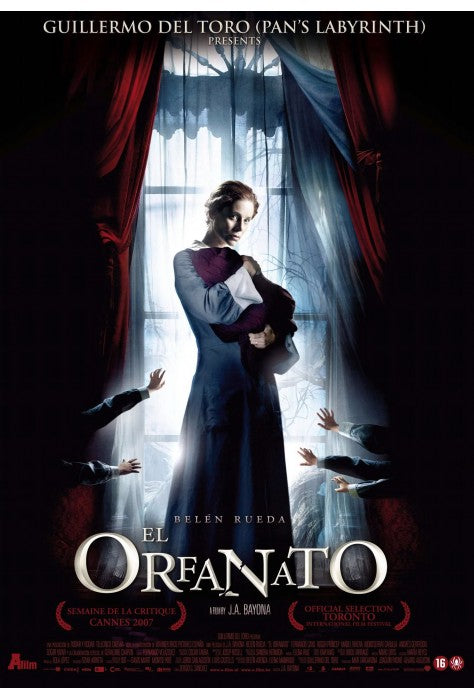
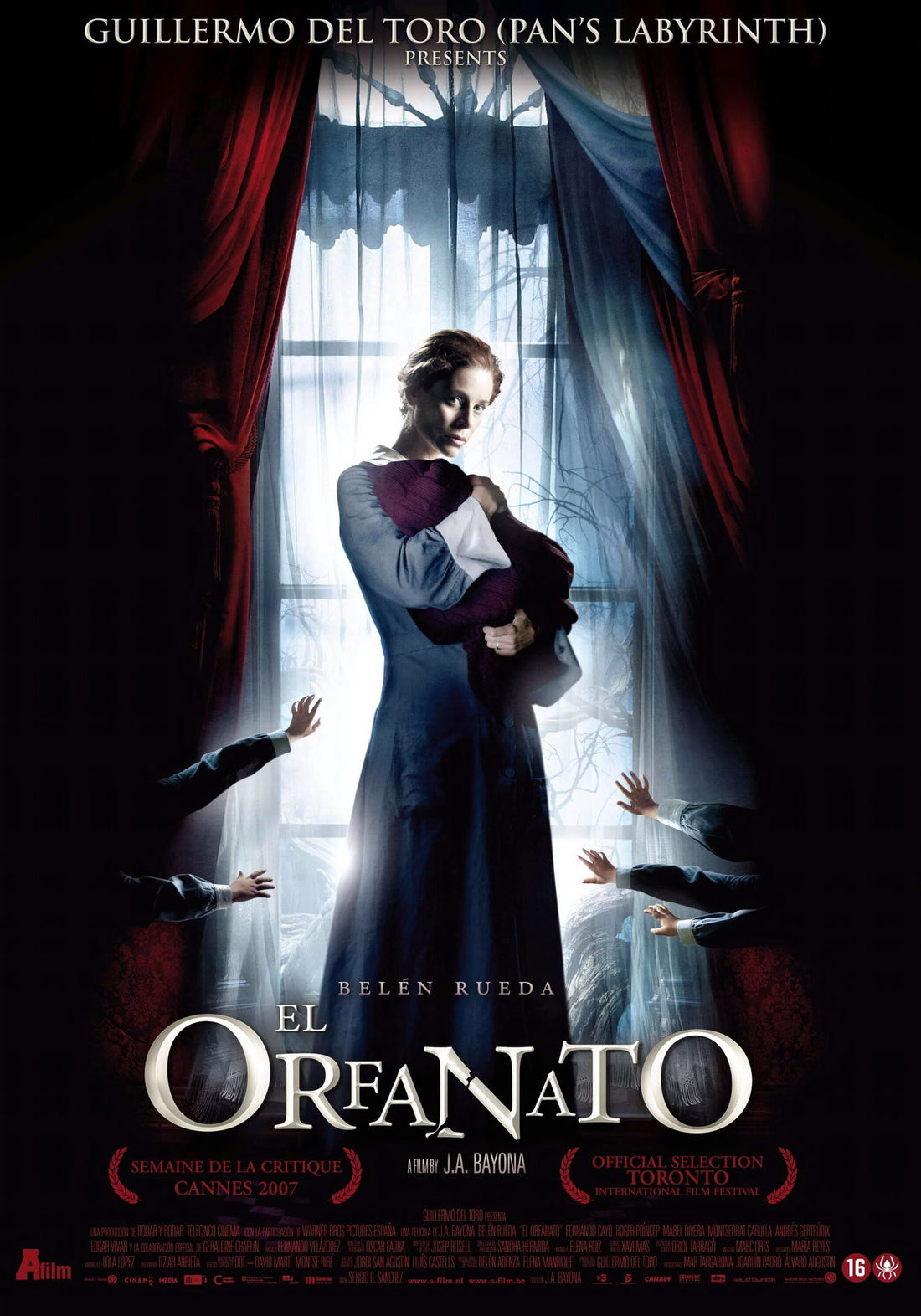
Laura grew up in an orphanage by the sea. Now she's bought the building, planning to turn it into a home for disabled children. Her young son Simón has imaginary friends. And then — in one terrifying afternoon — Simón disappears. J.A. Bayona's 2007 film is produced by Guillermo del Toro and bears his influence: it's a ghost story that is genuinely about grief, and a mystery whose solution is genuinely devastating. For a Spanish class, it is one of the most effective advanced films in the catalog — psychologically complex, linguistically rich, and emotionally honest.
The Spanish of El Orfanato is upper-middle-class contemporary Spanish — Laura and Carlos speak the measured, educated Castilian of people who believe in rational explanations for everything. The film uses that register deliberately: their controlled, reasonable Spanish is the language the horror invades, and watching it break down is watching a worldview collapse.
📬 Stay in the loop. New lessons added regularly — join the list to hear when your film is available.
Key Themes for the Classroom
- Grief and maternal love — The film is, at bottom, about a mother who cannot stop searching. Ask: ¿Qué está dispuesta a hacer Laura para encontrar a Simón? And: Is there a point where she should have stopped?
- The supernatural and the rational — Laura increasingly believes the house is haunted. Carlos doesn't. Ask: ¿Quién tiene razón — Laura o Carlos? And: Does it matter, given the ending?
- Childhood and abandonment — The orphanage's past is the present's problem. Ask: ¿Qué secreto guarda el orfanato? How does the past return in this film?
Scene to use: The medium's visit to the house — the séance sequence where the spirits make contact. The Spanish in this scene moves from the clinical (the medium's professional explanations) to the terrified (Laura's responses) to the completely controlled (the spirits, who have been waiting a long time and can afford patience). Ask: ¿Cómo cambia el tono del español en esta escena? Students track the register shifts as the scene intensifies.
Low-prep classroom activity: Students write a brief police report in Spanish — the investigating officer's account of what Laura reported the afternoon Simón disappeared. The officer must record what Laura said without editorial comment, but the report must make clear that the officer doesn't believe her. The constraint produces formal Spanish that requires students to maintain institutional register while implying disbelief.
What to listen for: J.A. Bayona builds the film's Spanish around Laura's increasing desperation — her speech becomes shorter, more urgent, more stripped of the social courtesies she uses at the beginning. By the film's final act, she is speaking in commands and questions, the most basic Spanish, because nothing else will serve. Ask students to track one character's register through three scenes: ¿Cómo cambia la manera de hablar de Laura? The linguistic compression mirrors the emotional compression, and students who identify it understand both the grammar and the story.
The full Spanish lesson plan for El Orfanato is ready at filmarobics.com/products/orfanato — $29.95.
Students walk away from El Orfanato having heard Spanish carry one of cinema's most devastating maternal stories — and having thought seriously about what grief looks like when it refuses to accept what the evidence says.
The full Spanish lesson plan for El Orfanato is ready at filmarobics.com/products/orfanato — $29.95.
📬 Stay in the loop. New lessons added regularly — join the list to hear when your film is available.
Students walk away from El Orfanato having heard Spanish carry one of cinema's most devastating maternal stories — and having thought seriously about what grief looks like when it refuses to accept what the evidence says.