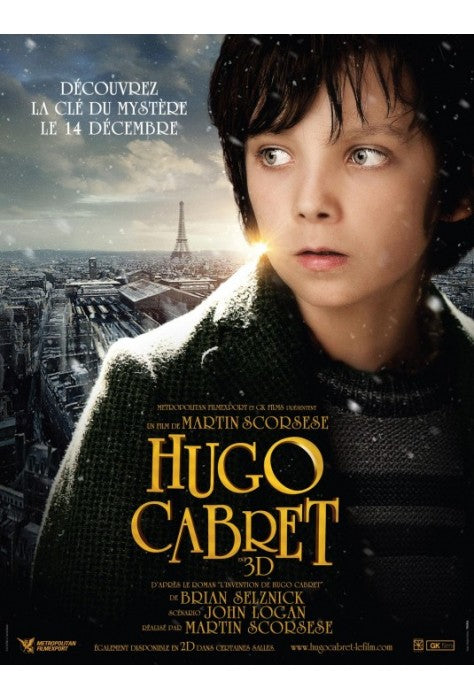
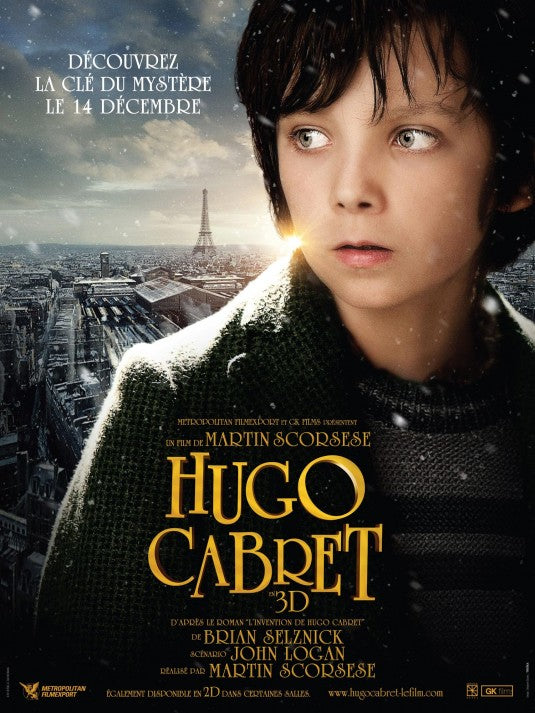
Hugo Cabret lives in the walls of a Paris train station, maintaining its clocks, surviving on stolen croissants, and obsessing over a mechanical automaton his dead father left him. He believes the automaton contains a message — and he's right. Martin Scorsese's Hugo is a love letter to the invention of cinema, and it's set entirely in French spaces even though it's in English. For a French class, that paradox is pedagogically useful: this is France as imagined from outside, and students can discuss what's accurate, what's romanticized, and why it matters.
Hugo (Martin Scorsese, 2011) is accessible to all levels because it's in English, but it is deeply about France — specifically about Georges Méliès, the French pioneer of cinema who invented special effects and whose work Hugo discovers. The film provides an entry point into French cinema history, Paris's built environment, and the vocabulary of mechanism and invention that students will find genuinely engaging.
📬 Stay in the loop. New lessons added regularly — join the list to hear when your film is available.
Key Themes for the Classroom
- Cinema as French invention: The Lumière brothers, Georges Méliès, the Gare Montparnasse — Hugo's world is the birthplace of cinema. Ask students: what French words entered the global cinema vocabulary? (cinéma, montage, mise en scène, auteur) Why French?
- Broken things and purpose: Hugo fixes clocks. He believes the universe is a machine where everything has a purpose. Ask students: what does it mean to fix something? What is the French vocabulary of repair — réparer, restaurer, reconstruire?
- Orphanhood and belonging: Hugo has no family and steals to survive. His relationship with Méliès is a kind of adoption. Ask students: what does Hugo need that no mechanical object can give him?
One Scene to Use
The sequence where Hugo and Isabelle discover Méliès's archive of films — and watch A Trip to the Moon projected in color — is one of Scorsese's finest moments. After watching it, show students the actual 1902 Méliès film (it's on YouTube). The juxtaposition of Scorsese's recreation and Méliès's original is a lesson in film history that no textbook can deliver as effectively.
One Low-Prep Classroom Activity
Give students five French cinema vocabulary terms from the film's historical context: le projecteur, la pellicule, le réalisateur, le tournage, les effets spéciaux. They write one sentence about each term using it in context — not a definition, but a sentence that shows they understand what the word does. Then share and compare. The best sentences go on the board.
The full ESL lesson plan for Hugo is ready at filmarobics.com/products/hugo — $29.95.
📬 Stay in the loop. New lessons added regularly — join the list to hear when your film is available.
Students who work through this unit leave knowing that France didn't just produce great films — France invented the medium, and that history is written in the French words the whole world uses for cinema.