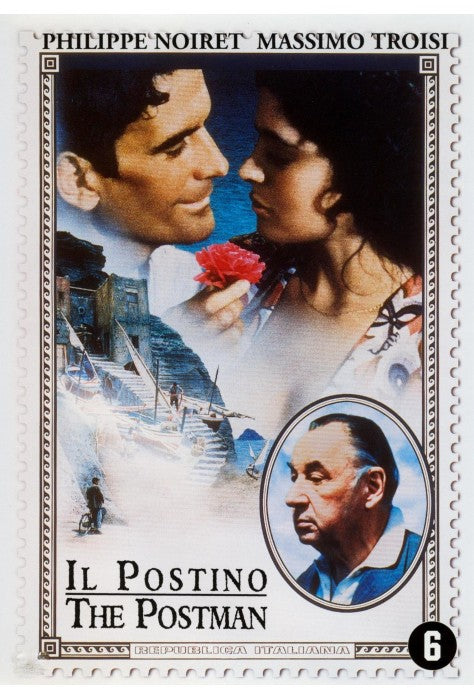
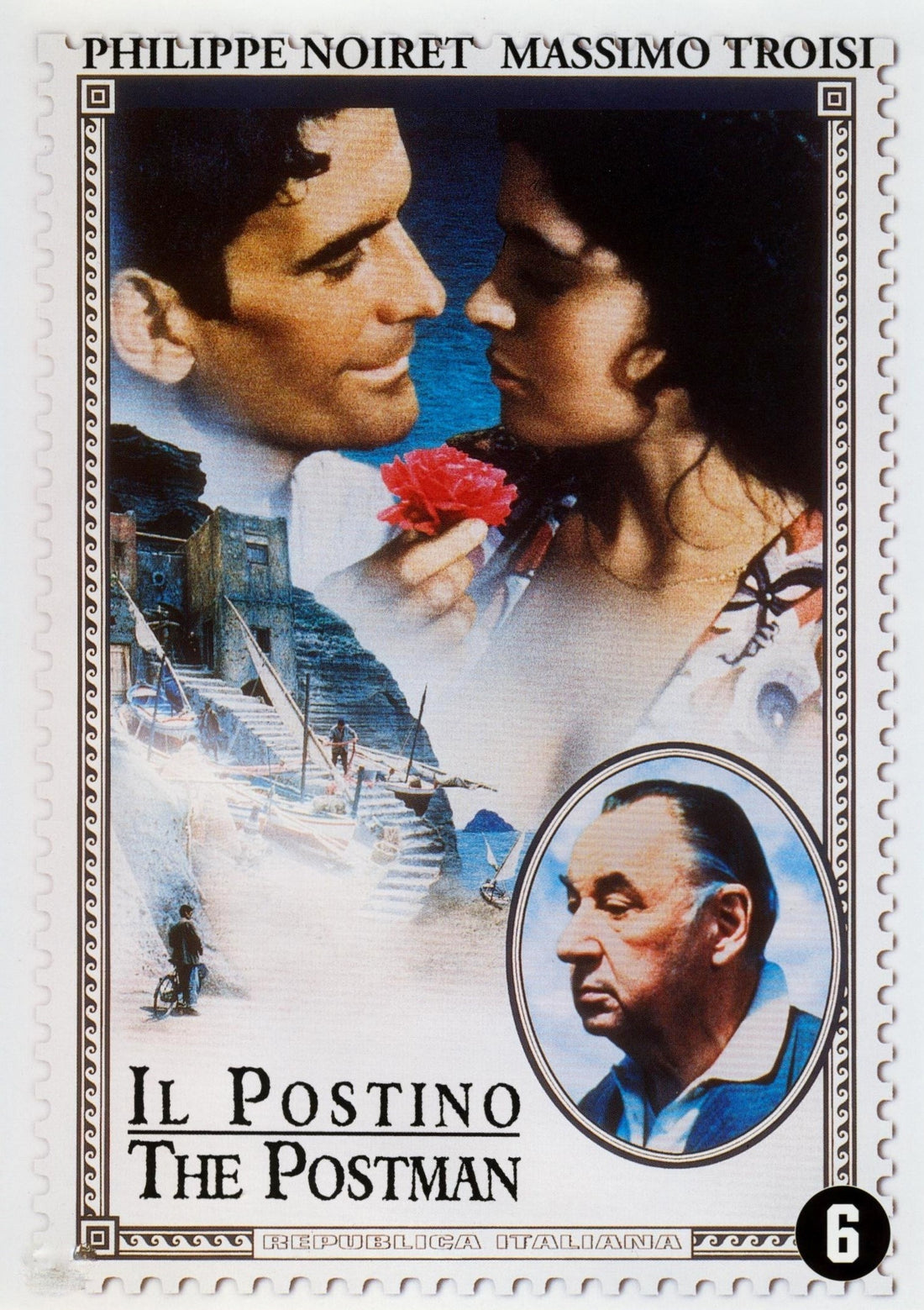
Mario Ruoppolo is a shy, uneducated postman on a small Italian island. Pablo Neruda, exiled from Chile, is the island's only unusual resident — which makes him the only person Mario delivers mail to. So Mario begins showing up at Neruda's door, not for the mail, but to ask the poet to teach him how to talk to women. Your students will laugh at Mario's clumsy sincerity. They will also watch him learn — word by painstaking word — that language is not just communication but transformation. That's the lesson of this film, and it's the lesson of every language class ever taught.
Il Postino (Michael Radford, 1994) is set on a sun-drenched southern Italian island and uses the broad vowels and unhurried rhythms of Mediterranean Italian. The language of the film is simple enough for intermediate students to track while being emotionally layered enough to reward close attention. Neruda's poetry — read in Italian — offers some of the most accessible poetic vocabulary in any language. And Mario's slow acquisition of poetic language mirrors what happens in your classroom every day, which makes the film uniquely self-aware as a teaching tool.
📬 Stay in the loop. New lessons added regularly — join the list to hear when your film is available.
Key Themes for the Classroom
- Metaphor as a way of seeing: Neruda introduces Mario to the concept of metaphor, and Mario is bewildered and then transformed. Ask students: what is a metaphor for? What can it do that a literal statement cannot? Find examples in Italian: il mare è un tamburo / le stelle sono occhi / le parole sono barche.
- Poetry and desire: Mario learns poetry specifically to court Beatrice. Ask students: is that a worthy use of art? Does it matter what brings someone to language, as long as they arrive?
- Political exile and belonging: Neruda is in exile — someone displaced from his home and his language community by political violence. Ask students what it means to carry a language away from the place it came from. Does the language change?
- The postman and the poet: Mario and Neruda are separated by education, class, fame, and nationality — and they become something like friends. Ask students: what made the friendship possible despite everything that should have prevented it?
One Scene to Use
The scene where Mario brings Neruda a recording of the island's sounds — the sea, the wind, the fishing nets, the church bells — as a gift, and Neruda listens with his eyes closed, is the film's gentlest and most powerful moment. Mario has learned that a place has a voice, and that giving someone that voice is an act of love. After watching it, ask students to describe, in Italian, the sounds of a place that matters to them. The exercise is sensory vocabulary and emotional register simultaneously.
One Low-Prep Classroom Activity
Give students Neruda's "Ode to My Socks" — it's available in Italian translation, it's short, and it's funny. Students read it, identify five nouns used as unexpected images, and write their own Italian "ode" to an ordinary object using at least three genuine Italian metaphors. The activity takes one class period and produces writing that students actually want to read aloud.
The full Italian lesson plan for Il Postino is ready at filmarobics.com/products/il-postino — $29.95.
📬 Stay in the loop. New lessons added regularly — join the list to hear when your film is available.
Students who work through this unit leave understanding that learning a language is itself a kind of poetry — a slow, imperfect, transformative attempt to say what cannot otherwise be said.