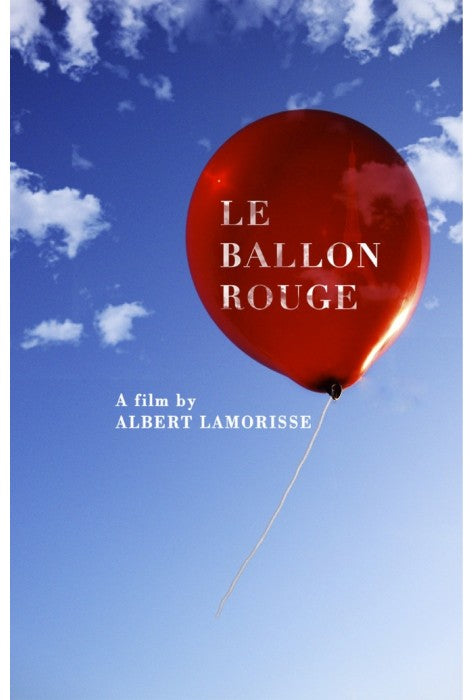
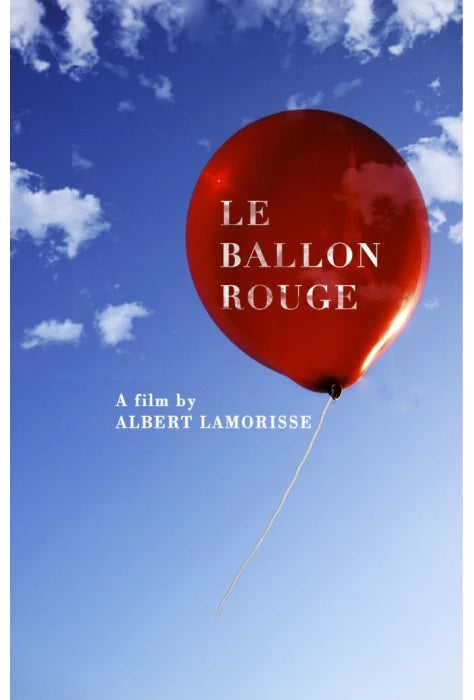
There are films for language classes that work because of what they say, and there are films that work because of what they don't say. Le Ballon Rouge and Crin Blanc — usually paired together in a FilmArobics lesson — fall into the second category. Albert Lamorisse's two short films (both running under forty minutes) are almost entirely visual: a boy in 1950s Paris befriends a red balloon that follows him everywhere; a boy in the Camargue befriends a wild white stallion. In both films, the emotional content is carried not by dialogue but by image, music, and the wordless communication between a child and something that cannot speak.
For beginning French students, these films are a gift: the minimal dialogue means students aren't lost in language they can't track, and the visual richness gives them enough context that they can discuss the films in French almost immediately. The vocabulary of movement, color, friendship, and freedom appears naturally in any discussion of what students have seen.
📬 Stay in the loop. New lessons added regularly — join the list to hear when your film is available.
Key Themes for the Classroom
- Friendship and loyalty — The balloon follows Pascal; the horse follows Folco. Ask: Qu'est-ce que l'amitié signifie dans ces deux films? What makes a friendship real when one partner can't speak?
- Freedom and constraint — Both films are about things that can't be owned — the balloon won't be kept; the horse won't be tamed. Ask: Pourquoi Pascal et Folco veulent-ils garder leurs amis? And: Ont-ils raison?
- Paris and the Camargue — The two films offer two completely different Frances. Ask students: Lequel des deux endroits préfères-tu, et pourquoi? The question is a speaking exercise disguised as preference.
Scene to use: The moment Pascal's red balloon begins following him home — the first time it demonstrates that it has chosen him. The scene has almost no dialogue, but the visual grammar is completely clear. Use it to teach description in French: students describe what they see, what they infer, and what they feel, using present tense. The exercise produces immediate French output from beginning students who haven't yet been afraid of the language.
Low-prep classroom activity: Students write three sentences in French describing each film — one about what they saw, one about what they felt, and one about what they think the film is really about. Beginners can do this with simple vocabulary; advanced students can go further. The same task works at any level.
What to listen for: Both films are almost silent — which is precisely their pedagogical value. Without dialogue to lean on, students must practice reading the visual language of cinema and then translating it into French: describing what they see, speculating about what characters feel, narrating what happens next. The exercise moves from comprehensible input (image) to productive output (French) in a way that intermediate students find surprisingly accessible. Start with Le Ballon Rouge and pause every five minutes to have students narrate the previous five minutes in French. The accumulated narrations become the lesson.
The full French lesson plan for Le Ballon Rouge / Crin Blanc is ready at filmarobics.com/products/ballon-rouge-crin-blanc — $29.95.
Students walk away from these films having described something beautiful in French — and discovered that a language they're still learning is already enough for that.
The full French lesson plan for Le Ballon Rouge is ready at filmarobics.com/products/ballon-rouge-crin-blanc — $29.95.
📬 Stay in the loop. New lessons added regularly — join the list to hear when your film is available.
Students walk away from these films having described something beautiful in French — and discovered that a language they're still learning is already enough for that.