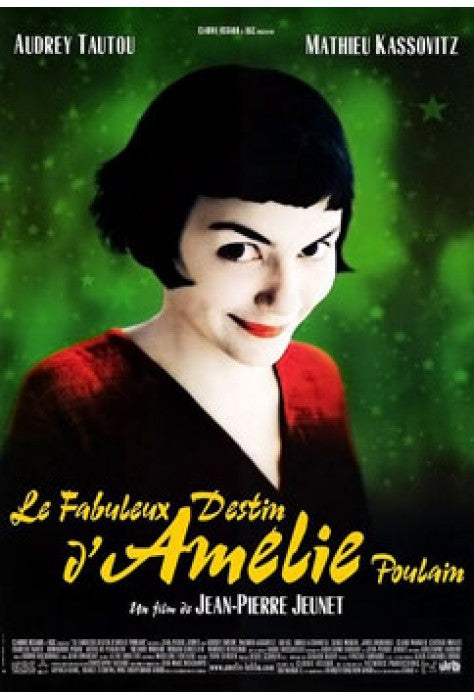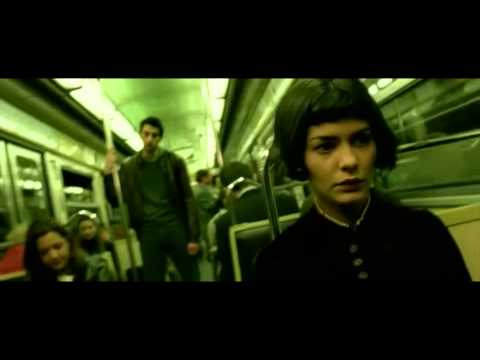
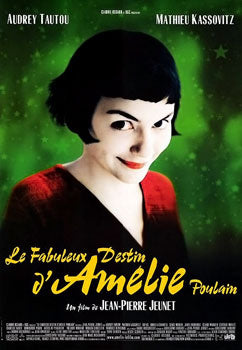
Picture it: you've just played the opening sequence of Amélie — the narrator's deadpan inventory of Amélie Poulain's likes and dislikes (les choses qu'elle aime, les choses qu'elle n'aime pas). Your students have heard authentic French at a real pace, with real Parisian music underneath it. And now they want to know: what exactly did he say? That's the moment. That's the gap between what they heard and what they understood — and it's the most productive gap in language learning.
Amélie (Jean-Pierre Jeunet, 2001) is pedagogical gold. The narration is clean, deliberate, and full of everyday vocabulary — colors, textures, sensations, routines. The Paris setting is authentic without being intimidating. And students who might never choose to study French will sit in rapt attention because the film is genuinely, visually arresting. Engagement is not a problem with this one.
📬 Stay in the loop. New lessons added regularly — join the list to hear when your film is available.
Key Themes for the Classroom
- Kindness as agency: Amélie doesn't just do good deeds — she engineers them, plans them, executes them in secret. Ask students: does an act of kindness count if the recipient never knows who helped them? There's no wrong answer, and every student has something to say.
- Loneliness and imagination: Amélie's childhood is isolated, so she builds an elaborate inner world. Students can discuss how language itself is an imaginary world — how learning French opens a door to another way of thinking, not just another way of talking.
- Paris as a character: Montmartre, the café, the vegetable market — Jeunet's Paris is hyperreal, not quite documentary. Ask students: what does this version of Paris say about how the French imagine themselves? Then compare to how American films imagine New York.
- Risk and self-disclosure: Amélie's central struggle is whether to reveal herself to Nino. This is exactly the struggle of a language learner speaking aloud for the first time. Name it. Use it.
One Scene to Use
The photo album sequence — where Amélie tracks down Nino's mystery man by returning a discarded photo-booth collection — is one of the finest examples of visual storytelling without dialogue in modern cinema. Play it without subtitles. Ask students to narrate what's happening in French, in real time. Their accuracy doesn't matter yet. Their willingness to try does.
One Low-Prep Classroom Activity
Before watching, give students three minutes to write their own narrator intro in French: three things they love, three things they hate, two things they feel neutral about. Model the structure from the film's opening. After watching, students share — and the class votes on whose list is most Amélie-style. It's a vocabulary and expression activity disguised as character work.
The full French lesson plan for Amélie is ready at filmarobics.com/products/amelie — $29.95.
📬 Stay in the loop. New lessons added regularly — join the list to hear when your film is available.
Students who work through this unit walk away with a real feel for colloquial French register, a cultural framework for contemporary Paris, and — if you use it right — a reason to care about the language that no textbook has ever given them.