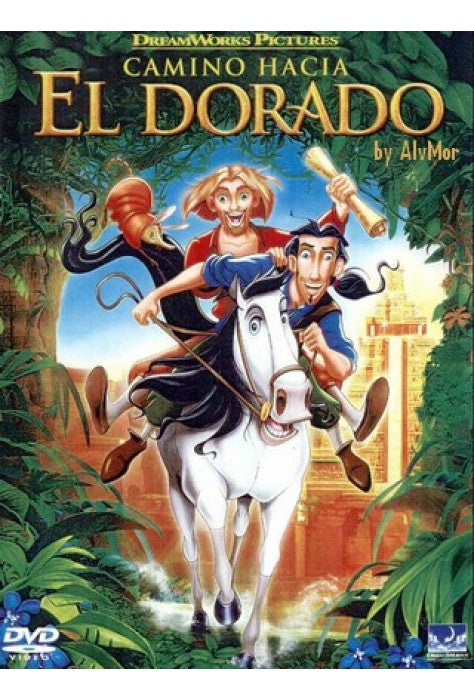

Every teacher has a film that takes zero setup — you press play and the class is in. Camino hacia El Dorado (The Road to El Dorado) is that film for Spanish class. Two Spanish con men, Miguel and Tulio, accidentally win a map to El Dorado, sail to the Americas, and are mistaken for gods by the local population. The comedy is fast, the characters are genuinely funny, and the film moves with such confidence that students are laughing before they realize they're doing Spanish.
The Spanish dub of Camino hacia El Dorado is one of the best in the animated catalog. Miguel and Tulio's banter is sharp, fast, and rhythmically natural — the kind of informal Spanish between close friends that textbooks can describe but can't actually model. The film also offers something rare: two male characters whose friendship is genuinely warm, physically expressive, and central to the story in a way that generates real classroom conversation about friendship, loyalty, and honesty.
📬 Stay in the loop. New lessons added regularly — join the list to hear when your film is available.
Key Themes for the Classroom
- Friendship and honesty — Miguel wants to stay; Tulio wants to leave. Neither will say it outright until the situation forces them. The Spanish vocabulary of indirect disagreement between friends is rich throughout. Ask: ¿Por qué les cuesta tanto decir la verdad el uno al otro?
- Identity and performance — Miguel and Tulio perform being gods. The film plays this for comedy, but the underlying question — what happens when you pretend so long you forget what's real? — is genuinely interesting.
- Conquest and contact — The film handles the Spanish arrival in the Americas with light comedy, but the underlying power dynamic is present. Advanced students can discuss what the film says and doesn't say about colonialism.
Scene to use: Miguel and Tulio's argument about whether to leave El Dorado, mid-film — each refusing to admit what he actually wants. The Spanish is fast, overlapping, and emotionally transparent despite the surface indirectness. Ask: ¿Qué quiere realmente Miguel? ¿Y Tulio? Students must identify the underlying desire from the surface language — a real listening comprehension task.
Low-prep classroom activity: Two friends have to make a decision that affects both of them, but they have opposite preferences. Students write a short argument in Spanish where neither character says what they want directly — they talk around it, deflect, change the subject, agree to disagree, and finally arrive at an impasse. The constraint produces authentic-feeling conversational Spanish.
What to listen for: The Spanish of the conquistador characters — Miguel and Tulio — is deliberately contemporary rather than historically authentic, which is a pedagogical asset: the vocabulary is modern, the humor is modern, and the situations are legible without historical knowledge. Ask students to identify three verbs or phrases from the film and use them in their own sentences. The film's accessibility makes vocabulary acquisition fast, and the historical setting means the cultural discussion can go deep even when the language is accessible.
The full Spanish lesson plan for Camino hacia El Dorado is ready at filmarobics.com/products/camino-hacia-el-dorado — $29.95.
Students walk away from Camino hacia El Dorado having laughed hard at Spanish and learned that the best friendships — in any language — are the ones where you can disagree without destroying anything.
The full Spanish lesson plan for Camino hacia El Dorado is ready at filmarobics.com/products/camino-hacia-el-dorado — $29.95.
📬 Stay in the loop. New lessons added regularly — join the list to hear when your film is available.
Students walk away from Camino hacia El Dorado having laughed hard at Spanish and learned that the best friendships — in any language — are the ones where you can disagree without destroying anything.