Ask a Spanish 3 student to describe their weekend and they'll manage. Ask them to narrate a scene they just watched — something they understood perfectly, something that moved them — and something strange happens. The sentences come out in the right language, but the story falls apart. Flat. Sequenceless. Like they're reading from a list of moments rather than telling something that happened.
This is not a vocabulary problem. It is not a grammar problem. It is a narrative competence problem, and it is one of the most underdiagnosed gaps in secondary language education.
The Research on Narrative in Second Language Acquisition
The research on this is unambiguous, and it goes back further than most teachers realize. Canale and Swain's 1980 framework for communicative competence included discourse competence as a distinct skill — the ability to connect utterances into coherent, organized stretches of language. Grammatical competence and discourse competence are not the same thing. A student can have robust grammatical accuracy and essentially zero ability to produce a coherent narrative. They're separate systems, and instruction that develops one does not automatically develop the other.
Labov's work on narrative structure adds another layer. Natural storytelling follows a recognizable architecture: orientation, complication, evaluation, resolution, coda. Native speakers acquire this architecture implicitly by hearing thousands of stories. Language learners in classroom settings hear textbook dialogues — almost none of which have narrative structure. They're acquiring grammatical forms without acquiring the connective tissue of how those forms move through time and cause-and-effect.
The result: a student who can conjugate in four tenses and still produces narrative that sounds, functionally, like a police report with the wrong subject.
What This Looks Like in the Room
You've seen it. You ask them to summarize the scene — any scene — and you get: "El hombre entra. Habla con la mujer. Ella se va. El está triste." Technically correct. Narratively empty. No evaluation. No stakes. No voice. The student has relayed events the way a security camera records them.
I started noticing this with my Spanish 4 students about three years ago. They could read. They could discuss — at least when I was scaffolding the discussion hard. But give them an open-ended task like "describe what happened in the first act of the film" and they produced transcriptions, not narratives. I assumed it was a writing problem at first. It wasn't. It happened in speaking too. The mode wasn't the issue. The skill itself was missing.
What I was seeing has a name. SLA researchers call it the narrative gap — the space between comprehension of story and production of story. Students can follow a film, understand its arc, feel its emotional weight, and still be unable to reproduce that arc in the target language. Comprehension and production draw on overlapping but distinct cognitive resources.
Why Film Is the Right Fix — Not Just a Nice Input Source
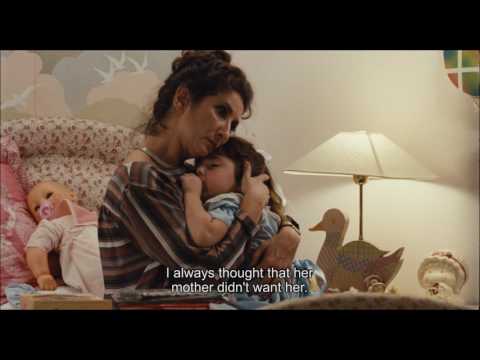
Here's what makes film structurally different from other input sources for this particular problem: film is inherently narrative. Not dialogic. Not expository. Narrative. It has orientation. It has complication. It has evaluation — character faces, music cues, scene cuts that tell you what matters and why. It has resolution and coda built in.
When a student watches a film with appropriate scaffolding, they are immersed in narrative structure for ninety minutes. Not as an abstract concept to memorize, but as a lived experience. The architecture of storytelling gets into their bodies through the story they're experiencing. That is what makes the transfer possible — the target-language re-telling of a film draws on an internal blueprint the student already holds from having watched it.
This is Krashen's comprehensible input thesis working at the discourse level. You need input that is emotionally salient and narratively coherent. Films are both. Textbook dialogues are neither.
Three Tasks That Actually Build Narrative Competence
The key is using the film's structure as a template, not a summary prompt.
The Scene Re-Cast. After a pivotal scene, ask students to retell it as if they're telling a friend who missed the movie — not summarizing the plot, telling the story of that moment. Require an evaluation: what made it matter? What did they feel? This forces the full narrative arc in a manageable chunk. The film provides the orientation; the student has to supply the evaluation and stakes. That's where narrative competence lives.
The Character's Voice. Ask students to narrate a scene in the first person, as the main character, past tense. They cannot just list events — they have to locate the character in the moment and move through it from the inside. This task forces discourse-level choices: what do you mention first, what do you withhold, when does the story turn? In Spanish, this exercise does extraordinary work on preterite-imperfect distinction — not as a grammar target, but as a natural consequence of trying to narrate with perspective.
The "And Then" Ban. Give students a two-minute retelling task and prohibit additive connectors — no y entonces, no and then, no puis. This seems cruel until you watch what happens. Students cannot coast on additive connectors; they have to reach for causal language. Sin embargo. Por eso. Aunque. A causa de. This single constraint does more for discourse coherence than any direct instruction I've tried.
What This Reveals About the Rest of Your Instruction
The narrative gap doesn't just exist in film units. It exists everywhere, and film units reveal it because they're one of the few places we actually ask students to produce sustained discourse. The gap was always there — we just weren't creating situations where it would show up.
Once you've identified it, you start to see the textbook problem more clearly. Textbooks teach language at the sentence level. They build grammatical accuracy that is real and measurable. But they don't build the connective architecture that turns sentences into stories. Film does that — provided you design tasks that require students to produce the narrative, not just comprehend it.
The pre-film work matters enormously here. If students understand narrative stakes going in — who these characters are, what they want, what stands between them — their during-film comprehension is richer, and their post-film production is exponentially more textured. The scaffolding is not remediation. It's the difference between comprehension and acquisition at the discourse level.
If you're looking for a complete architecture for this kind of work — pre-film, during-film, and post-film tasks designed around narrative production — the lesson plans at FilmArobics Spanish are built exactly for this. Fourteen sections, structured for the kind of sustained discourse development that closes the narrative gap.