The Unit Ended on Friday. By Monday, They'd Already Forgotten Half the Words.
If you've taught a language for more than two years, you know this feeling intimately. You run a strong unit — solid activities, good energy, students actually using the vocabulary. You give the test, they pass it. Then three weeks later you casually reference a word from that unit and you get thirty blank faces staring back at you.
It's not that the students didn't learn it. They did — for about eleven days. The problem isn't the teaching. The problem is the architecture of how vocabulary retention actually works, and most units aren't built to support it.
What Paul Nation Actually Says About Vocabulary Learning
The research on vocabulary acquisition is remarkably clear on one point: a word is not learned after one encounter. Nation's work puts the number of meaningful exposures needed for long-term retention at somewhere between seven and fifteen, depending on the word's frequency, its cognitive complexity, and whether the learner encountered it in a meaningful context or a list.
Most classroom vocabulary units give a word two or three encounters: the introduction, the practice activity, the test. Then it disappears. That's not incidental acquisition. That's temporary memorization, and it has a shelf life of roughly one to three weeks.
What gets retained long-term is a word encountered across multiple spaced encounters, in emotionally varying contexts, with stakes attached to the comprehension. The learner needed to understand the word in order to understand something that mattered to them. That's the mechanism. Without it, even well-taught vocabulary fades.
Third Period, February
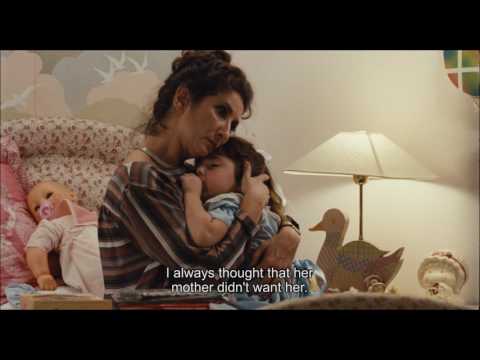
I had taught a full unit in October on family and relationships vocabulary — genuinely solid unit, the students liked it, the assessment went well. We were watching a clip from a Spanish-language film, a scene in which a character argues with her mother, and I asked the class to describe what was happening.
Silence. Not because they couldn't understand the scene — they clearly could. Because the words for "argue" and "blame someone" weren't coming back. Those words had been on October's list. We were now in February. I had taught those words. I had assessed them. And four months later, they were gone.
That's when I started thinking much harder about what "learned" actually means.
The Spacing Problem and Why Film Changes the Equation
The cognitive science of spaced repetition is one of the most robust findings in memory research — Ebbinghaus established the forgetting curve in the 1880s, and every decade of research since has confirmed it. Retention drops sharply without re-exposure, and re-exposure works best when it happens at increasing intervals over time.
Most vocabulary units front-load the word density and then move on. The test is the last meaningful engagement with most of those words. After the test: nothing.
Film changes this structurally. When students engage with a feature film over two to three weeks, vocabulary from the pre-film activities appears in the film itself — not as a vocabulary drill, but as language embedded in a scene that carries emotional weight. A word they first encountered on a pre-reading list shows up again in a tense moment between characters. Then it appears in a post-film discussion. Then in a written reflection. Then, when you show a clip in a later unit, there it is again.
That's not just repetition. That's spaced, contextualized, emotionally anchored repetition — exactly what Nation and Laufer identify as the conditions for long-term retention. The film provides the ongoing narrative context that keeps the word active without requiring you to manufacture artificial re-exposure exercises.
The Emotional Salience Factor
Krashen's affective filter hypothesis has been debated for decades, but the core empirical claim is well-supported: learners retain language encountered in emotionally meaningful contexts at significantly higher rates than language encountered in neutral contexts.
When a student learns the word traicionar (to betray) from a vocabulary list, it goes into short-term declarative memory. When they learn it because a character in the film they've been invested in for two weeks just betrayed someone they trusted, that word gets encoded differently. The emotional charge creates a richer memory trace. The word is harder to forget because it's attached to something that felt real.
Textbooks cannot engineer this. There is no manufactured emotional context that competes with genuine narrative stakes — and that is something only authentic media delivers at scale.
Design for Re-Encounter, Not Just Introduction
If you're building a film unit and you want vocabulary to stick past the unit test, the design principle is simple: every key vocabulary item needs to appear in at least three emotionally distinct contexts before the unit ends.
Pre-film vocabulary work introduces the word semantically. The film provides the first emotionally loaded encounter — the student needs that word to understand what's happening on screen. A post-film discussion or writing task demands productive use, which activates a different encoding process than receptive comprehension. Then, ideally, a reflection task or a second viewing of a key scene gives the word one more anchor point.
Four encounters. Each one in a different mode — reading, listening, speaking, writing. Each one attached to a different emotional moment in the narrative. That's not just better instruction. That's the architecture of long-term retention, built into the structure of the film unit itself.
When the Unit Ends, the Film Doesn't Have To
One thing experienced film-based language teachers figure out eventually: you don't have to close the door on the film when the unit ends. A thirty-second clip from a film you watched in October, shown at the start of class in January, does more for vocabulary retention than most stand-alone review activities. The students remember the scene. The scene brings the words back. The words, reactivated in context, get re-encoded.
This isn't a major structural overhaul. It's a two-minute callback that sits precisely in the spaced repetition window where it does the most good. Story as retrieval cue for language — that mechanism is one of the most underutilized tools in secondary language instruction, and film gives it to you, ready-made, for every unit you teach.
Built for This
FilmArobics lesson plans are structured across pre-film, during-film, and post-film sections precisely because retention research demands that architecture. Every key vocabulary item is introduced before the film, activated during it, and returned to in the writing and discussion work that follows. The design isn't accidental — it's built to solve the problem described above.
If you're teaching Spanish and want a film unit that handles vocabulary retention the way the research actually recommends, the FilmArobics Spanish collection is worth a look: filmarobics.com/collections/spanish.