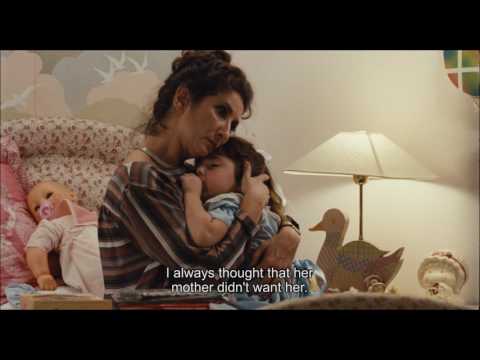
There's a moment most world language teachers know well. It happens in the faculty lounge, usually around October. A colleague asks how things are going. You say something like, "Actually, we're in the middle of a film unit right now — it's been really great for getting them to produce language in context." And the response is a polite nod that communicates, with absolute clarity, that they have no idea what you just said and are already thinking about something else.
Being the only language teacher in a building — or one of two, with the other person teaching a different language and a different grade level — is a specific kind of professional isolation. The department meeting that doesn't have a department. The curriculum conversation that doesn't apply to your subject. The PD session on "data-driven instruction" where the data model assumes everyone teaches multiple-choice assessments in a subject with right answers.
It's not that people are unsupportive. It's that the structural logic of most schools wasn't built with language acquisition in mind.
What the Research Says About This Kind of Isolation
Etienne Wenger's work on communities of practice is typically applied to student learning, but it applies equally well to teachers. The basic argument is this: expertise develops in community. You get better by working alongside people who share your problems and your language for describing them. When you're the only one in a building who knows what i+1 means, or who cares whether a student's output is comprehensible or merely grammatically correct, you lose access to the feedback loop that improves practice.
This isn't a soft argument about collegiality. It's about professional development. Research on teacher expertise — from Berliner's work on expert teachers to more recent studies on instructional improvement — consistently shows that growth happens through structured reflection with people who can actually see what you're doing. When that peer group doesn't exist in your building, improvement becomes harder, lonelier, and slower.
The affective dimension matters too. Krashen's affective filter hypothesis is usually applied to students, but anxiety, low self-esteem, and lack of confidence affect teacher performance as well. A teacher who feels invisible in their own school — whose methods aren't recognized, whose results aren't understood, whose professional identity sits completely outside the school's dominant conversation — is a teacher who is burning down slowly.
The Specific Problem With Language Teaching in This Context
Most subjects produce visible outputs. Math teachers can show scores. English teachers can show papers. Science teachers can show lab results. Language acquisition doesn't work that way. The gains are subtle, cumulative, and distributed across time. A student who makes a breakthrough in spoken fluency in November won't necessarily show that in a standardized test in May. A student who finally stopped translating in their head — who is genuinely thinking in the target language for the first time — produces no artifact you can put in a portfolio review.
This invisibility problem is real. When your principal walks in during a film scene and sees students watching a movie with what looks like minimal teacher direction, the gap between what they see and what is actually happening is enormous. The scaffolded prediction task. The structured listening guide. The affective engagement that is lowering the filter right now, in this room, in a way that is backed by thirty years of acquisition research. None of that is visible from the door.
I've had a department chair suggest — kindly, with genuine concern — that I might want to show "more direct instruction" so that observations looked more rigorous. The film was running. Students were engaged at a level I hadn't seen in a traditional lesson in years. And I spent twenty minutes after school explaining why what they saw wasn't a movie day.
Three Things That Actually Help
The first is building your own external community of practice, since the internal one doesn't exist. This means language-specific professional networks — ACTFL, state foreign language associations, the teacher communities that live on Reddit, Twitter, and in subject-specific Facebook groups. These aren't substitutes for a department, but they provide something a department would: people who share your vocabulary, your problems, and your willingness to argue about whether comprehension checks interrupt the affective experience of a film.
The second is becoming fluent in translation. Not between languages — between pedagogical frameworks. If your school talks about "structured academic controversy," know that the film discussion task you've been running for three years is a structured academic controversy. If the curriculum framework uses "text-based evidence," know that your post-film writing prompt is exactly that. The methodology doesn't change. The language you use to describe it to administrators and colleagues needs to map onto their existing frameworks, or you will spend every observation cycle defending something that doesn't need defending.
The third is letting the student results do the talking. When a student who was failing English class starts producing coherent paragraphs in the target language because the film gave them enough context to actually care, that is a result worth documenting. Keep records. Collect writing samples. Create a before-and-after portfolio — not for your students' grades, but for the moment you need to explain to someone why the methodology works. You will need that moment eventually.
What Film Does That Helps With This Specific Problem
One underappreciated advantage of film-based instruction for the solo language teacher is that it provides a coherent, defensible curricular framework that travels well. You're not asking an administrator to understand acquisition theory from scratch. You're showing them a structured lesson plan — pre-film, during-film, post-film — with vocabulary scaffolding, comprehension tasks, grammar noticing, and output production. That sequence is legible to anyone who has ever seen a unit plan.
The film-based lesson plan also gives you something to point at when the "movie day" question comes up. This is a 14-section structured unit. These are the learning objectives. This is what the students will produce. That's not a movie day. That's a unit with a film as the primary text — the same way an English teacher uses a novel.
The analogy to literature instruction is worth making explicitly to your administrators, by the way. Nobody questions the English department for spending two weeks on Of Mice and Men. The film is your novel. The lesson plan is your teacher's edition. The methodology is thirty years old and backed by the same SLA research that informed the ACTFL standards your school already agreed to teach toward.
You're Not Doing It Wrong
The isolation that comes from being the only language teacher in a building is real, and it has genuine professional costs. But the methodology isn't the problem. The problem is structural: you're doing rigorous, evidence-based work in a context where almost no one around you has the vocabulary to recognize it.
That doesn't mean the work is wrong. It means the translation problem — explaining what you're doing and why it works — is part of the job, unfortunately, in a way it isn't for most of your colleagues. The teacher down the hall doesn't have to explain why she grades essays. You sometimes have to explain why a film is a primary text.
The students know, though. Eventually, they always know.
If you're building or rebuilding a film-based language program and you want a structured starting point, the lesson plans at FilmArobics are designed exactly for teachers who need a complete, defensible unit they can run independently — no department, no committee, no approval required. Just a film, a plan, and a class full of students who are about to understand why language is worth learning.