The week before winter break is the week most teachers have given up on. The tests are done. The grades are in or nearly in. Students have emotionally checked out somewhere around December 15th, and you have six more school days. Anything you teach feels like shoveling sand against a tide of holiday anticipation and collective adolescent apathy.
But here's the thing: the research on memory consolidation suggests this window may actually be one of the most pedagogically valuable weeks of the semester. Not in spite of the low-stakes atmosphere — because of it.
What Consolidation Research Actually Says About This Window
Consolidation in language acquisition is not what most teachers were taught. The common model is: teach, practice, test, move on. Language is locked in by drilling until it's automatic. That model is not what the cognitive science literature supports.
What Roediger and McDaniel's work on retrieval practice shows — and what Krashen's broader input hypothesis implies — is that language forms are consolidated not through repetition of the original practice but through encountering those forms again in new, emotionally engaging contexts. The second encounter in a different context is often more generative for long-term retention than the original learning event.
The week before break is, almost by definition, a low-anxiety environment. Tests are over. Nobody's being formally evaluated. The affective filter — Krashen's term for the emotional barrier that blocks acquisition when anxiety is high — is at its lowest point of the semester. That's not a problem to manage. That's an acquisition window to use.
What Period 3 Looks Like on December 16th
I'll be honest with you: I spent about six years treating this week like a holding pattern. We did holiday-themed worksheets. We watched something vaguely related to the target culture and called it a day. Students were happy in the way students are happy when they know nothing is being asked of them. But I always had this low-grade guilt about it, because I knew we'd lost a week.
The reframe came when I stopped thinking about this week as dead time and started treating it as the ideal conditions for something I couldn't pull off in October. When stakes are low and anxiety is low, students are actually more willing to take risks in the target language. They'll try the joke. They'll attempt the narrative. They'll say something imperfect without the usual defensive crouch. The conditions for authentic communication are better in week 36 than they are in week 12.
The problem is almost nobody designs for it. You need a unit that works when energy is fragmented, attention windows are short, and you cannot rely on grade motivation. There's really only one instructional format that meets all three of those constraints simultaneously: film.
The Design Logic for Pre-Break Film Work
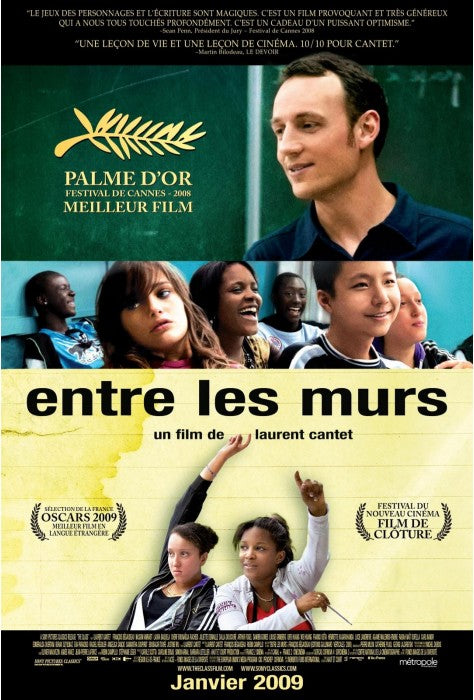
This week should not be a new film. The cognitive load of a completely unfamiliar text — new characters, new setting, new vocabulary threshold — works against the consolidation function you're after. The right move is to return to a film students already know, or to bring in a film from the same director or genre as something they studied earlier in the year.
Familiarity reduces processing load, which frees up cognitive resources for language production. Students aren't working to understand the plot; they're working to engage with the language. That reallocation is exactly what consolidation requires.
This is consistent with what Long and Robinson's focus-on-form framework predicts. When learners are already oriented to meaning — because the narrative is familiar — they have the spare attention to notice and process linguistic form. The low-stakes week before break, combined with a familiar film, creates the conditions for incidental form-focused noticing that is extraordinarily hard to engineer during the regular semester.
Three Tasks That Work in This Window
The "What We Know Now" Rewatch. Pick one scene from a film students studied earlier in the year. Watch it again. But this time, ask a different question: what does this scene mean now that you've seen the whole film? This forces retrospective analysis — students have to connect earlier language learning to a larger interpretive frame. It generates genuine discussion in the target language because students have real disagreements about interpretation, and those disagreements are interesting in a way that comprehension checks are not.
Low-Stakes Oral History. Have students describe — in the target language — one moment from their year in the class. In Spanish. In French. In whatever language you teach. Not a rehearsed presentation. An actual story. The affective filter is low, the language is already primed from the year's work, and you get to hear what stuck. What vocabulary shows up? What structures are automatic? This is also some of the best informal assessment data you'll collect all year, and none of it feels like assessment to them.
The Translation Question. Pick a line from a film they know — ideally a line with real cultural or emotional weight — and ask them to explain why they can't simply translate it. This sounds like a trick question. It isn't. Getting students to articulate what gets lost in translation forces them to think at the pragmatic level: what does this phrase mean in this culture, in this moment, between these characters? That's not holiday-week filler. That's communicative competence.
The Real Reason This Week Gets Wasted
The honest answer is that it's hard to plan for this week. By December 16th, most teachers are exhausted, and the path of least resistance is a movie with cultural adjacency to the target language and a casual worksheet that nobody really does. I've done it. It's fine. Students don't hate it.
But if you go in with a pre-built plan — tasks designed for low-stakes consolidation, a film you know well, output activities that work with short attention windows — this week can be genuinely productive. Not productive in the "cover chapter 8" sense. Productive in the sense of language that gets consolidated through emotionally meaningful re-encounter, which is exactly what the retrieval practice literature tells us actually drives long-term retention.
The week before break is not wasted time. It's time that most people waste. Those are different problems with different solutions.
If you want a lesson plan that's already structured for this kind of work — pre-film through post-film tasks, designed for maximum flexibility and student engagement — the ESL and world language plans at FilmArobics ESL are built to work in exactly this kind of high-interest, low-anxiety window. The architecture is already there. You just need to bring the film.