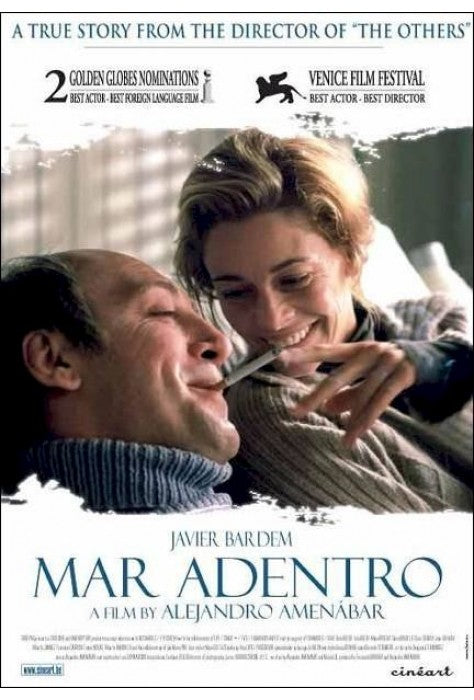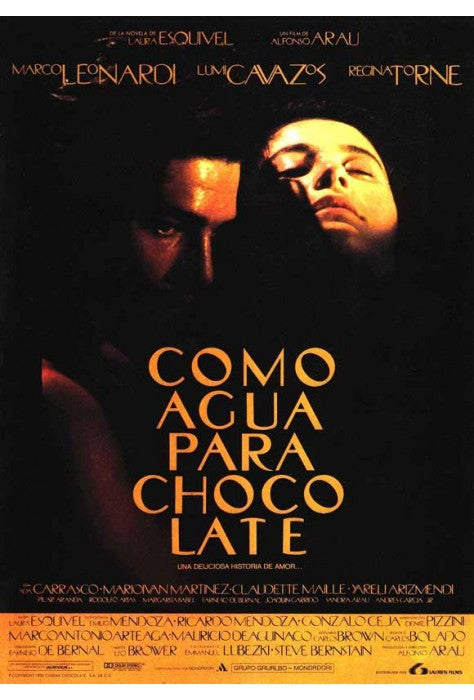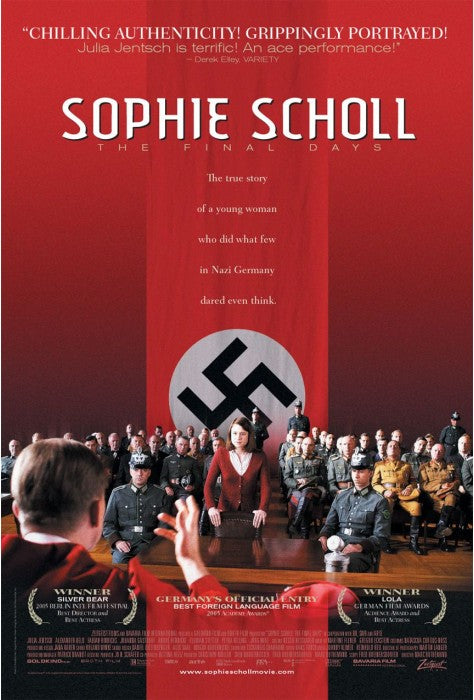
It started with a scheduling conflict that I did not ask for. My classroom was double-booked for three Tuesdays in a row, so I had to split my film unit across a station rotation — four groups, four tasks, one period, no whole-class viewing. I assumed it was going to be a disaster. It was not. It turned out to be one of the most productive structures I have run in fifteen years of Spanish class, and I have been doing a version of it on purpose ever since.
Here is what I know now that I did not know then: the station rotation does not break the film. It changes what students do with it — and for language acquisition, what students do with the material is most of the work.
Why Variability in Task Type Drives Acquisition
The research on variability in language learning is worth understanding before you set up the logistics. Nick Ellis and others working in usage-based acquisition have shown that learners build stronger representations of language when they encounter the same material across multiple processing demands. Listening, reading, speaking, and writing about the same content are not redundant — they each activate different neural pathways and consolidate the same language in different ways. A student who hears a scene, then reads a transcript excerpt, then discusses it with a partner, then writes a response to it has processed the same language four times in four different modes. That is not repetition in the drill sense. That is the kind of recycling that acquisition actually runs on.
This is one of the structural advantages of the station rotation in a film unit that teachers do not always name: the rotation enforces multi-modal processing without the teacher having to orchestrate four sequential activities in a single whole-class setting. The structure does the work.
The Logistics Problem — and the Real One
The question I always get is: how do you handle the viewing station? Students are at different points in the film. Half the class has seen a scene the other half has not. You cannot run the whole film at every station simultaneously.
This is the wrong problem to solve. The viewing station does not show new footage. It shows a scene the whole class has already watched together — you use one period for whole-class viewing before you ever rotate. The stations then work with that material. This distinction matters because it also tells you what the stations are for: not first exposure, but deep processing. Students are not learning the scene at the stations. They are acquiring language from a scene they already understand, which is exactly where Krashen's affective filter is at its lowest and acquisition can actually happen.
Once you make this shift — viewing together, processing in rotation — the logistical problem mostly dissolves.
A Station Structure That Works
Station One: Listening Close
Students have a transcript of two or three exchanges from the scene — not the whole thing, two or three exchanges. Their job is to watch the clip (on a tablet or laptop, with headphones) and annotate the transcript: circle words pronounced differently than written, underline phrases that did not translate literally, mark anything that surprised them. The annotation task keeps them in linguistic mode rather than entertainment mode. They are noticing, which Schmidt would call a prerequisite for acquisition.
Station Two: Speaking From Evidence
A question prompt and a partner. Not an open discussion question — a structured one. "Based on the scene, what does Character A want and what is Character B refusing to give? Use at least three pieces of evidence from the dialogue." The constraint matters. Students who are told to use evidence stay in the film's language instead of defaulting to their own. Swain's pushed output research is exactly right here: learners who are required to be precise produce more accurate language than learners given open-ended speaking tasks.
Station Three: Reading Extension
A short passage in the target language — a film review excerpt, a cultural note, a character background summary — that connects to the scene. This station does two things: it gives you a natural differentiation point (different text difficulty for different students), and it builds the background knowledge that makes the film's language more comprehensible on subsequent viewings. Nation's work on extensive reading makes clear that reading adjacent content accelerates vocabulary retention. This is the quieter station, and it is the one that pays off three weeks later when students remember things you did not directly teach.
Station Four: Writing Response
One specific writing task, not "write about the scene." Write the scene from the other character's point of view. Write the text message one character would send after the scene ends. Write the argument that happened the day before the scene, using vocabulary from the dialogue. These constrained tasks require students to produce new language using the structures they have just processed three different ways. Output at this stage is not premature — it is the consolidation step the other three stations have set up.
The Narrative Stays Intact
The worry teachers have — that rotating stations will fragment the story and students will lose the thread — has not matched my experience. When you anchor the stations in a scene the whole class has already watched together, students bring the narrative context with them. The story is not in the station. It is already in their heads. What the station does is give them four different instruments to play the same note, which is exactly what turns comprehensible input into retained language.
The rotation also solves the differentiation problem without requiring you to design four separate lessons. Students at different proficiency levels self-select their depth within each station. The annotation task stretches as far as a student pushes it. The speaking task can be supported or extended by the prompts you give. The reading station is the easiest place to layer in text at different complexity levels. One structure, one film, one room — and every student working at their actual level.
Where to Start
If you have never run a station rotation inside a film unit, pick a film you know well, pick one ten-minute scene with strong dialogue, and run the four-station structure for a single period after your whole-class viewing day. That is all the pilot you need. The room will tell you the rest.
If you want a lesson plan that is already structured for this kind of multi-modal, pre-film-to-post-film work — tasks that sequence deliberately instead of asking you to build from scratch — the FilmArobics Spanish lesson plans are built on exactly this principle. The 14 sections map across exactly the modes described above. It is worth seeing what a fully designed unit looks like before you try to build your own.